


Choosing between the different types of blinds for windows can feel overwhelming when you’re staring at dozens of options that all look similar at first glance. Material, slat size, mounting style, light control, each detail changes how a blind performs and looks in your home. And the wrong pick can mean wasted money on a product that doesn’t hold up or fit your space.
At The Shutter Look, we’ve spent over 23 years helping Central Florida homeowners navigate these exact decisions. Through thousands of in-home consultations and installations, we’ve seen firsthand which blinds work brilliantly in real homes, and which ones fall short. That hands-on experience shaped this guide.
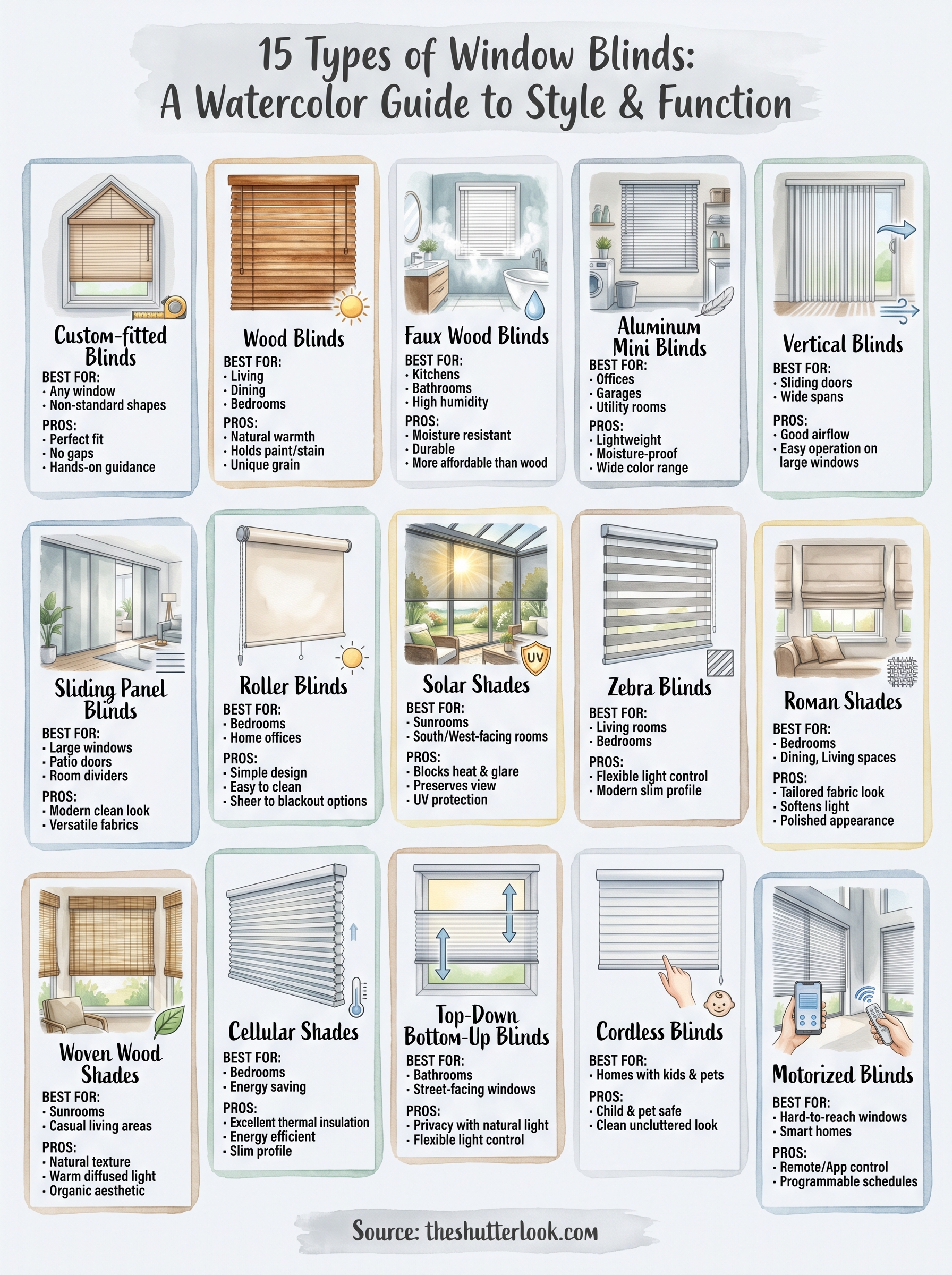
Below, we break down 15 types of window blinds, covering what each style does best, where it works, and the pros worth knowing. Whether you’re upgrading a single room or outfitting an entire house, this list gives you a clear starting point to compare your options with confidence.
1. Custom-fitted blinds with pro installation
Before diving into the different types of blinds for windows by material or style, it helps to understand the foundation that makes any blind perform well: how it gets measured and installed. Custom-fitted blinds with professional installation set the standard against which every other approach gets measured. The product matters, but a blind that doesn’t fit correctly won’t perform correctly, no matter how well it’s constructed.
How it works
A professional measurer visits your home and records precise dimensions for each window, accounting for mounting depth, frame irregularities, and any trim that might affect how the blind sits. Those measurements go directly to a manufacturer who builds the blind to your exact specifications. When the product arrives, an installer mounts it correctly the first time, without guesswork or on-the-spot adjustments.
Getting measurements wrong by even a fraction of an inch can leave visible gaps, cause the blind to bind on the frame, or make mounting impossible without modification.
Best for
Custom-fitted blinds with professional installation work well for any homeowner who wants a clean, finished result without the risk of returns and remounting. They’re especially valuable when you have non-standard window sizes, older homes with frames that aren’t perfectly square, or large windows where an imprecise fit stands out immediately. New construction projects also benefit since builders often prioritize speed over window uniformity, leaving behind openings that vary slightly from one room to the next.
Pros
The primary advantage is accuracy from the start. Every blind fits the specific window it was built for, so there are no gaps, no awkward overhangs, and no sagging corners. You also get hands-on product guidance before you commit, with most professional services bringing physical samples directly to your home so you can evaluate colors, textures, and opacity levels in your actual light conditions rather than guessing from a screen.
Cons
Professional installation costs more upfront than buying a stock blind off the shelf. You also need to schedule a home visit and wait for production, which typically adds two to three weeks to the overall timeline. For someone who needs a quick fix, this process won’t fit that need.
Price and upkeep
Professional installation generally adds $50 to $150 per window on top of material costs, depending on complexity and your region. Once installed correctly, upkeep stays minimal. Regular dusting with a microfiber cloth and a periodic wipe-down keeps most blind styles in solid condition for years with no major maintenance required.
2. Wood blinds
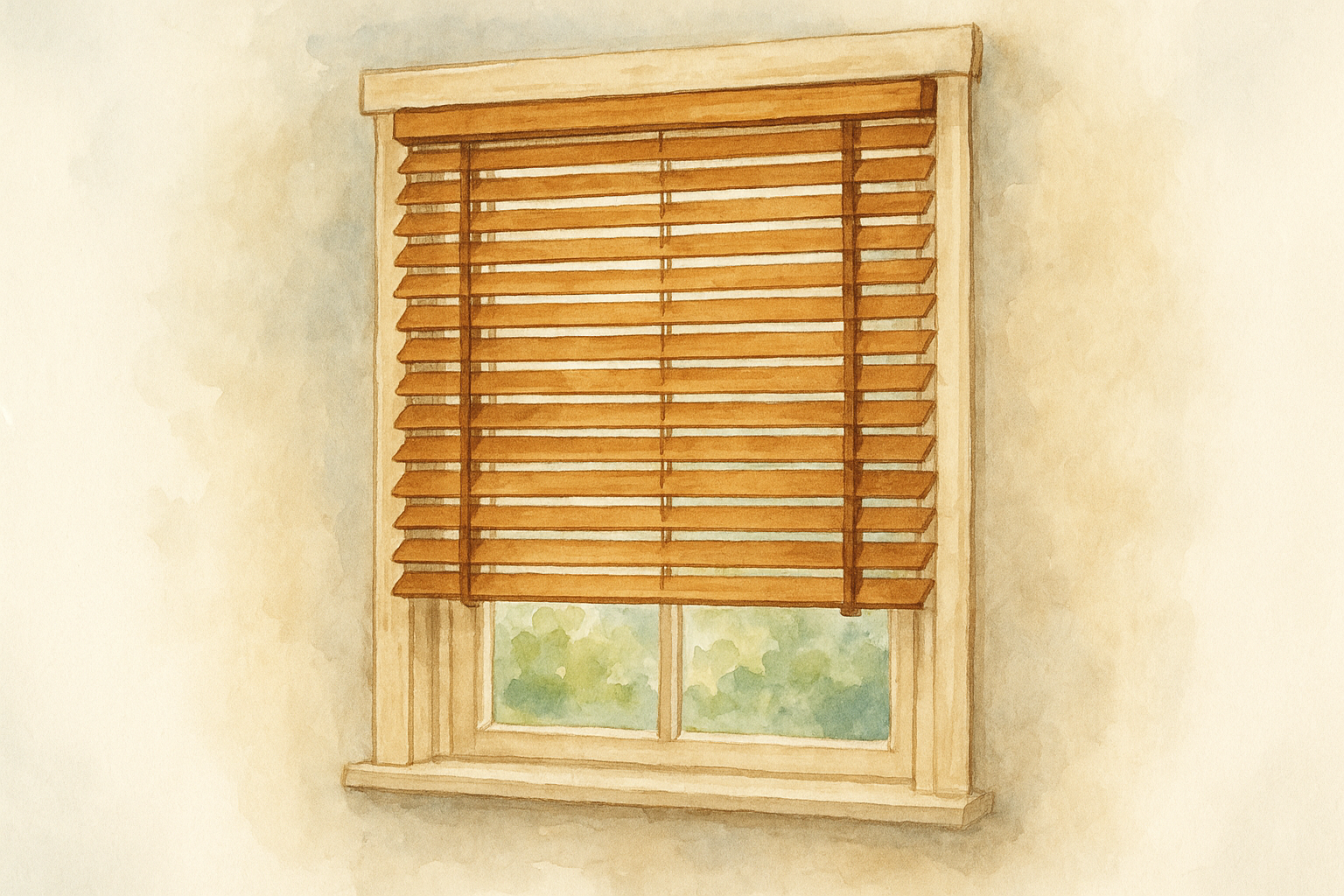
Wood blinds are one of the most recognizable of all the different types of blinds for windows, and their popularity holds up because they deliver a warm, natural look that fits both traditional and contemporary homes.
How it works
Wood blinds use horizontal slats cut from real hardwood, typically basswood, ramin, or bamboo. A ladder cord holds the slats in place, and you tilt them open or closed to control light. Pull the lift cord and the slats stack neatly toward the top of the window, leaving your view unobstructed.
Best for
These blinds work best in living rooms, dining rooms, and bedrooms where you want texture and warmth. They pair naturally with hardwood floors and wood furniture. Avoid installing them in high-humidity rooms like bathrooms or kitchens, since real wood warps and cracks when exposed to consistent moisture.
Wood blinds in a sunlit living room add genuine depth that painted or synthetic alternatives rarely replicate.
Pros
The biggest advantage is visual quality. Real wood has natural grain variation that gives each blind a slightly unique character. Wood blinds also hold paint and stain well, so you can match them precisely to your trim or wall color if you want a cohesive look.
Cons
Wood scratches and dents more easily than synthetic materials. Cost runs higher than faux wood or aluminum options, and real wood doesn’t tolerate humidity or direct water exposure.
Price and upkeep
Expect to pay $50 to $200 per window depending on wood species and slat width. Dust weekly with a dry microfiber cloth and avoid liquid cleaners on unfinished wood.
3. Faux wood blinds
Faux wood blinds give you the look of real wood without the vulnerability to moisture or the higher price tag. They’ve become one of the most practical of all the different types of blinds for windows, especially in climates like Central Florida where humidity and heat are constant factors.
How it works
These blinds use PVC or a composite wood-polymer blend to mimic the appearance of real hardwood slats. The slats operate the same way as wood blinds: tilt them for light control, or pull the lift cord to stack them at the top of the window and open up your view completely.
Best for
You can install faux wood blinds in virtually any room, including bathrooms, kitchens, and laundry rooms where real wood would warp or split. If you want a consistent wood-look finish throughout your home without worrying about room-by-room conditions, faux wood covers every space reliably.
Faux wood blinds hold up particularly well in rooms with direct sunlight exposure, since they resist fading better than real wood over time.
Pros
The standout advantage is moisture resistance, which makes faux wood suitable in rooms where real wood would fail within a season or two. They’re also more affordable than genuine hardwood options and hold their shape without cracking under temperature swings.
Cons
Faux wood blinds are heavier than real wood, which becomes noticeable on very wide windows where the headrail can bow slightly over time. The grain patterns also look more uniform and less natural than genuine hardwood when viewed up close.
Price and upkeep
Expect to pay $30 to $120 per window for faux wood blinds. Wipe them down with a damp cloth whenever needed since the material handles moisture without warping or staining.
4. Aluminum mini blinds
Aluminum mini blinds represent one of the most affordable and widely available entries among the different types of blinds for windows. They’ve been a standard choice for decades thanks to their simple operation and no-frills durability in everyday settings.
How it works
Each blind uses thin metal slats (typically 1 inch wide) held together by ladder cords. You rotate a tilt wand to angle the slats and control how much light enters, and a lift cord raises the entire stack toward the top of the window to open the view completely.
Their slim slat profile lets in a generous amount of natural light even when partially closed, which makes them a practical choice for rooms where you want brightness without direct glare.
Best for
These blinds work best in spaces where function matters more than aesthetics. They’re a reliable fit for:
- Offices, garages, and utility rooms where cost efficiency matters
- Kitchens and bathrooms where moisture resistance is a priority
- Rental properties where easy replacement keeps maintenance costs low
Pros
Aluminum blinds are moisture-resistant and lightweight, so you can install them in high-humidity rooms without worrying about warping or swelling. They also come in a surprisingly wide range of colors and finishes, which gives you more visual flexibility than their budget price might suggest.
Cons
The slats dent and bend easily when bumped or grabbed, making them a poor choice for homes with young children or pets. They also tend to rattle against the frame near windows that don’t seal tightly in drafts.
Price and upkeep
Aluminum mini blinds typically cost $10 to $60 per window. Wipe them down with a damp cloth whenever dust or kitchen grease builds up, and they’ll stay functional for years without significant investment.
5. Vertical blinds
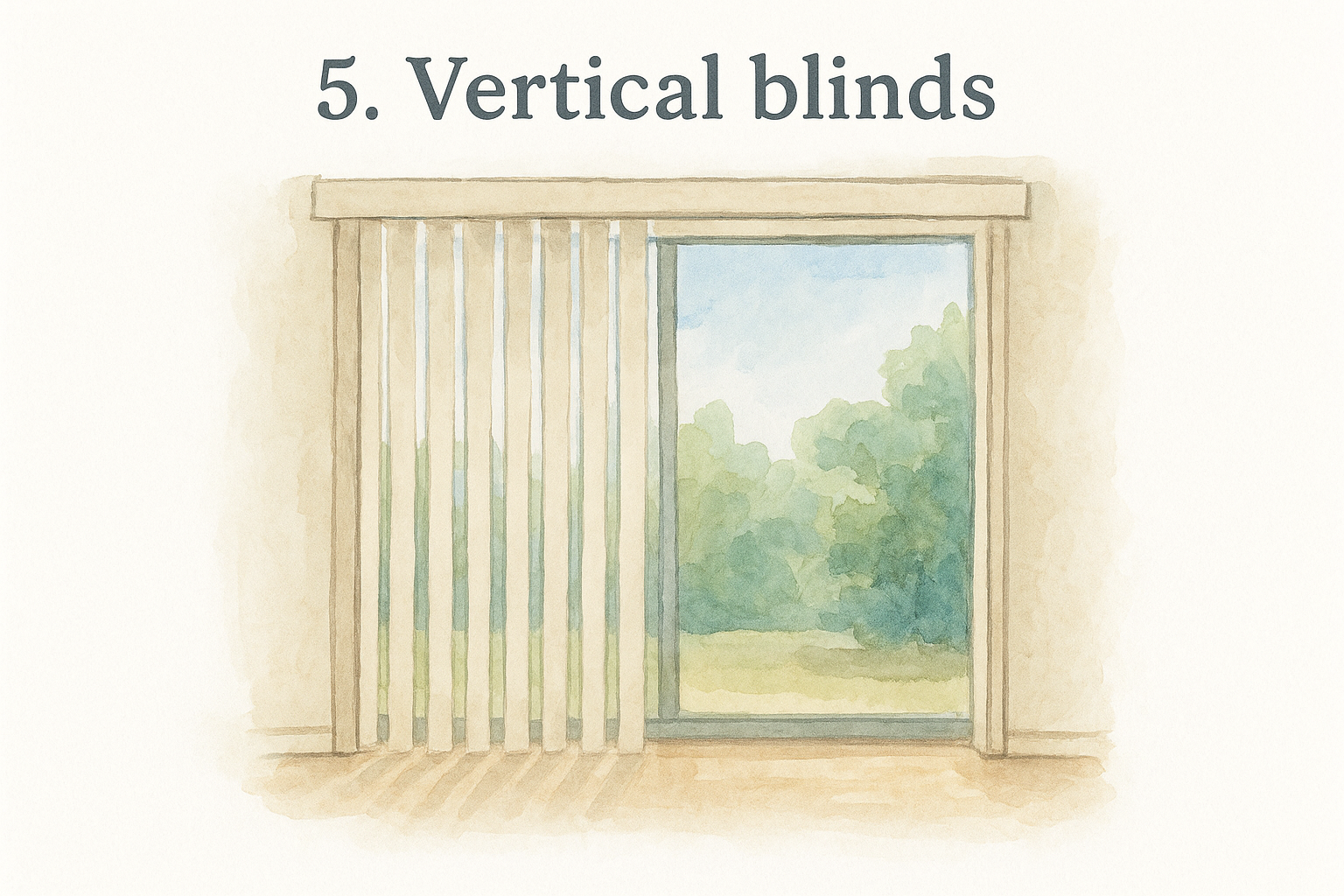
Vertical blinds occupy a specific niche among the different types of blinds for windows, built specifically for wide window spans and sliding glass doors that horizontal blinds simply don’t cover well.
How it works
Vertical blinds use long fabric, vinyl, or PVC slats that hang from a track mounted at the top of the window. You rotate the slats to angle the light, or draw them to one side to open the view completely. The sliding track mechanism handles wide spans with ease since there’s no lift cord carrying the weight of stacked slats.
Best for
These blinds work best on sliding glass doors, floor-to-ceiling windows, and wide patio openings where a horizontal blind would need to stack an awkward amount of material. They’re a natural fit for living rooms and family rooms that connect to an outdoor patio or pool area.
Vertical blinds let you open just one side of a wide window without disturbing the other half, which gives you more precise control over light and airflow than most horizontal options.
Pros
The wide slat format moves air more freely than tightly packed horizontal blinds, which helps in Florida’s warmer months. They’re also easy to operate on large spans because the sliding motion requires minimal effort compared to raising a heavy horizontal stack.
Cons
Individual slats break or detach from the track more often than horizontal slat systems, especially in high-traffic doorways. The hanging design also collects dust along the length of each slat, which makes cleaning more time-consuming.
Price and upkeep
Vertical blinds typically cost $30 to $100 per window. Wipe each slat with a damp microfiber cloth every few weeks to prevent dust from building up along the edges.
6. Sliding panel blinds
Sliding panel blinds offer a clean, modern solution for large windows and openings that standard horizontal blinds can’t cover effectively. Unlike vertical blinds with their narrow hanging slats, sliding panels use wide fabric sections that glide along a multi-channel track, giving you a sleek, minimal appearance that suits contemporary homes and open floor plans particularly well.
How it works
Each blind consists of wide fabric panels (typically 20 to 24 inches wide) that hang from an overhead track. You slide the panels left or right to open or close the window, and multiple panels stack behind one another to clear the entire opening. The track system handles large spans smoothly without the sag or resistance you’d get from a wide horizontal lift cord.
Sliding panels give you the same light-blocking coverage as vertical blinds, but with a cleaner visual profile and quieter operation.
Best for
Sliding panel blinds are one of the different types of blinds for windows best suited to oversized openings. They perform particularly well on floor-to-ceiling windows, wide patio entries, and sliding glass doors. You can also use them as soft room dividers in open floor plans where you want a flexible partition between spaces.
Pros
The wide panel format creates a clean, uncluttered appearance that complements modern interiors better than narrow-slat options. Fabric choices range from sheer to full blackout, so you can match both the aesthetic and the light control level to each room’s needs.
Cons
Sliding panels don’t offer precise light gradation the way angled slats do. Your control is essentially limited to open or closed, with little in between.
Price and upkeep
Expect to pay $60 to $200 per track system. Vacuum the fabric panels regularly with a soft brush attachment to prevent dust from working into the weave over time.
7. Roller blinds
Roller blinds rank among the simplest of all the different types of blinds for windows, and that simplicity is their main appeal. A single continuous piece of fabric rolls up and down over your window with no slats, no cords to tangle, and no complicated hardware to maintain.
How it works
The fabric wraps around a cylindrical tube mounted at the top of the window frame. You pull the blind down to cover the glass, then release it to roll back up using a spring mechanism or a pull chain. Most roller blinds mount inside the frame for a clean recessed look, though outside-mount options give you more flexibility on non-standard windows.
The tighter the fabric weave, the more light and heat the blind blocks, so the material you choose determines how much control you actually get.
Best for
Roller blinds suit bedrooms, home offices, and living rooms where you want a minimal profile and reliable light control. They’re also a practical choice for narrow windows or kitchen windows above a sink where a more complex system would get in the way.
Pros
The single-fabric design is easy to clean and unlikely to malfunction since there are no slat mechanisms or multiple cords to manage. Roller blinds also come in fabrics ranging from sheer to full blackout, giving you broad light control options in one simple format.
Cons
Roller blinds don’t offer graduated light control the way angled slats do. You’re choosing between fully down or rolled up, with limited options in between.
Price and upkeep
Roller blinds typically cost $20 to $100 per window. Spot-clean fabric panels with a damp cloth to remove dust or smudges as needed.
8. Solar shades
Solar shades stand out among the different types of blinds for windows because they solve a specific problem that standard blinds can’t: blocking heat and glare while keeping your view intact. Instead of cutting off your connection to the outdoors, they filter what comes through.
How it works
Solar shades use a tightly woven mesh fabric that reduces solar heat gain and UV exposure without completely blocking light. The openness factor of the fabric, typically rated from 1% to 14%, determines how much light and visibility passes through. A lower percentage means denser fabric, which blocks more glare and heat but reduces the clarity of your outward view.
The mesh material blocks up to 99% of UV rays on tighter weaves, which protects flooring, furniture, and artwork from fading over time.
Best for
These shades work best in rooms with direct sun exposure, such as south- or west-facing living rooms, sunrooms, and offices where afternoon glare makes screens difficult to see. They’re a strong choice for Florida homeowners dealing with intense heat since the fabric cuts solar heat gain without requiring you to close off the room entirely.
Pros
Solar shades reduce energy costs by lowering the amount of heat that enters through the glass, which takes some load off your air conditioning. They also maintain daytime privacy since the mesh is harder to see through from outside than from inside in bright conditions.
Cons
Solar shades provide minimal privacy at night when interior lights are on, since the mesh becomes transparent in reverse lighting conditions.
Price and upkeep
Solar shades typically cost $40 to $150 per window. Wipe the fabric with a damp cloth or vacuum with a soft brush attachment to remove dust buildup.
9. Zebra blinds
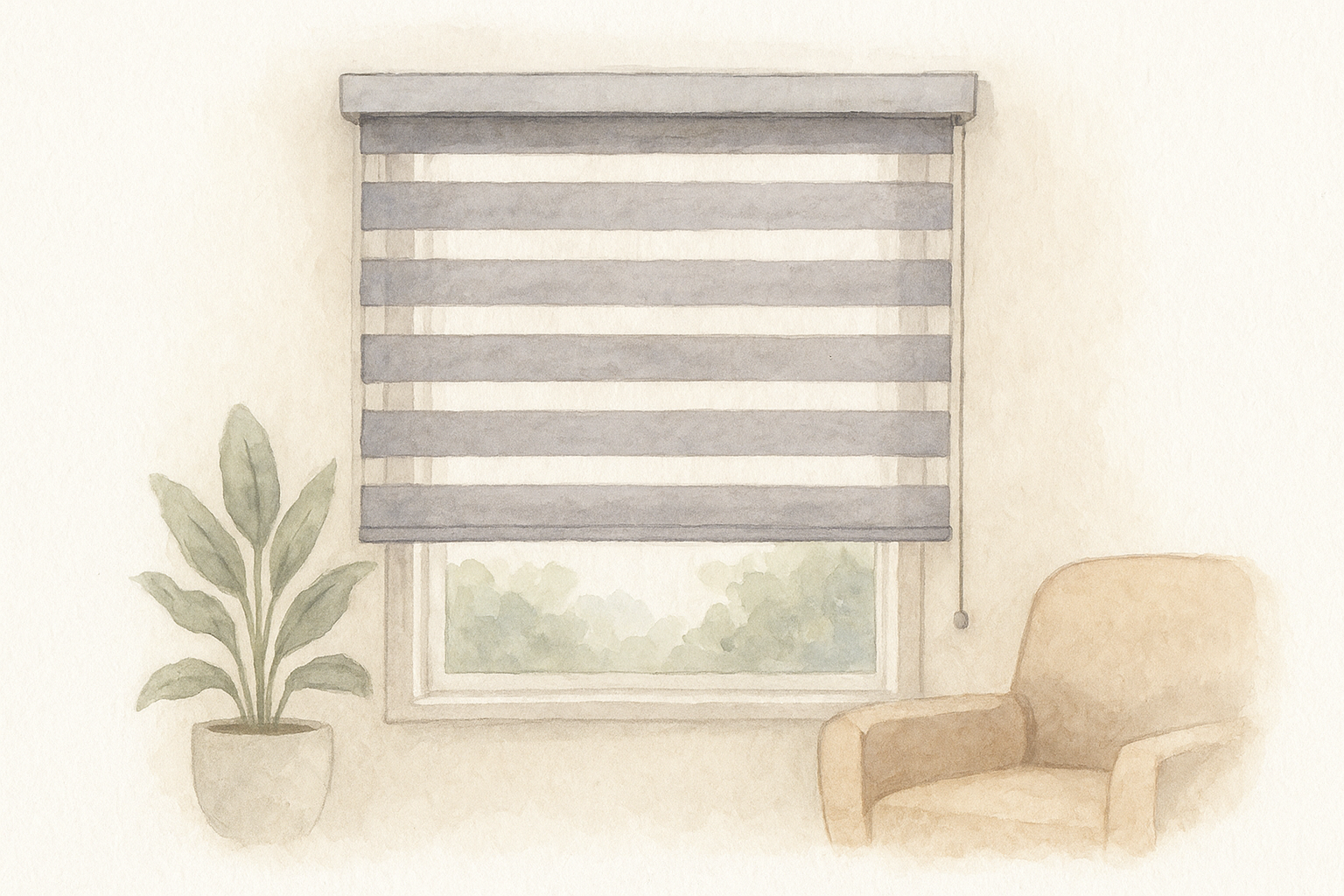
Zebra blinds, also called dual-layer shades, sit at the intersection of style and flexibility among the different types of blinds for windows. They give you a level of light adjustment that neither standard roller blinds nor slatted horizontal blinds can match independently.
How it works
A zebra blind uses two layers of alternating sheer and solid fabric bands that roll together on a single tube. When the solid bands align with each other, the blind blocks light effectively. When you shift the fabric so the sheer bands line up, natural light filters through while still providing a soft visual screen. The transition between settings is smooth and continuous with a simple pull of the chain.
Best for
These blinds suit living rooms and bedrooms where you want flexible light options throughout the day without switching between separate window coverings. They work especially well on standard-sized windows with moderate direct sun exposure where precise light gradation adds real value to the room.
Because the sheer bands filter rather than block light, zebra blinds let you maintain natural brightness without the harsh glare that comes through unfiltered glass.
Pros
The dual-layer system gives you more light control positions in a single blind than most other styles offer. The roller format also keeps the profile slim and clean, which suits contemporary interiors where a busy window treatment would look out of place.
Cons
Full blackout isn’t achievable with zebra blinds, since light still passes through fabric edges even when the solid bands align. The layered fabric also requires more careful handling during cleaning than a single-layer roller blind.
Price and upkeep
Expect to pay $40 to $130 per window for zebra blinds. Dust them regularly with a soft microfiber cloth and avoid saturating the fabric with liquid cleaners to preserve the layer alignment over time.
10. Roman shades
Roman shades bring a tailored, fabric-forward look to windows that most slatted blinds can’t replicate. Among the different types of blinds for windows, they stand out for combining soft textile aesthetics with genuine light control, making them a popular choice in rooms where you want warmth and refinement rather than a utilitarian finish.
How it works
Roman shades use a continuous piece of fabric that folds into horizontal pleats as you raise it. A cord or chain system pulls the fabric upward in even layers, creating a neat stacked appearance at the top of the window when fully open. When lowered, the fabric lies flat against the glass, giving you a clean, unbroken panel.
Best for
These shades perform best in bedrooms, dining rooms, and living rooms where fabric texture adds to the room’s overall design. They suit windows that don’t require frequent operation since the folding mechanism works best on a consistent raise-and-lower routine rather than constant adjustment throughout the day.
Roman shades pair especially well with neutral walls and wood furniture because the fabric introduces softness without competing with other design elements in the room.
Pros
Roman shades offer broad fabric variety, from sheer linen to full blackout options, so you can match both the light control level and the visual tone to each room. The flat profile when lowered also creates a polished, custom appearance that prefabricated horizontal blinds rarely achieve.
Cons
Fabric shades absorb dust and odors more readily than hard-slat alternatives. Professional cleaning is sometimes necessary to avoid damaging the pleating structure.
Price and upkeep
Roman shades typically cost $50 to $200 per window. Vacuum them regularly using a soft brush attachment to keep dust from settling into the fabric folds.
11. Woven wood shades
Woven wood shades bring natural texture to windows in a way that few of the different types of blinds for windows can replicate. Materials like bamboo, jute, and reeds create an organic, relaxed look that softens rooms without making them feel heavy.
How it works
Each shade consists of natural fibers woven together into a flat panel that rolls up from the bottom using a standard cord or chain system. When you lower the shade, the woven material diffuses incoming light rather than blocking it entirely, casting a warm, filtered glow into the room.
Best for
Woven wood shades work best in living rooms, sunrooms, and bedrooms where you want natural light softened rather than cut off. They pair particularly well with rattan furniture, linen textiles, and hardwood floors, where the natural material palette reinforces the overall design direction.
Because natural fibers allow some light to pass through the weave, these shades work better in rooms where you enjoy ambient light rather than complete darkness.
Pros
Woven wood shades add genuine texture and depth to a window that painted or synthetic alternatives simply don’t offer. They’re also lightweight and easy to raise, which makes them practical on frequently used windows without putting stress on the cord mechanism.
Cons
Natural fibers don’t handle moisture well, so avoid installing these shades in bathrooms or humid kitchens. The open weave also provides limited privacy at night when interior lights are on.
Price and upkeep
Woven wood shades typically cost $40 to $150 per window. Dust them regularly with a soft brush attachment on your vacuum to prevent fibers from matting over time.
12. Cellular shades
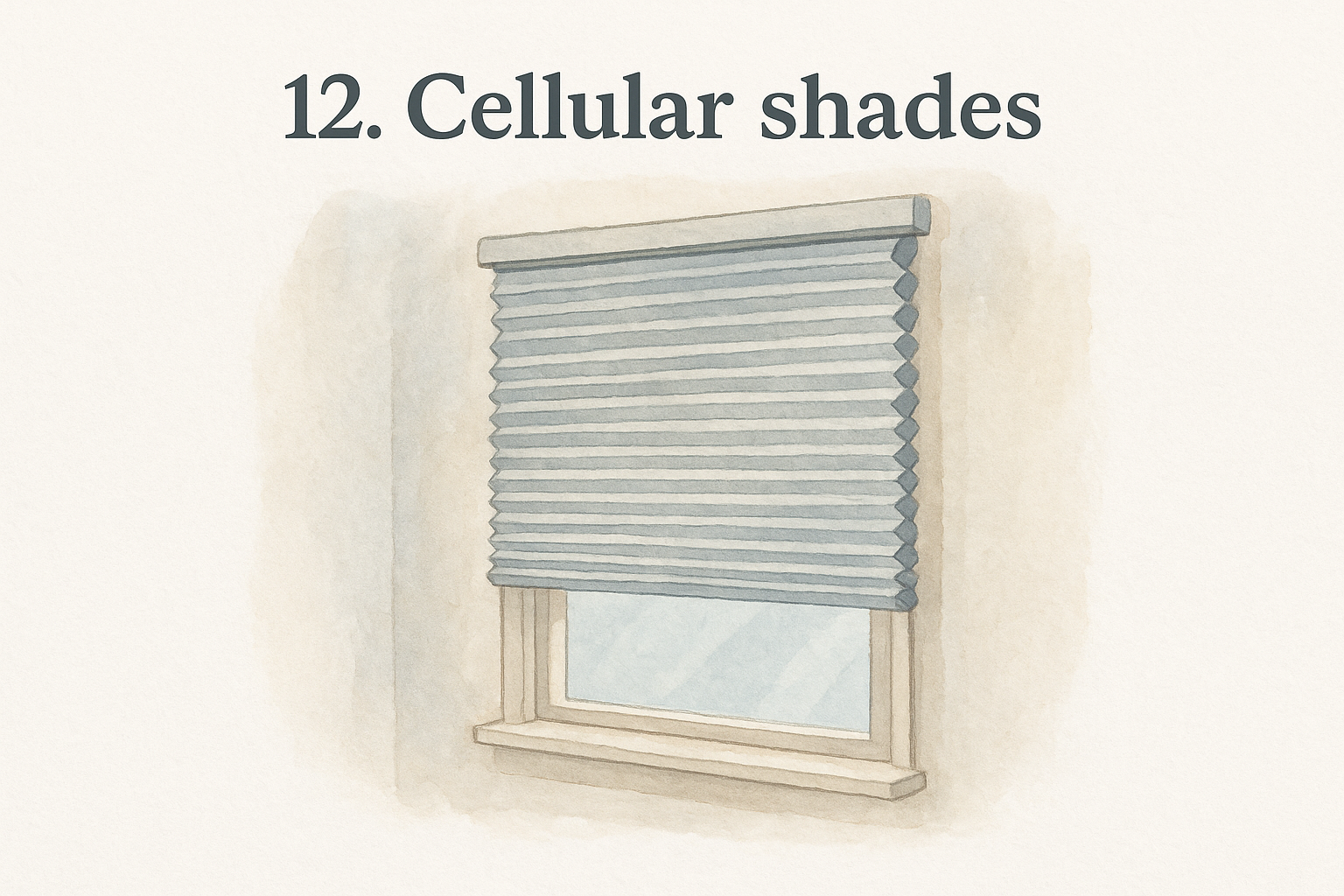
Cellular shades, sometimes called honeycomb shades, stand out among the different types of blinds for windows for one specific reason: thermal performance. Their construction traps air in a way that no other blind style replicates, making them one of the most energy-efficient window coverings available.
How it works
Each shade consists of fabric cells that form a honeycomb cross-section when viewed from the side. Air gets trapped inside these cells, creating a buffer layer between the glass and your room that slows heat transfer in both directions. Single-cell designs provide basic insulation, while double- and triple-cell versions stack additional air pockets for greater performance.
Cellular shades can noticeably reduce heat gain through windows during Florida’s hottest months, which helps lower the workload on your air conditioning system.
Best for
These shades perform best in bedrooms, living rooms, and any room facing direct sunlight where you want to reduce heat gain without sacrificing a clean appearance. They also suit new construction projects where energy efficiency is a priority from the start.
Pros
Cellular shades offer strong insulation without bulk, keeping the overall profile slim and neat against the window frame. They come in a wide range of opacity levels, from sheer to blackout, so you can match the light control to each room’s purpose.
Cons
The fabric cells trap dust inside the honeycomb structure, which makes thorough cleaning difficult without a vacuum or compressed air. They also cost more than basic roller or aluminum options at the same window size.
Price and upkeep
Cellular shades typically cost $40 to $180 per window. Use a vacuum with a soft brush attachment along the cell openings every few weeks to prevent dust from accumulating inside the fabric structure.
13. Top-down bottom-up blinds
Top-down bottom-up blinds represent one of the most functional innovations among the different types of blinds for windows. This style gives you control over the window opening from both ends simultaneously, a feature no standard up-or-down blind can match.
How it works
These blinds use two separate rails, one at the top and one at the bottom, each operated by its own cord. You lower the top rail to let light in from above while keeping the bottom portion closed for privacy, or raise the bottom rail independently to open the lower section while leaving the top covered.
This dual-rail system gives you more precise light and privacy combinations than any single-direction blind can offer.
Best for
Top-down bottom-up blinds work best in bathrooms and street-facing bedrooms where you need natural light without exposing the interior to passersby. They’re equally useful in living rooms with low windows where letting in sky light from above while blocking the direct sightline from outside makes a real difference in how comfortable the room feels.
Pros
The main advantage is privacy without darkness. You can keep the lower half closed at eye level while drawing light in from the upper portion of the window, a balance that a standard single-direction blind simply doesn’t allow you to achieve.
Cons
The two-cord mechanism adds complexity compared to a single-rail system, which means more components that can eventually wear or tangle with regular use.
Price and upkeep
Top-down bottom-up blinds typically cost $60 to $180 per window. Keep both cords untangled and dust the slats weekly with a microfiber cloth to maintain smooth operation across both rails.
14. Cordless and motorized blinds
Cordless and motorized blinds represent two distinct upgrades from traditional pull-cord systems, and both rank among the most practical of the different types of blinds for windows available today. Cordless designs eliminate the hanging cord entirely, while motorized versions add remote or app-based control that lets you operate multiple blinds without leaving your seat.
How it works
Cordless blinds use an internal spring tension mechanism that lets you raise or lower the blind by pushing or pulling the bottom rail directly. Motorized versions replace that manual action with a battery-powered or hardwired motor built into the headrail, which responds to a remote control, a wall switch, or a smart home app like Google Home.
Motorized blinds are especially useful for hard-to-reach windows above staircases or near furniture where pulling a cord manually would be awkward or unsafe.
Best for
These blinds work best in households with young children or pets, where dangling cords create a safety hazard. Motorized options add particular value in large homes or rooms with multiple windows where adjusting each blind individually throughout the day becomes time-consuming.
Pros
Cordless systems deliver a clean, uncluttered appearance since there are no hanging cords to tangle or loop. Motorized blinds let you program automated schedules so your blinds open and close at set times without any manual input required.
Cons
Both systems cost more than standard corded blinds at the same size. Motorized versions also require battery replacements or a power source, which adds a maintenance step that cord-operated blinds don’t need.
Price and upkeep
Cordless blinds typically cost $30 to $120 per window. Motorized options range from $100 to $400 per window depending on the drive system. Check battery levels on motorized units every few months and dust both styles regularly with a microfiber cloth.
Next steps for your windows
Working through the different types of blinds for windows in this guide gives you a solid foundation to make a decision that fits your space, your budget, and how you actually use each room. The right blind isn’t always the most expensive one. It’s the one that matches your light control needs, handles your room’s humidity and sun exposure, and holds up over time without constant maintenance.
Measuring accurately and choosing the correct mount type matter just as much as the product itself. A blind that fits well and gets installed correctly performs better and lasts longer than a similar product that gets forced into place.
If you want expert guidance and physical samples brought directly to your home, schedule a free in-home consultation with The Shutter Look. You’ll get precise measurements, honest recommendations, and professional installation completed within three weeks of your estimate.
