


Choosing between plantation shutters vs blinds is one of the most common decisions homeowners face when upgrading their windows. Both options control light, offer privacy, and look good doing it, but they differ significantly in cost, lifespan, and long-term value.
At The Shutter Look, we’ve spent over 23 years installing both shutters and blinds across Central Florida homes. We’ve seen firsthand how each product performs over time, what holds up, what doesn’t, and where homeowners tend to feel buyer’s remorse. That hands-on experience shapes every recommendation we make during our free in-home consultations.
This guide breaks down the real differences between plantation shutters and blinds, covering everything from upfront pricing and durability to energy efficiency and resale impact. By the end, you’ll have a clear picture of which option fits your home, your budget, and your expectations, so you can spend your money where it actually counts.
Why this choice matters for comfort and value
Window treatments do more than block sunlight. The product you put on your windows affects how your home feels day to day, from the temperature of a room in the afternoon to how well you sleep at night. Making the right call between plantation shutters vs blinds is a decision that touches your comfort, your energy bills, and your home’s resale value all at once.
How window treatments shape daily comfort
Most homeowners think about window treatments in terms of looks. But how a product controls light and heat is what you actually live with. In Florida, where the sun pushes temperatures up for most of the year, the wrong window covering makes a room feel stuffy and forces your air conditioning to work harder. The right one keeps heat out and glare manageable without making a room feel like a cave.
The window treatment you choose today determines how comfortable you feel in that room every single day you live there.
Your daily habits also shape the right answer. If you work from home and need precise control over light levels without adjusting things every hour, that points you toward one product over another. If you have young kids who wake at sunrise, the ability to fully block morning light matters far more than a low price tag. The product you pick needs to fit how you actually use the room, not just how it looks in a catalog.
Why the financial impact goes beyond the price tag
The upfront cost of window treatments is just one part of the math. Product durability and installation quality shape what you spend over the full life of the covering. A blind set that costs less today but warps, fades, or breaks within a few years ends up costing more in replacements than a longer-lasting option would have from the start.
There’s also the energy angle. Window treatments that insulate well reduce heat transfer through your glass, which in Florida means your air conditioner runs less often. The U.S. Department of Energy notes that heat gain and loss through windows accounts for 25 to 30 percent of residential heating and cooling energy use. Choosing a product that handles that load better has a direct effect on your monthly utility bills over years of ownership.
What resale value has to do with your window choice
Real estate agents note that buyers respond to quality window treatments, especially shutters, because they read as permanent fixtures rather than temporary add-ons. When you install plantation shutters, they typically stay with the home and contribute to its perceived value. Blinds, by contrast, are often the first thing new buyers plan to replace.
Your window treatment choice also signals how well a home has been maintained. Warped, broken, or faded blinds tell a story you do not want buyers to read. Quality shutters in solid condition tell the opposite story. If you plan to sell your home in the next five to ten years, what you put on your windows now is part of your overall investment strategy.
What plantation shutters and blinds are
Before comparing plantation shutters vs blinds side by side, it helps to understand what each product actually is. Both cover your windows, but they work differently, use different materials, and behave differently in your home over time.
Plantation shutters: structure and materials
Plantation shutters are solid window frames built with horizontal louvers, or slats, that tilt open and closed. They mount directly to your window frame, becoming part of the window itself rather than hanging in front of it. The louvers typically range from 2.5 to 4.5 inches wide, giving you adjustable control over light and airflow. Most shutters come in two core materials: wood and synthetic composites like Polycore. Wood looks traditional but can warp in humid climates. Polycore shutters handle Florida’s humidity without warping, cracking, or fading, which makes them a strong choice for most Central Florida homes.
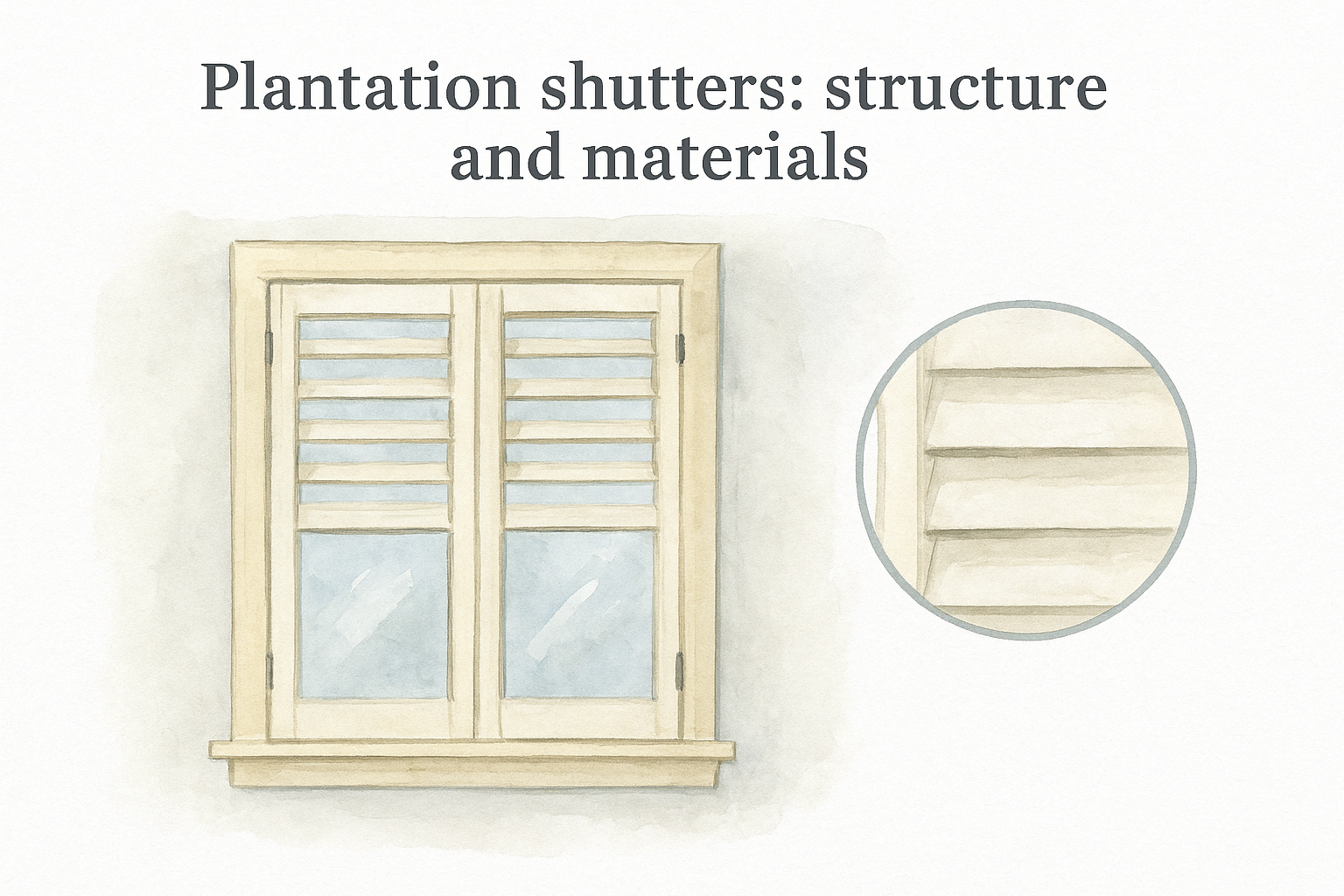
Shutters are one of the few window treatments that become a fixed part of your home’s architecture rather than sitting in front of it.
The panels split into sections with a center rail or as full-height units, and they open on hinges like interior doors. This structural design gives shutters a clean, built-in appearance that other window products simply cannot replicate.
Blinds: types and how they work
Blinds are a separate category of window covering that hangs from a headrail mounted above your window frame. Thin slats, usually 1 to 2 inches wide, run horizontally and connect with strings or a ladder system. You control them by pulling a cord or twisting a wand. The most common materials include aluminum, faux wood, and real wood, each carrying different price points and durability levels.
Faux wood blinds resist moisture better than real wood and cost less, making them a practical pick for kitchens and bathrooms. Aluminum blinds are the most affordable option, but they dent easily and look less refined over time. Real wood blinds sit at a higher price but add warmth to a room. Your choice within the blind category already involves trade-offs before you even start comparing them to shutters.
Cost breakdown: upfront, install, and lifetime cost
When comparing plantation shutters vs blinds, cost is usually the first thing you look at, but the upfront number tells only part of the story. Understanding what each option costs at purchase, during installation, and over years of use gives you a more accurate picture of where your money actually goes.
Upfront cost: what you pay at the start
Blinds are the cheaper option at the register. Standard faux wood blinds run between $20 and $80 per window depending on size and material, while aluminum blinds can cost even less. Real wood blinds push higher, landing between $50 and $150 per window. Plantation shutters carry a significantly higher price, typically ranging from $200 to $350 per window for quality composite materials like Polycore. That gap feels large upfront, but it becomes less significant when you factor in what happens next.
Installation and lifetime expenses
Professional installation adds cost to both products, but shutters require more precise fitting because they mount directly to the window frame. That labor cost is built into the overall value, since a properly installed shutter stays in place, operates smoothly, and needs no further adjustments for years. Blinds install faster and sometimes cost less to hang, but the cord mechanisms, slat connectors, and headrails all wear out and need replacing over time.
A blind set you replace every five to seven years will cost more over a decade than shutters you install once and keep.
| Cost Factor | Blinds | Plantation Shutters |
|---|---|---|
| Per window (product) | $20 to $150 | $200 to $350 |
| Installation | Lower | Moderate to higher |
| Average lifespan | 5 to 8 years | 20 or more years |
| Replacement frequency | Every few years | Rarely |
Shutters hold their value when you sell your home, while buyers typically discount or ignore existing blinds during a sale. That resale consideration shifts the lifetime math further in shutters’ favor for most homeowners who plan to stay put or eventually sell.
Pros and cons: light, privacy, energy, upkeep
When you compare plantation shutters vs blinds on performance, the differences show up fast. Both products do the core job, but how well they do it, and how long they keep doing it, separates the two in ways that matter in your home every single day.
Light control and privacy
Shutters give you the most precise light control of any window treatment. You tilt the louvers to any angle, direct light exactly where you want it, and fully close them when you need total privacy. Blinds offer similar tilt control, but the slats are narrower and the gaps between them let in more light even when closed, which limits how dark you can make a room.
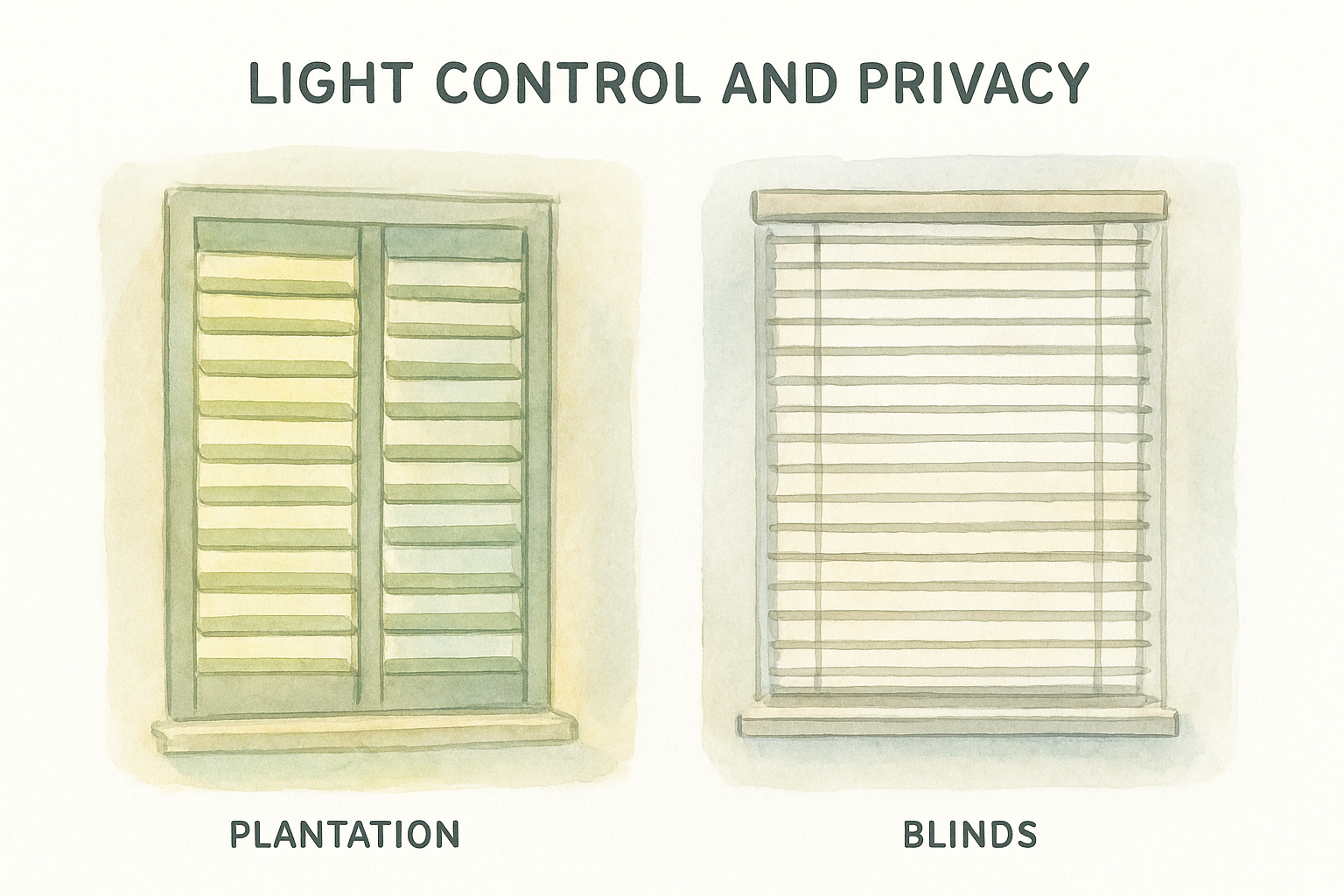
If blackout performance matters to you, shutters consistently outperform standard blinds without requiring any additional layering.
For privacy, shutters win again. Because they mount directly to the frame with no gap between the panel and the wall, neighbors and passersby cannot see around the edges. Blinds hang inside the frame or in front of it, leaving small gaps on the sides where light and sight lines pass through.
Energy efficiency
Shutters create a physical barrier against heat transfer. Their solid construction and tight frame fit reduce the amount of heat that moves through your windows, which matters considerably in Florida where summer sun hammers the glass for months. Blinds provide some insulation benefit, but their thinner slats and open cord design leave more room for heat to pass through.
Upkeep and maintenance
Blinds need more regular attention. Dust collects in the slat cords and on each individual slat, and the cord mechanism wears out over time. Slats bend if handled roughly, and replacing broken ones is often more trouble than it sounds. Shutters wipe clean with a damp cloth, and because there are no cords or complex mechanisms, the maintenance workload stays minimal year after year.
How to choose the best option for each room
The right window treatment depends heavily on where you’re installing it and what that room demands. Weighing plantation shutters vs blinds works best when you let the room’s function, moisture level, and your daily routine drive the decision rather than looks alone.
High-moisture rooms: kitchens and bathrooms
Moisture is the deciding factor in kitchens and bathrooms. Real wood blinds and wood shutters both warp when exposed to daily steam and humidity, so neither belongs near a sink or shower long-term. Your two practical choices in these rooms are faux wood blinds or Polycore composite shutters.
Faux wood blinds cost less upfront and resist moisture reasonably well for a few years. Polycore shutters cost more but last significantly longer, wipe clean in seconds, and look far better on the wall. If your bathroom gets heavy steam daily, Polycore shutters give you the cleaner, longer-lasting result.
Living areas and bedrooms
Living rooms and bedrooms are where the gap in quality shows most clearly. These are the rooms you spend the most time in, so comfort, light control, and durability carry more weight here than in any other part of your home. Shutters give you full control over light angles, block the outside view completely when closed, and hold up through years of daily use without visible wear.
For bedrooms specifically, shutters deliver better light blocking than most blind options without requiring blackout curtains layered behind them.
Blinds work in living spaces and bedrooms, but they require more frequent adjustment and tend to look worn within a few years of regular handling.
Home offices and flex spaces
Home offices need precise, repeatable light control throughout the day. Direct glare on a monitor causes eye strain and cuts your productivity, so adjusting your window covering quickly and accurately matters every single workday. Shutters let you tilt the louvers to redirect light without shutting the room off entirely.
Blinds can work in these spaces too, but narrower slats give you less control over exactly where the light lands on your desk or screen.
Key takeaways and next steps
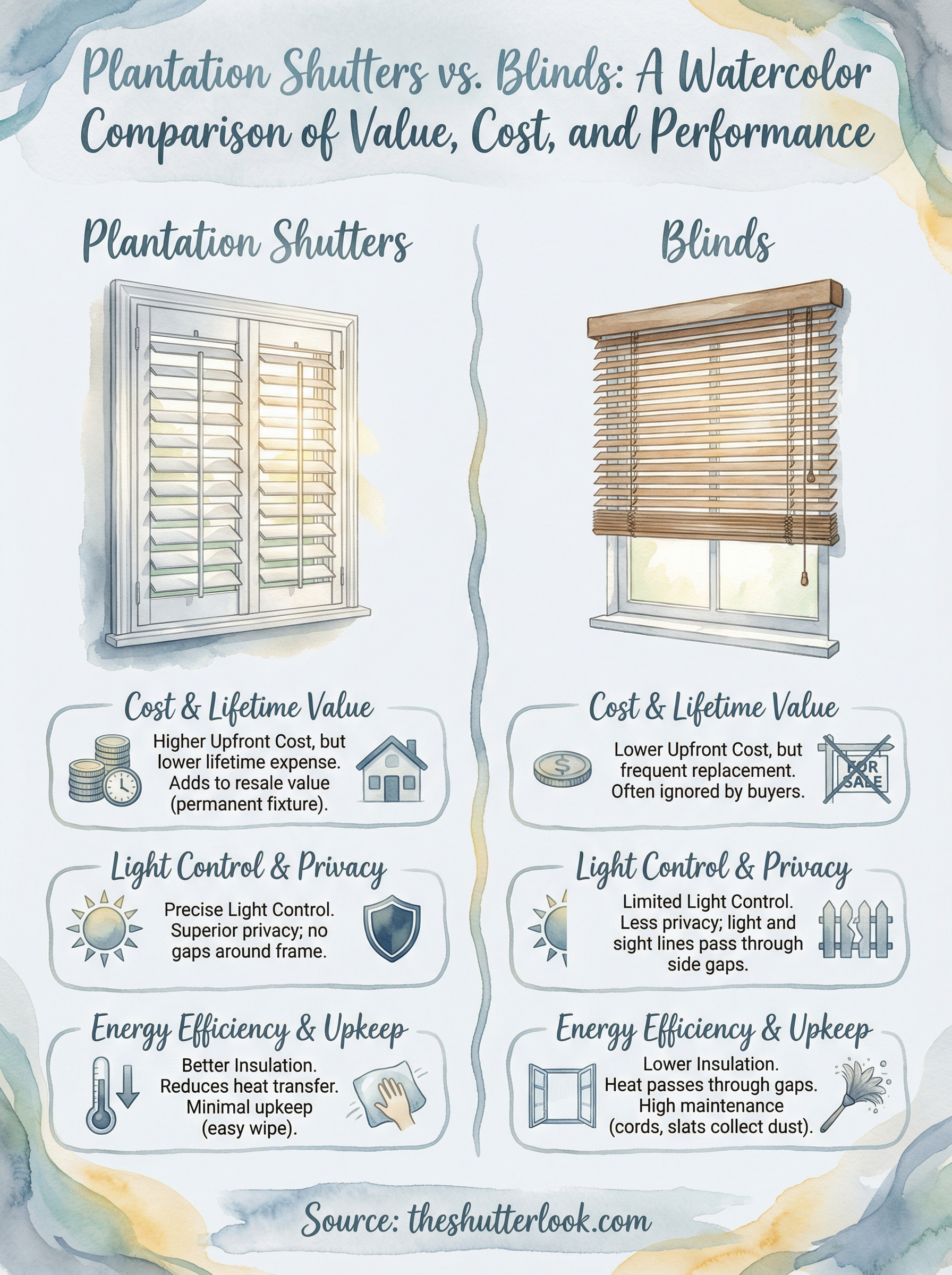
Comparing plantation shutters vs blinds comes down to what you value most: upfront savings or long-term performance. Blinds cost less to start, but they wear out faster, need more upkeep, and rarely add anything to your home’s resale value. Shutters cost more upfront but deliver better light control, stronger insulation, and a longer lifespan that makes them the smarter financial move for most homeowners.
Your room, your budget, and how long you plan to stay in your house all shape the right answer. Faux wood blinds work fine in low-priority spaces where you want a quick, affordable fix. But for living areas, bedrooms, and any room you care about, plantation shutters give you a product that performs better and lasts longer without demanding much maintenance in return.
Ready to see your options in person? Schedule a free in-home consultation with The Shutter Look and get expert advice tailored to your home and budget.
