


Bay windows add character and depth to a room, but finding the right window treatment for their angled design isn’t always straightforward. Plantation shutters for bay windows are one of the most popular solutions, and for good reason. They follow the contour of the window, give you full control over light and privacy, and hold up well over time. But choosing the right style, material, and configuration takes some careful planning specific to your bay window’s shape.
At The Shutter Look, we’ve spent over 23 years measuring, fitting, and installing shutters across Central Florida, including plenty of bay windows with tricky angles and non-standard dimensions. We’ve seen what works, what doesn’t, and where homeowners tend to get stuck. That hands-on experience is exactly what shaped this guide.
Here, we’ll walk you through the most common shutter styles for bay windows, what they typically cost, and the practical tips that make the difference between a good installation and a great one. Whether you’re upgrading an older bay window or outfitting a new build, you’ll have a clear picture of your options and what to expect, from first measurement to final install.
Why plantation shutters work so well on bay windows
Bay windows sit at an angle to the main wall, which rules out most standard window treatments right away. Flat blinds look awkward, curtains bunch up at the corners, and shades can’t span the angles cleanly. Plantation shutters for bay windows solve this because each shutter panel is built to fit its individual section of the bay, matching the exact angle and dimension of that specific pane. The result is a clean, unified look that ties the whole bay together rather than fighting against its shape.
The fit follows the frame
Most bay windows include three or more distinct sections, each sitting at a different angle to the next. A shutter frame is custom-built to sit flush inside each section, so there are no gaps at the corners and no overlapping material pulling at odd angles. Custom-fit frames also protect the shutter louvers from warping over time because the panel doesn’t have to flex or strain to close properly. This precision fit is one of the main reasons shutters outlast other window treatments on bay windows by a wide margin.
A shutter that fits precisely from day one will stay looking sharp for years, while a treatment that’s forced to fit will show wear much faster.
Light control works section by section
One feature that sets shutters apart is that you can adjust each panel independently. On a bay window, that matters more than it does on a standard flat window. The sun hits each section at a different angle throughout the day, so being able to tilt the louvers on one panel without touching the others gives you precise control over glare, heat, and privacy in a way that curtains or roller shades simply cannot match.
How bay window shutters get measured and built
Measuring a bay window isn’t like measuring a standard flat window. Each section sits at its own angle, and small errors in measurement will show up as gaps, uneven frames, or panels that won’t close flush. For plantation shutters for bay windows, accurate measurements are the foundation of everything that comes after.
Each section gets its own set of measurements
A professional measures the width and height of each individual pane separately, then records the exact angle where two sections meet. Those angles typically run between 100 and 135 degrees, and the frame joints are cut to match so the finished installation sits flat against each section of the bay without any visible gaps at the corners.
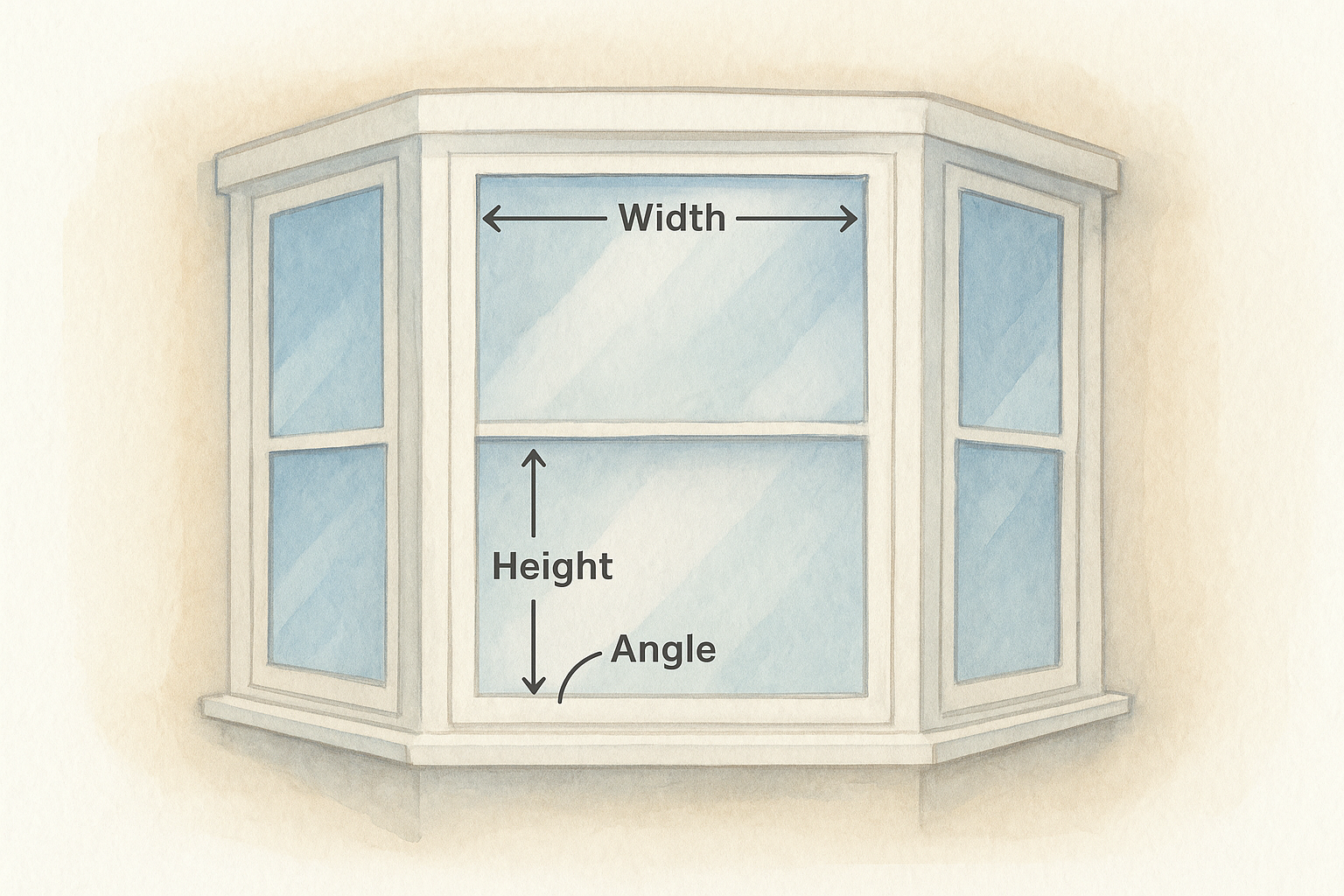
Getting the angles wrong at this stage is the most common reason shutters end up looking misaligned once installed.
Custom building starts with your measurements
Once your measurements are confirmed, the shutter panels are custom-cut to those exact dimensions. Each frame is sized and shaped to fit one specific section of your bay window. This process rules out off-the-shelf shutters entirely, since standard sizes won’t account for the angle variations between sections. The result is a set of panels that drop into place cleanly on installation day.
Styles and layouts that fit bay windows
When picking a layout for plantation shutters for bay windows, your choices on panel style and louver size shape how the room looks and functions every day. Both decisions are worth thinking through before you commit.
Full-height vs. café-style panels
Full-height panels span the entire window from top to sill and give you complete control over light and privacy at any point in the day. They’re the most practical choice for living rooms and bedrooms where you need the flexibility to go from fully open to fully closed.
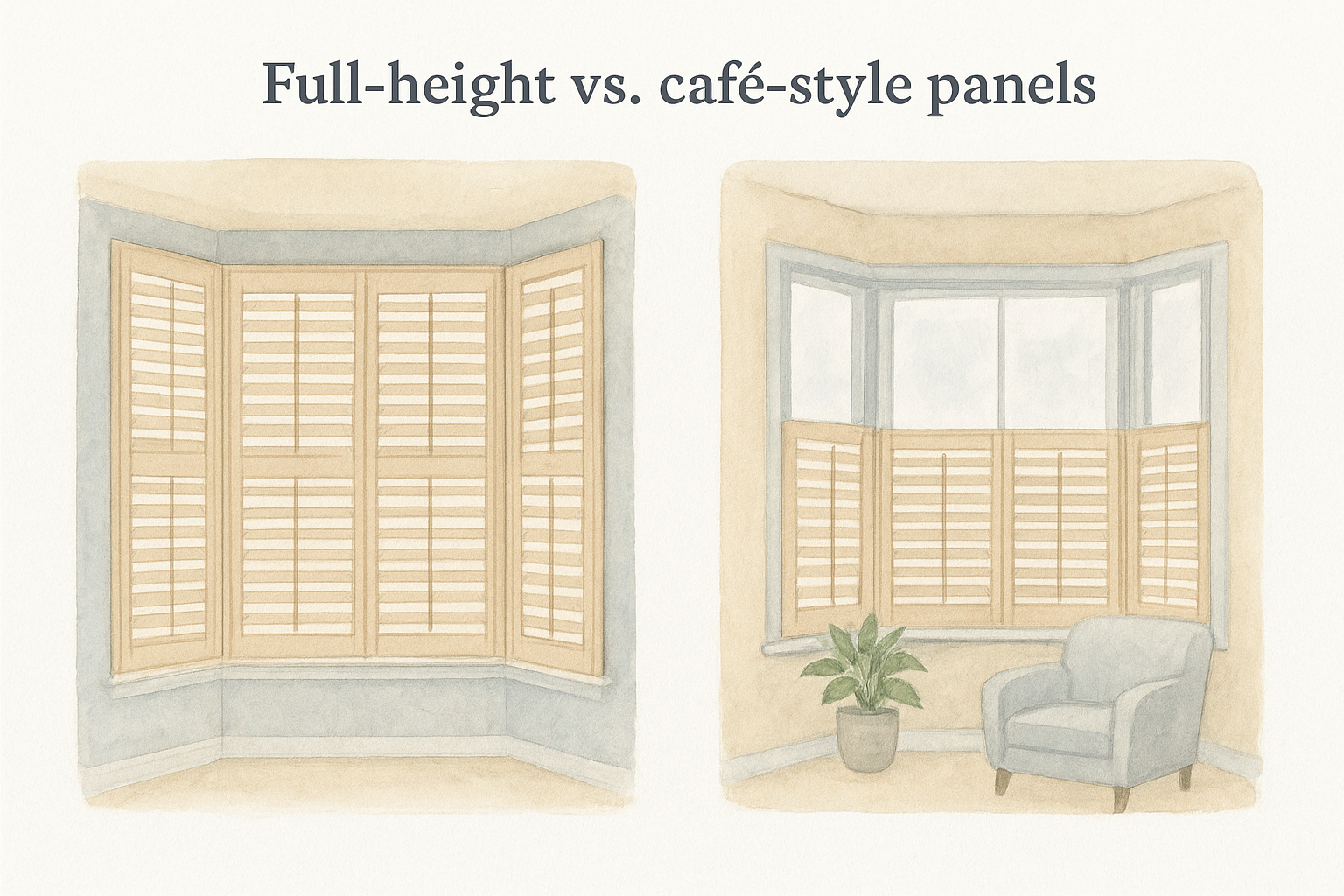
Café-style panels cover only the lower half of the bay, keeping privacy at eye level while letting natural light flow in through the top. This layout fits kitchens and casual sitting areas particularly well.
Café-style is worth considering if your bay window faces a street or a neighbor’s yard where eye-level privacy matters more than full coverage.
Louver size options
Wider louvers at 3.5 inches suit most bay windows because they let in more light when open and don’t look visually crowded on larger panes. They’re the most popular choice for standard bay windows across Central Florida homes.
Narrower 2.5-inch louvers work better when your individual bay sections are smaller, where a wider louver would look out of proportion with the frame size.
Costs and what drives the price up or down
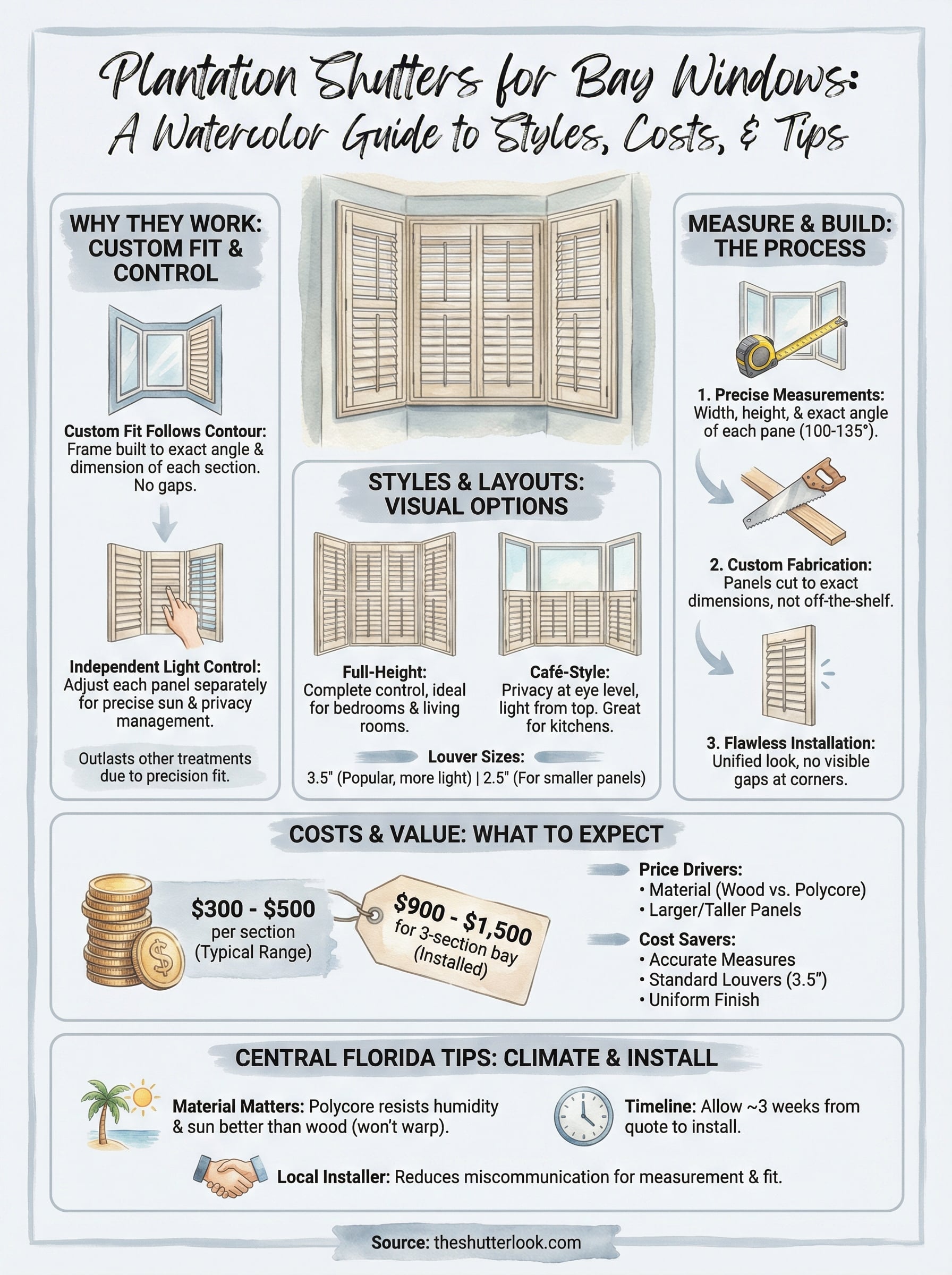
Plantation shutters for bay windows cost more than shutters for standard flat windows because every panel is custom-built. Pricing typically runs between $300 and $500 per section depending on material, louver size, and your bay’s angle complexity. A three-section bay window will generally land between $900 and $1,500 installed, though larger bays push that number higher.
What raises the cost
Material choice is the single biggest price driver. Polycore shutters cost less than real wood and hold up better in Florida’s humidity, while painted wood options carry a premium. Wider louvers and taller panels add to the cost because they require more material and more precise cuts to fit your bay’s angles cleanly.
Polycore is worth the investment for most Florida homes because it won’t warp or crack in the heat the way wood eventually can.
What keeps costs in check
Accurate measurements on the first visit avoid costly remakes that delay your project and add fees. Two choices that keep your quote lower without hurting the final look:
- Stick to a standard 3.5-inch louver rather than requesting a custom size
- Choose a uniform finish across all panels to simplify production
Buying and installation tips for Central Florida homes
Florida’s humidity and intense sun create conditions that affect how plantation shutters for bay windows perform long-term. Before you buy, confirm that your shutter material is rated for high-humidity environments, since wood shutters can swell or warp in the Florida heat.
Pick a material that handles Florida’s climate
Polycore shutters are the most practical choice for Central Florida homes because they won’t absorb moisture or fade from direct sun exposure the way painted wood eventually does. They clean up easily with a damp cloth, which matters when your bay window faces west and catches afternoon heat daily.
Real wood carries a premium price and requires more upkeep in a humid climate. If you prefer the look of wood grain, ask about Sunland Lexwood shutters, which give you that appearance without the maintenance drawbacks of solid wood panels.
Schedule your install with lead time in mind
Once you confirm your measurements and choose your material, allow roughly three weeks from your quote to installation. That timeline covers custom production and delivery, so plan ahead if you have a move-in date or renovation deadline you’re working toward.
Booking your in-home estimate early gives you more flexibility on scheduling, especially during peak renovation seasons.
Working with a local installer who handles both measurement and installation reduces the risk of miscommunication between a retailer and a separate crew.
Next steps
Plantation shutters for bay windows are a practical, long-lasting upgrade, but the details matter. Your bay window’s angles, dimensions, and orientation all shape which material, style, and layout will work best for your specific home. Getting those details right from the start saves you from remakes, delays, and treatments that look off once they’re installed.
Your clearest next move is to get a professional measurement before you make any final decisions. A precise in-home estimate gives you accurate panel counts, confirmed angles, and a realistic price range based on your actual window, not a general quote. At The Shutter Look, we bring physical product samples to your home so you can compare materials and louver sizes against your space before committing. With over 23 years of experience fitting bay windows across Central Florida, we make sure every panel fits cleanly from day one.
Schedule your free in-home estimate and see your options in person.
