


Sliding glass doors let in plenty of natural light, but they also create real challenges with privacy, glare, and temperature control. Plantation shutters for sliding glass doors solve all three problems at once, and they do it without the flimsy look of vertical blinds or the hassle of curtains that bunch up in the track. But not every shutter system works the same way, and picking the wrong configuration can mean restricted access to your door or panels that don’t operate smoothly.
Several shutter styles exist for sliding doors, including bypass, bi-fold, and split-tilt systems. Each one handles differently, fits different door widths, and comes at a different price point. The right choice depends on how you use the door, how much clearance you have, and what matters most to you, whether that’s full access to the opening, light control, or keeping costs down.
At The Shutter Look, we’ve spent over 23 years installing custom shutters across Central Florida, including hundreds of sliding glass door projects. This article breaks down every major option, covers realistic costs, and explains what actually works in practice, so you can make a confident decision before scheduling your free in-home estimate.
Why plantation shutters work for sliding doors
Sliding glass doors present a specific set of problems that most window treatments are not built to handle. Standard curtains pool in the track or block the door entirely when open. Vertical blinds, the most common default option, bend out of shape, tangle, and look dated within a few years. Plantation shutters for sliding glass doors address these problems directly because they’re built as structured, rigid panels that move predictably and stay in position.
They handle large openings without sagging
Most sliding glass doors span six feet or wider, which rules out many window covering options that weren’t designed for that kind of span. Plantation shutters use a frame-within-frame installation that anchors the panels securely at the top and bottom. This means the louvers stay level and the panels don’t bow, warp, or drift even when the door gets heavy use over time.
A well-built shutter frame distributes weight evenly across the opening, which is why shutters hold their shape where fabric or vinyl treatments eventually fail.
Because the panels attach to a dedicated frame rather than hanging from a rod or track, they stay stable regardless of how wide the opening is. You get a clean, consistent appearance across the full width of the door without any gaps or sagging sections.
Light control that stays where you put it
Unlike blinds that tilt unevenly or curtains that shift with air movement, plantation shutters let you adjust the louvers precisely and hold that position. You can tilt them to angle light toward the ceiling, close them fully for complete privacy, or open them wide to bring in full light. The control is exact, and the position stays put until you change it.
Florida’s intense afternoon sun makes this kind of control more than a design preference. Being able to redirect glare without closing off the room entirely reduces heat buildup and lowers the load on your air conditioning, which matters a great deal when your sliding door faces west or south.
They hold up in Florida’s conditions
High humidity, temperature swings, and intense UV exposure wear down fabric treatments and warp cheaper wood quickly. Polycore shutters, which use a composite core wrapped in a durable outer shell, resist moisture and maintain their finish for years. Your shutters won’t yellow, crack, or soften the way vinyl blinds do after a few Florida summers.
Fabric and faux-wood options also fade significantly under direct sun, which means replacement costs add up over time. A quality shutter system installed once and maintained properly outperforms most alternatives on a ten-year timeline, both in appearance and in function.
Sliding door shutter system options
Three main configurations exist for plantation shutters for sliding glass doors, and each one handles your door differently depending on how wide the opening is and how much wall clearance you have on either side. Knowing how each system operates before you commit saves you from a frustrating fit problem after installation.
Bypass shutters
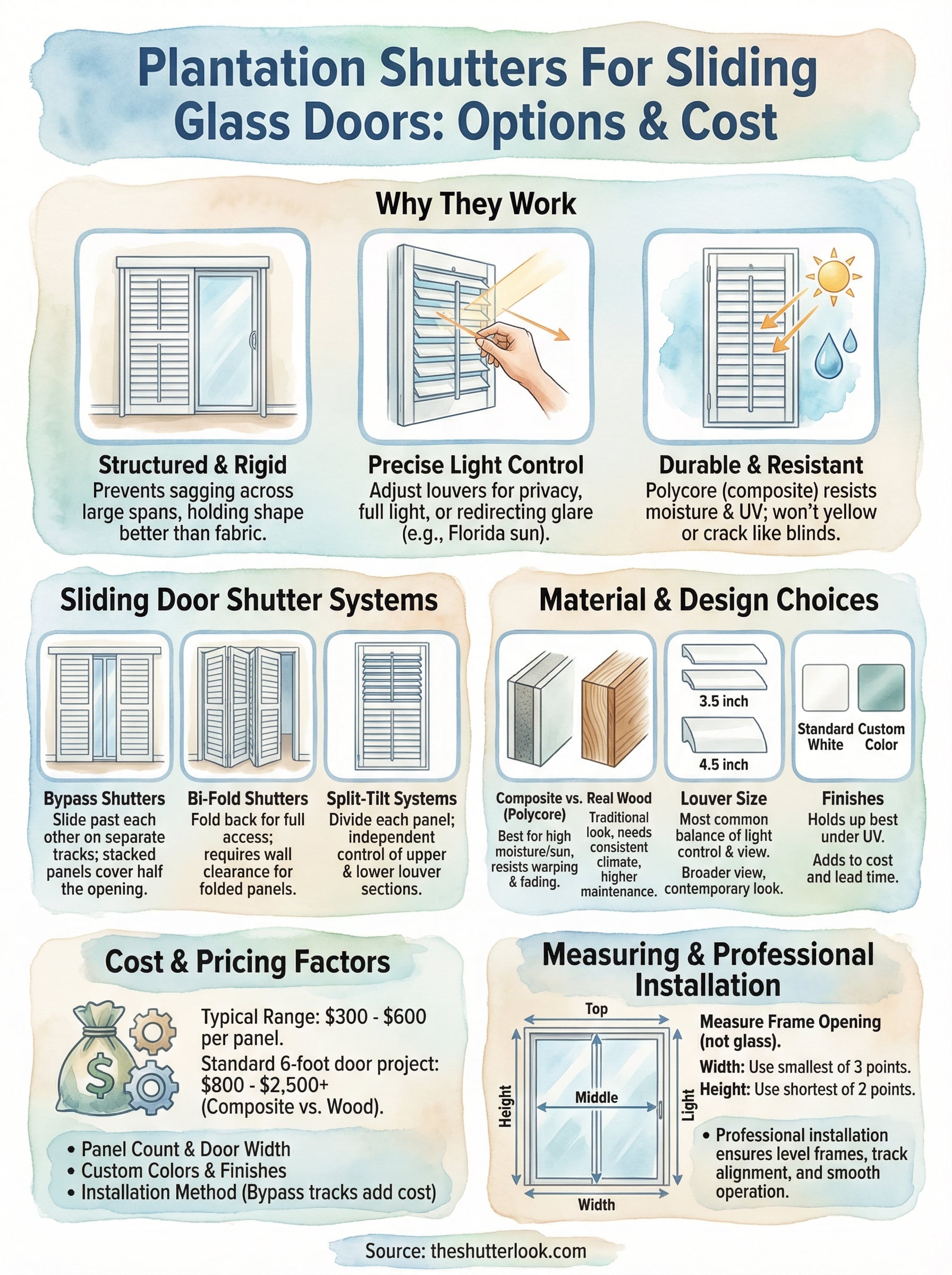
Bypass shutters use two or more panels that slide past each other on separate tracks, mirroring how the door itself operates. This configuration works well for wide openings because you can stack the panels to one side without them swinging into the room. You can also adjust the louvers on each panel independently for light and privacy control without opening the door at all.
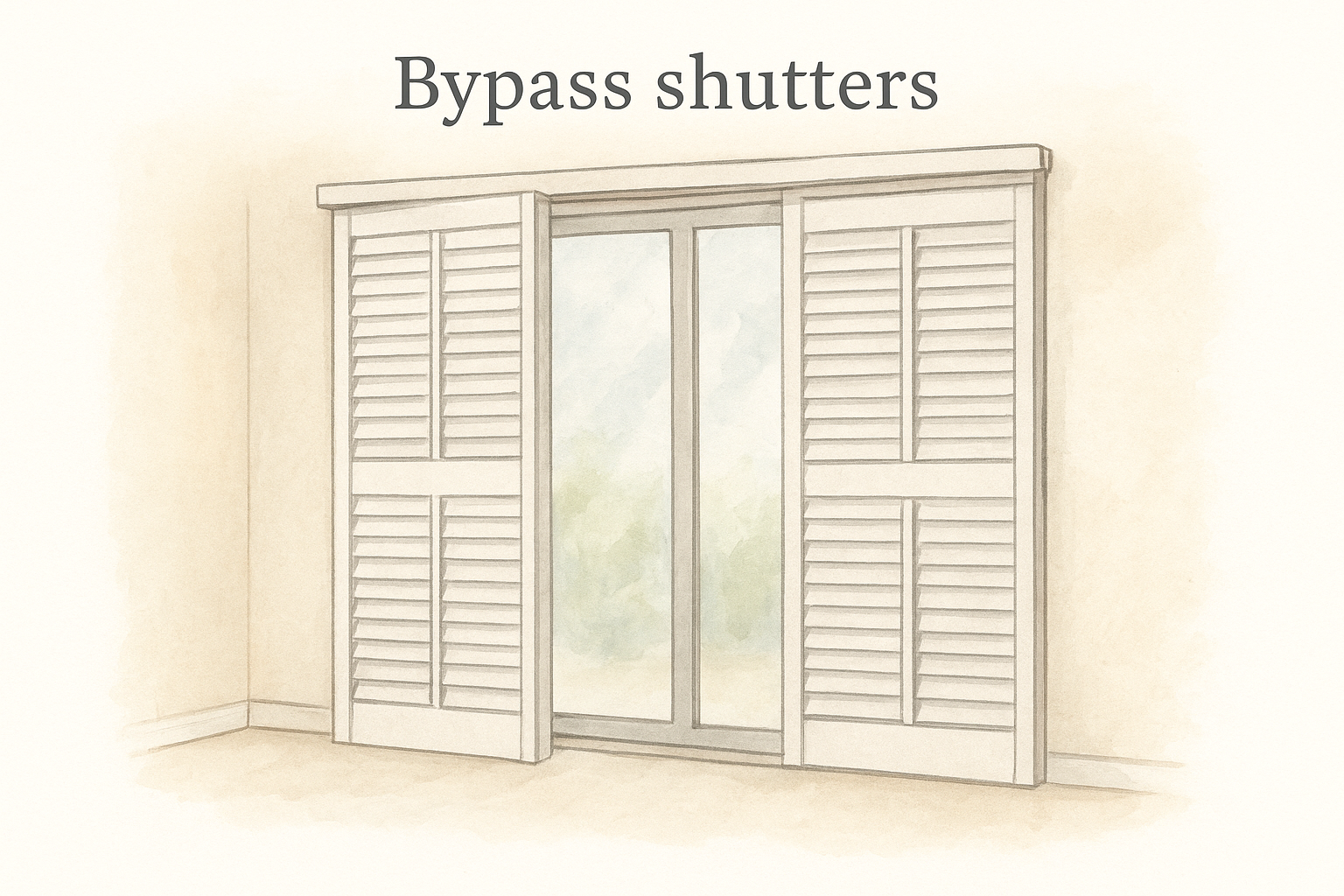
The main trade-off is that you only access half the opening at a time, since one panel always sits in front of the other when the door is open. For most homeowners with a standard six-foot sliding door, this is not a problem, but if you regularly move large items through the opening, it is worth factoring in before you decide.
Bypass systems require no swing clearance on either side, which makes them the easiest fit for most sliding glass door openings.
Bi-fold and split-tilt shutters
Bi-fold shutters fold back like an accordion, giving you full access to the entire door opening when the panels are stacked. This option suits wider doors where an unobstructed path matters, but it does require usable wall space on at least one side to accommodate the folded panels, so measure your clearance carefully first.
Split-tilt systems divide each panel into an upper and lower section so you can adjust the louvers separately on each half. Angling the top section for light while keeping the bottom closed for privacy gives you more precise daily control than a standard single-section panel provides.
Materials, louvers, and design choices
The material you choose for your shutters affects how long they last, how they look, and how much upkeep they need over time. For sliding glass doors that face direct sun or sit near a pool area, material durability matters more than it does for standard interior windows. Two core options dominate the residential market: composite and real wood, and they suit different situations.
Composite vs. wood shutters
Composite shutters, sometimes called Polycore, use a dense composite core wrapped in a rigid outer shell that resists moisture, holds its finish under UV exposure, and won’t warp in high humidity. If your sliding glass door faces south or west in a Florida home, composite is the practical long-term choice over real wood, which can dry out and crack under prolonged heat.
Real wood shutters offer a richer, more traditional appearance and accept paint or stain well when you want to match a specific interior finish. They perform well in climate-controlled spaces where temperature and humidity stay consistent, but they require more care in environments with heavy moisture or intense sun.
Louver size and panel color
Louver width changes how your shutters look and function on a daily basis. Wider louvers, typically 3.5 to 4.5 inches, give you a broader view when open and a more contemporary appearance, while narrower louvers around 2.5 inches suit traditional interiors. For plantation shutters for sliding glass doors, most homeowners choose the 3.5-inch louver because it balances light control with a clear sight line through the glass.
Louver size also affects how much light you block when the shutters are fully closed, so factor in your typical sun exposure before you commit.
Standard white and off-white finishes hold up better under UV than painted wood, making them the most common choice for composite panels. Custom colors are available but typically add to both the lead time and the overall cost.
Cost and what affects pricing
Plantation shutters for sliding glass doors cost more upfront than vertical blinds or curtains, but the price range varies significantly based on several factors. Material choice, panel configuration, and door size all drive the final number, so understanding what you’re actually paying for helps you set a realistic budget before you request a quote.
Custom-fitted shutters require precise fabrication, which means the price reflects the labor and materials specific to your opening rather than an off-the-shelf product.
What you’ll typically spend
Most homeowners spend between $300 and $600 per panel for professionally installed plantation shutters, depending on the material and louver size. A standard six-foot sliding door with a bypass system usually involves two to three panels, which puts the total project cost somewhere between $800 and $2,000 for mid-range composite shutters.
Real wood shutters push that number higher, often reaching $2,500 or more for a standard sliding door opening. Composite options like Polycore land in the middle of the price range and tend to deliver better long-term value given Florida’s heat and humidity.
Factors that push the price up or down
Panel count and door width have the biggest impact on your total cost. Wider openings require more panels and more material, which adds to both the fabrication and installation cost. Custom colors and specialty finishes also add to the final price compared to standard white or off-white options.
Your installation method matters too. Bypass systems that require track hardware add a small but consistent cost over simpler bi-fold setups. Getting an in-home measurement before you order protects you from expensive sizing mistakes down the line.
Measuring and installation for a clean fit
Getting the measurements right is the most critical step in any shutter project. Plantation shutters for sliding glass doors are built to order, which means a wrong measurement leads to panels that don’t fit, and re-fabrication adds both cost and time to your project. Measure the full width and height of the door frame opening, not the glass itself, so your installer has the correct dimensions before anything gets ordered.
Measuring the opening correctly
Start by measuring the width at three separate points: the top, middle, and bottom of the opening. Use the smallest measurement when ordering to ensure the panels clear the frame without binding. Then measure the height on both the left and right sides and record the shortest dimension as your working height. Even small variations across the opening can cause fit problems if you ignore them.
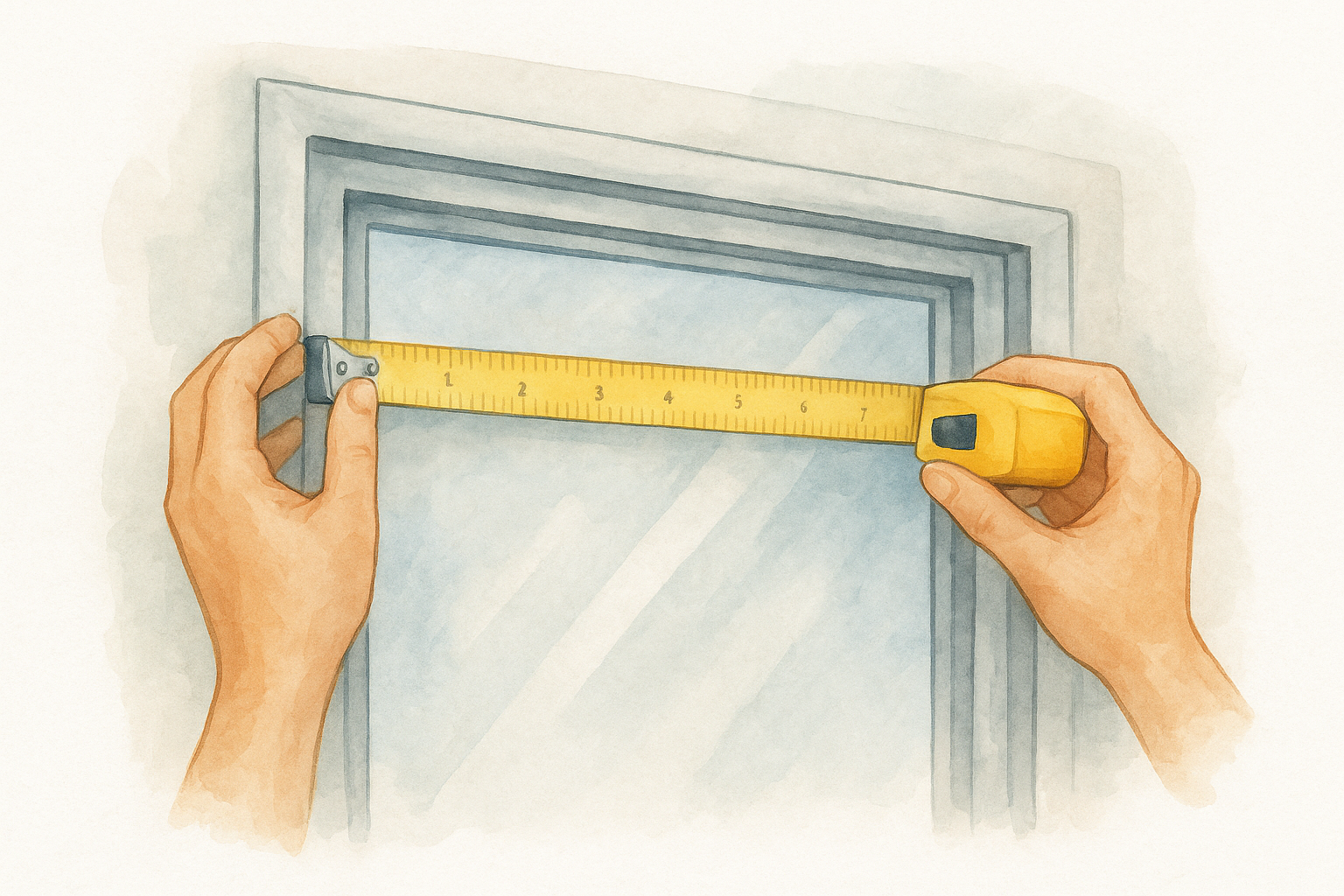
A difference of even a quarter inch across a wide opening can prevent a bypass panel from sliding smoothly, so precision matters here.
Write down every measurement twice and confirm the numbers against your notes before submitting your order. Skipping this check is the most common source of delays on custom shutter projects.
What professional installation covers
A professional installer handles more than just hanging the panels. They level the frame, verify the measurements against the fabricated product, and adjust the hardware so each panel slides or folds without resistance. For bypass systems, track alignment matters because a misaligned track causes uneven sliding over time.
Installation typically takes two to four hours for a standard sliding glass door depending on the system type, and a professional will also confirm that the louvers open and close evenly before finishing. This final check protects the investment you’ve made in the product itself.
Next steps
You now have a clear picture of how plantation shutters for sliding glass doors work, what systems are available, and what drives the cost up or down. The next move is getting accurate measurements and seeing the actual materials in person, because photos and specs only tell part of the story. Feeling the louver weight, checking the panel finish, and understanding how each system operates in your specific opening makes the decision much easier than guessing from a screen.
At The Shutter Look, we bring physical samples directly to your home so you can compare options against your existing interior before committing to anything. Our free in-home estimate covers the full measurement process, material walkthrough, and a firm quote with no obligation. With over 23 years of experience and a three-week turnaround from quote to installation, we make the process straightforward from the first visit to the finished product.
