


If you’ve been shopping for window treatments, you’ve probably come across roller shades more than once. They’re one of the most popular choices for homeowners, and for good reason, they’re simple, clean, and work well in almost any room. But "simple" doesn’t mean there isn’t a lot to consider. Between fabric types, opacity levels, motorized options, and pricing that ranges from budget-friendly to premium, the category is broader than most people expect.
At The Shutter Look, we’ve spent over 23 years helping Central Florida homeowners choose the right window treatments for their homes. Roller shades are one of the products we install regularly, and we’ve seen firsthand how the right (or wrong) selection affects a room’s comfort, privacy, and energy efficiency. That hands-on experience is exactly what shaped this guide.
Below, we’ll break down how roller shades work, the different types available, their pros and cons, and what they actually cost in 2026. Whether you’re comparing them against shutters or blinds, or you’ve already decided roller shades are the way to go, this article covers everything you need to make a confident decision.
Why roller shades stay popular in 2026
Roller shades have been around for decades, but they haven’t faded into the background. In 2026, they remain one of the top-selling window treatments in the U.S. because they solve a real problem: you need light control and privacy without cluttering your windows with complicated hardware or fabric. Their clean, flat profile fits modern, transitional, and even traditional interiors, which means they work in more homes than almost any other option on the market.
They fit practically any room and style
One reason homeowners keep choosing roller shades is how well they adapt to different spaces. A blackout roller shade in a bedroom gives you complete darkness for better sleep. A light-filtering shade in a living room softens harsh Florida sunlight without blocking your view. You can install them in kitchens, bathrooms, offices, and even on sliding glass doors, making them one of the most versatile window treatments available.
Versatility is one of the biggest reasons roller shades consistently rank as a top choice for homeowners across different interior styles and budgets.
The variety of fabric options and colors also plays a big role. You can match the shade fabric to your existing color palette, and since the hardware stays minimal, the fabric itself becomes the design statement. This makes it easy to refresh your space without a full renovation.
They offer real energy efficiency benefits
Beyond looks, roller shades deliver measurable energy efficiency. In Florida’s climate, where air conditioning runs most of the year, a solar or blackout shade reduces heat gain through your windows and lowers monthly cooling costs. Choosing the right opacity level lets you manage glare and temperature without losing natural light entirely.
Solar shades in particular block UV rays while preserving your outdoor view. This balance between sun protection and visibility is something other window treatments don’t always achieve as cleanly, which is part of what makes roller shades a practical, lasting choice for Florida homes.
How roller shades work and control options
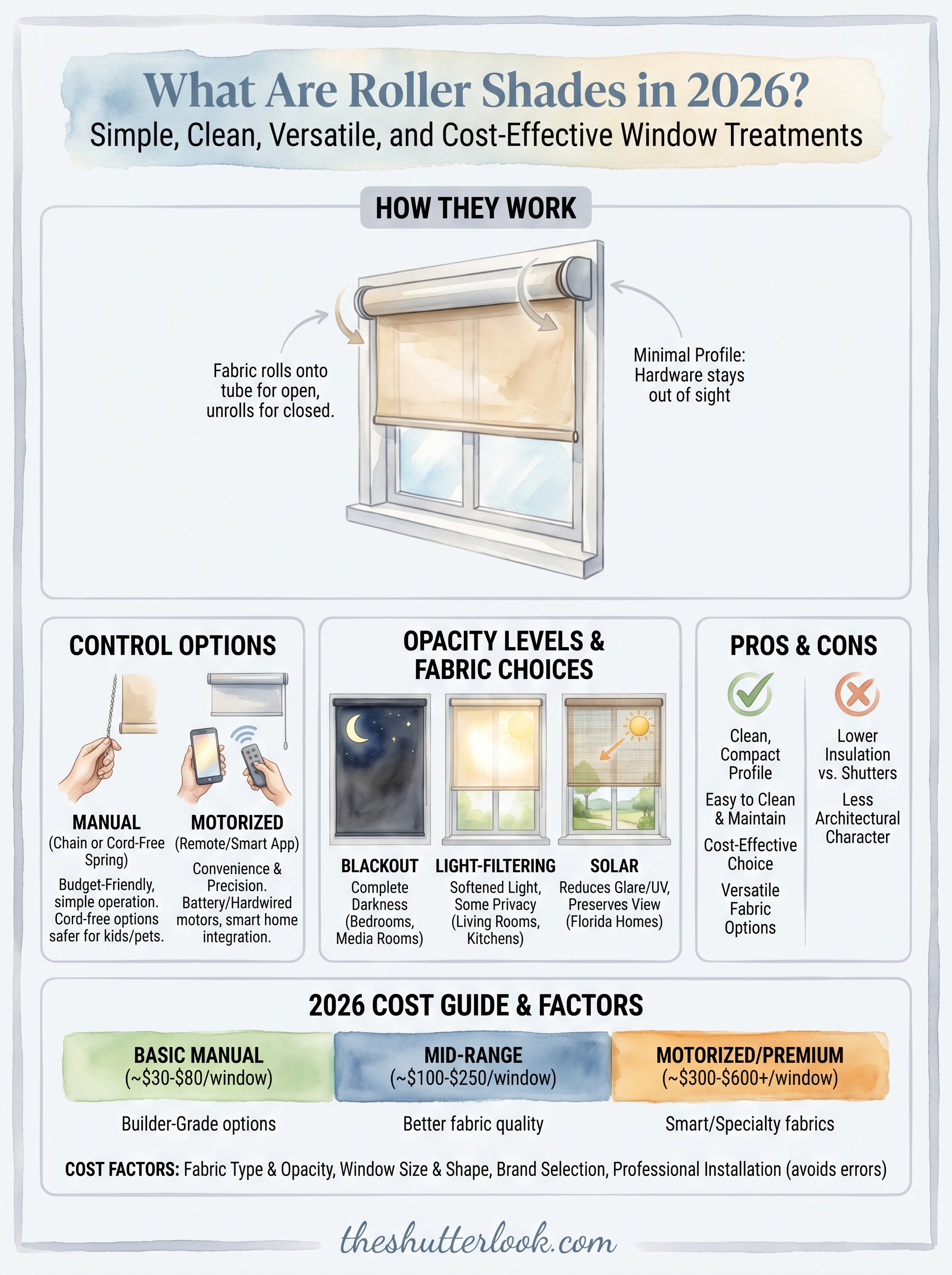
Roller shades operate on a simple tube-and-fabric mechanism. A fabric panel wraps around a cylindrical tube mounted at the top of your window. When you raise or lower the shade, the fabric rolls onto or off that tube. The tube sits inside a compact bracket, so the hardware stays nearly invisible once installed. That minimal profile is a big part of why roller shades look so clean on a window compared to other treatments.
Manual vs. motorized controls
If you’re wondering what are roller shades when it comes to everyday operation, you have two main paths: manual or motorized. Manual shades use either a side-chain loop or a spring-loaded mechanism. You pull down to lower the shade and use the chain or a gentle tug to raise it back up. Spring-loaded, cord-free options are the safer choice for homes with children or pets, since there’s no hanging cord to worry about.
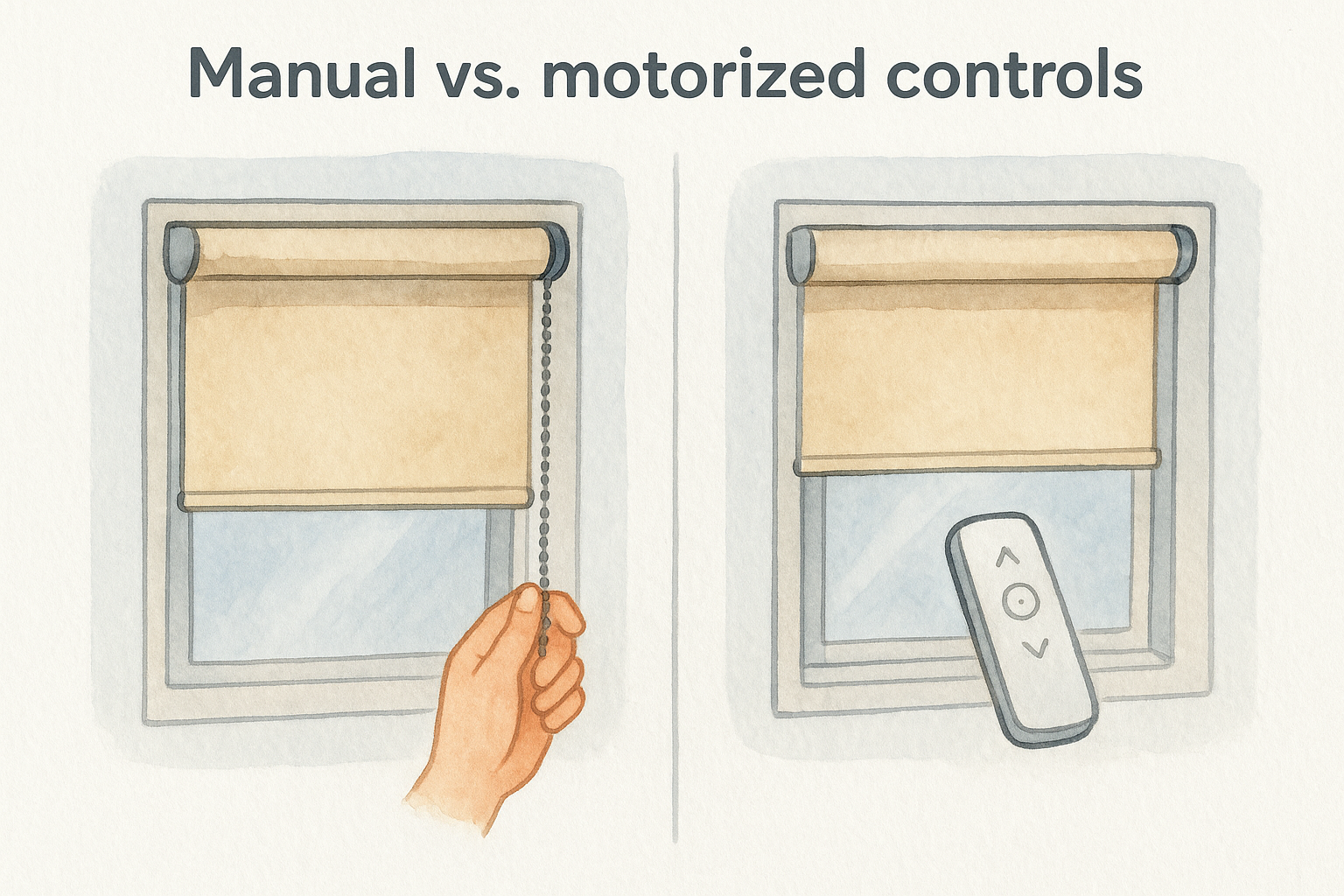
Motorized roller shades are the fastest-growing segment of the window treatment market because they combine genuine convenience with precise light control.
Motorized shades use a battery-powered or hardwired motor built into the tube. You operate them with a remote, a wall switch, or a smartphone app, and many systems sync with smart home platforms so you can set automated schedules based on time of day or sunlight levels.
Types of roller shades and fabric choices
When most people ask what are roller shades, they’re surprised to learn how many fabric options exist. The fabric you choose determines how much light enters your room, how much of your view you keep, and how well the shade handles heat. Getting this choice right matters more than almost any other decision in the selection process.
The three main opacity levels
Blackout fabrics block all incoming light, making them the go-to option for bedrooms, media rooms, or any space where you need complete darkness. Light-filtering fabrics soften and diffuse sunlight without cutting it off entirely, which works well in living rooms and kitchens. Solar fabrics sit in between, reducing glare and UV exposure while keeping your outdoor view intact.
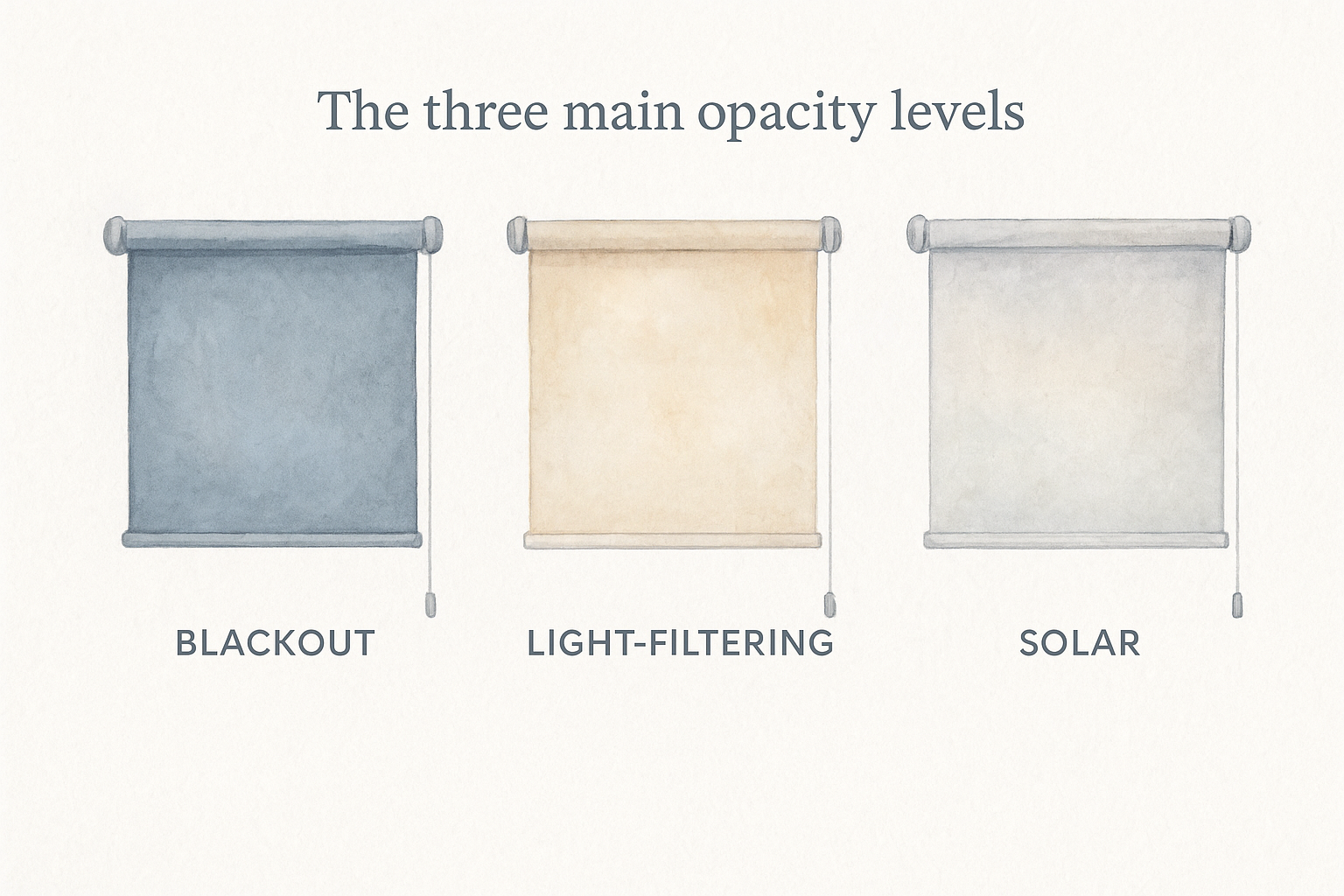
Solar shades are especially useful in Florida homes because they cut heat gain significantly without making your room feel closed off.
Textured and patterned fabrics give you a design element beyond plain colors, and moisture-resistant fabrics work well in bathrooms and kitchens where humidity is a factor. Matching the right fabric type to each room in your home gives you the best combination of comfort, privacy, and light control.
Pros, cons, and how they compare to other shades
Roller shades hit a sweet spot for many homeowners, but they’re not the right fit for every window or situation. Understanding where they excel and where they fall short helps you decide if they belong in your home before you commit to a purchase.
What roller shades do well
Roller shades are easy to clean, compact, and cost-effective compared to most other window treatments. They work well in small or oddly shaped windows where bulky fabric treatments would look out of place. Compared to cellular shades, roller shades offer a cleaner, flatter profile and are generally easier to wipe down with a damp cloth.
Roller shades give you the broadest range of opacity options of any single window treatment category, from fully transparent solar fabric to complete blackout.
Where they fall short
If you’re asking what are roller shades lacking compared to shutters, the honest answer is insulation and structural durability. Shutters sit inside the window frame and create a tighter seal, which gives them a stronger energy efficiency advantage in climates with extreme heat. Roller shades also don’t add the same architectural character that wood shutters bring to a room, so your design goals matter here.
Roller shades cost in 2026 and what affects price
One of the most common questions homeowners ask when researching what are roller shades is what they actually cost. In 2026, basic manual roller shades start around $30 to $80 per window for builder-grade options, while mid-range shades with better fabric quality run $100 to $250 per window installed. Motorized shades can push $300 to $600 or more per window depending on the motor type and smart home integration.
Professional installation adds cost upfront but protects you from measurement errors that lead to gaps, poor fit, or shades that don’t operate correctly.
What drives the price up or down
Fabric type and opacity level are the biggest price factors. Solar and blackout fabrics with higher UV protection or specialty coatings cost more than standard light-filtering options. Window size and shape also matter significantly, since larger or non-standard windows require more material and more precise fitting during installation.
Brand selection and whether you choose cordless mechanisms both affect your final number as well. Getting a professional measurement and quote before you set your budget is the most reliable way to avoid surprises, since online estimates rarely account for your specific window dimensions or local installation rates.
A simple way to decide if they fit your home
Now that you understand what are roller shades and how they work, the decision comes down to your specific priorities. If your main goals are light control, a clean profile, and budget flexibility, roller shades fit most rooms well. They work especially well in Florida homes where managing heat gain and glare matters year-round without adding bulky hardware or heavy fabric.
If you need maximum insulation or a strong architectural statement, shutters or cellular shades may be a better match for certain rooms. The most practical approach is to evaluate your home room by room rather than choosing one treatment for every window. Combining roller shades with shutters in different spaces often gives you the best of both outcomes.
Get a free in-home estimate from The Shutter Look and let our experienced team help you choose the right treatment for every window in your home.
