


Picking between cellular shades vs roller shades comes down to what matters most in your home, energy savings, light control, aesthetics, or budget. Both options work well in Florida, but they solve different problems in different ways.
Florida’s heat and sun exposure put real demands on your window treatments. A shade that works fine in Michigan might fall short here, where UV protection and insulation actually affect your electric bill. At The Shutter Look, we’ve spent over 23 years helping Central Florida homeowners choose the right fit, and this is one of the most common comparisons we walk through during in-home consultations.
This guide breaks down the real differences between cellular and roller shades, covering cost, energy efficiency, light filtering, durability, and style. By the end, you’ll have a clear picture of which shade type matches your needs and why the choice matters more than most people think in a Florida climate.
What cellular shades and roller shades are
Both shade types hang inside your window frame and operate on a similar up-down mechanism, but the way they’re built and what they do with sunlight are completely different. Understanding the basic construction of each helps you see why one outperforms the other in specific situations.
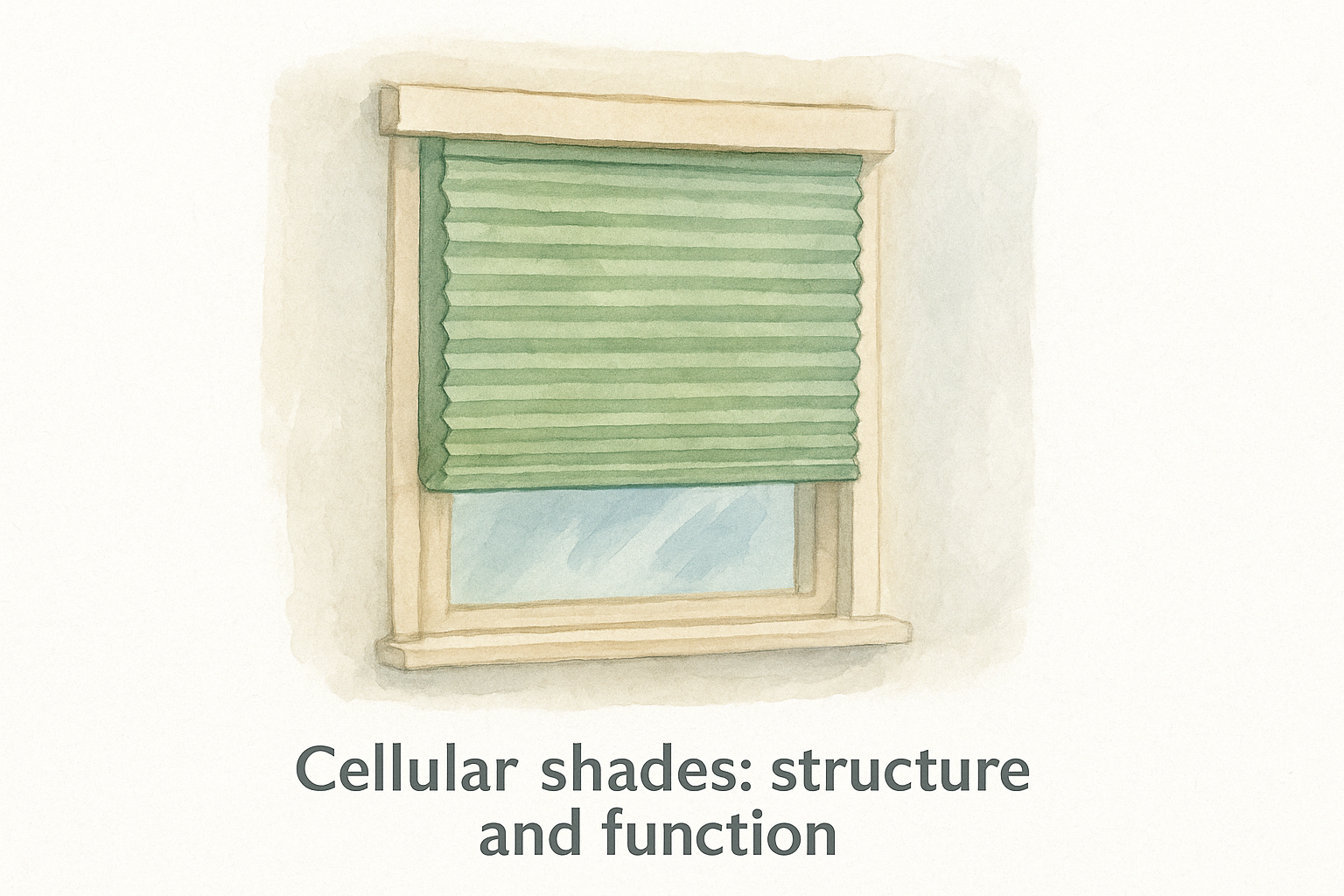
Cellular shades: structure and function
Cellular shades, also called honeycomb shades, are made from a fabric formed into small air pockets that run horizontally across the shade. Those pockets trap air between the window glass and your room, creating a natural insulating barrier. You can get them in single-cell, double-cell, or triple-cell configurations, where more cells mean more insulation. Single-cell shades work well in mild climates, but in Florida, double-cell or triple-cell options give you meaningful heat resistance.
The more cell layers a cellular shade has, the harder it works to keep conditioned air inside your home during Florida summers.
Cellular shades come in sheer, light-filtering, and blackout fabrics, so you have real control over how much light enters a room while still keeping the insulating benefit. They tend to sit closer to the window glass, which is exactly where you want insulation working in a climate with high sun exposure.
Roller shades: structure and function
Roller shades use a single layer of fabric that wraps around a cylindrical tube at the top of the window. When you raise them, the fabric rolls up cleanly. When you lower them, it unrolls in a flat, smooth sheet across the window opening. The result is a minimal, uncluttered look that works well in modern and contemporary interiors.
The fabric you choose defines how a roller shade performs. Solar fabrics block UV rays while keeping your view partially intact. Blackout fabrics eliminate light entirely for bedrooms or media rooms. Room-darkening options fall somewhere in between. Unlike cellular shades, roller shades have no built-in air pocket, so they rely entirely on fabric density and coating to manage heat and light.
When you compare cellular shades vs roller shades side by side, the core trade-off becomes clear: cellular shades prioritize thermal performance, while roller shades prioritize visual simplicity and versatility. Neither is universally better. The right choice depends on what each room in your home actually needs.
Why the choice matters in Florida
Florida is not an average climate, and window treatments that hold up in other parts of the country can fail here within a few years. The combination of intense sun, high humidity, and long cooling seasons means your shades do more than block light. They directly affect how hard your HVAC system works every single day, which shows up in your electric bill month after month.
Heat and UV exposure
Central Florida gets more than 230 sunny days per year, and summer temperatures regularly push into the mid-90s. That constant sun exposure drives up indoor temperatures when your windows aren’t properly covered, forcing your air conditioning to compensate. When you’re weighing cellular shades vs roller shades, this is where the difference between the two becomes most relevant. Cellular shades with their air pockets slow heat transfer at the glass, while roller shades with solar fabrics reflect UV rays before they penetrate the room.
Choosing a shade with strong UV protection in Florida isn’t just about fading furniture. It’s about keeping your cooling costs under control.
Your windows account for a significant portion of heat gain in a Florida home, so the insulating or reflective properties of your shade choice directly affect how comfortable your home stays during the hottest months.
Humidity and moisture resistance
Florida’s average relative humidity sits above 70% through much of the year, especially in coastal and inland areas near lakes. That moisture puts pressure on materials that weren’t built for it. Cellular shades made with synthetic or coated fabrics hold up better than natural fibers in these conditions. Roller shades with vinyl-backed or moisture-resistant fabrics also perform reliably. Whichever option you choose, making sure the fabric is rated for high-humidity environments will save you from replacing them prematurely.
How they compare on performance and comfort
When you set cellular shades vs roller shades side by side on actual performance, the differences become more practical than technical. Both shade types control light and provide privacy, but they deliver different levels of comfort depending on how much insulation and light management your specific rooms need.
Light control and privacy
Cellular shades give you a wider range of light-filtering options built into their layered structure. You can choose sheer fabric that softens incoming light without blocking the view, or blackout cellular shades that shut out nearly all light for bedrooms where sleep quality matters. Roller shades with solar fabrics let in diffused light while cutting UV rays, but their flat single-layer construction means they don’t diffuse light as evenly as cellular options during bright afternoon sun.
For rooms that face west in a Florida home, the added light diffusion from cellular shades makes a noticeable difference in afternoon glare.
Roller shades and cellular shades both offer privacy, but cellular shades provide more consistent coverage across the full window because the fabric sits flatter against the frame with less light bleed at the edges.
Temperature comfort
Cellular shades reduce heat transfer through the window, which keeps the area near your windows noticeably cooler during peak heat hours. You feel that difference most in rooms with south- or west-facing windows where direct sun hits for several hours a day. Roller shades with high-openness solar fabric reflect UV rays effectively, but without an insulating air pocket, they don’t slow radiant heat the same way.
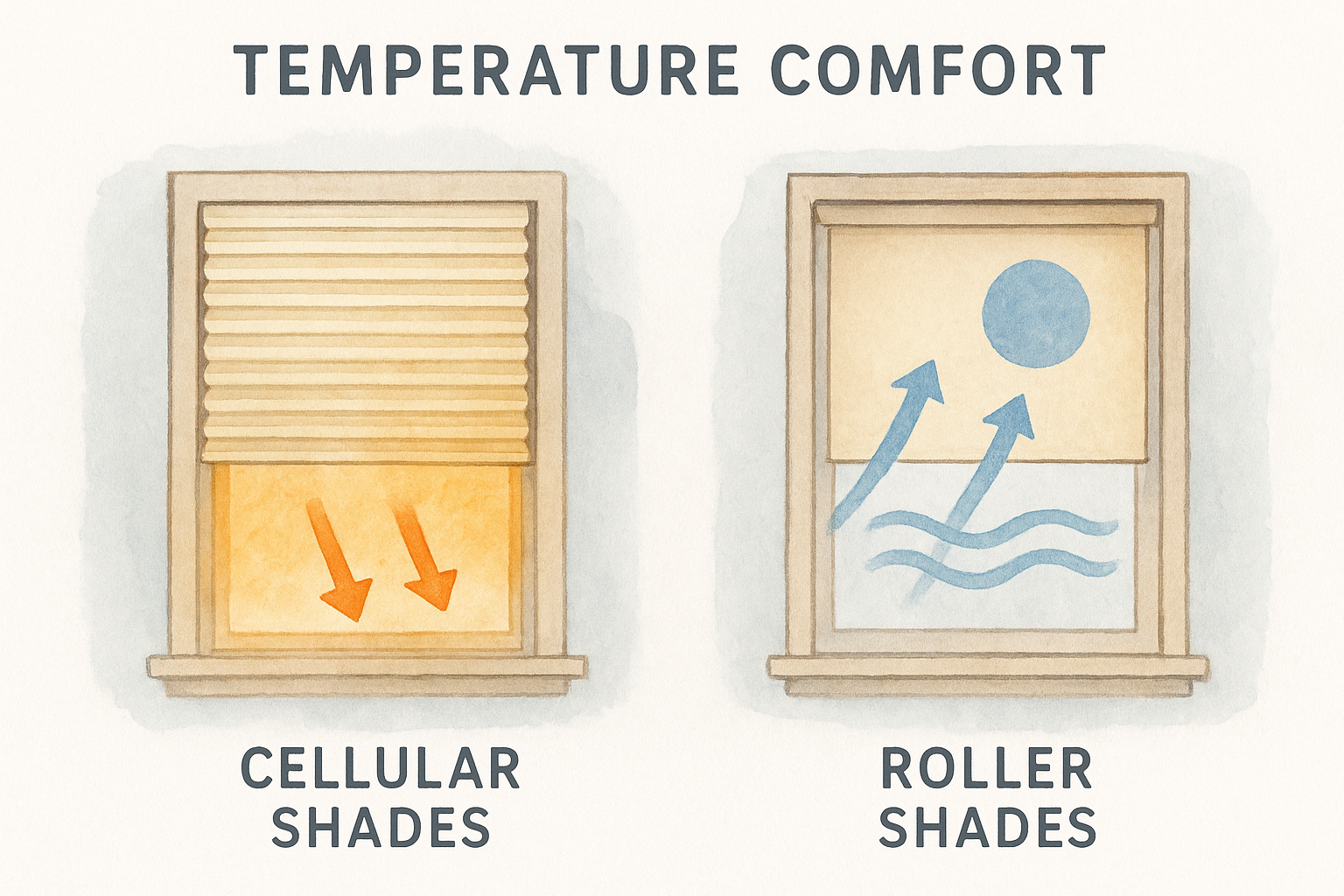
Your comfort goal defines the winner here. For rooms where you want genuine heat reduction, cellular shades hold the advantage. For rooms where UV protection and clean aesthetics matter more than insulation, roller shades get the job done.
Cost, maintenance, and lifespan
When comparing cellular shades vs roller shades, cost is one of the first things most homeowners ask about. The price gap between the two is real, and understanding why it exists helps you decide whether the higher upfront investment in one option actually pays off over time.
Upfront cost and value
Roller shades typically cost less per window than cellular shades, making them a practical choice when you’re covering a large number of windows on a tighter budget. Cellular shades run higher because of their multi-layer honeycomb construction, which requires more material and more precise manufacturing. In Florida, where your air conditioning runs most of the year, the energy savings from cellular shades can offset the price difference over a few cooling seasons, so the total cost of ownership often looks closer than the sticker price suggests.
A higher upfront cost on cellular shades can translate into lower monthly utility bills in Florida’s long cooling season.
Maintenance and durability
Both shade types are relatively low-maintenance, but they have different cleaning needs. Roller shades with smooth, coated fabrics wipe down easily with a damp cloth, which makes them convenient in kitchens or rooms that collect dust quickly. Cellular shades require gentler care because their fabric pockets can trap dust inside the cells. Compressed air or a soft brush attachment on a vacuum handles most buildup without damaging the fabric structure.
For lifespan, both options hold up well when you buy quality fabric and have them installed correctly. Roller shades in high-sun Florida rooms can fade faster if the fabric lacks UV-resistant coating, so material selection matters. Cellular shades with synthetic or coated fabrics resist humidity and prolonged sun exposure, which makes them a durable long-term investment in Central Florida’s demanding climate.
How to pick the right shade for each room
Matching the right shade to each space comes down to how that room functions and what you need from your window treatment on a daily basis. No single option wins in every room, which is why many homeowners end up with a mix of both types across their home.
Rooms that benefit from cellular shades
Bedrooms and home offices are the strongest candidates for cellular shades. If you work from home, the reduced heat near the window keeps your workspace comfortable during afternoon hours without running the air conditioning harder than necessary. For bedrooms, double-cell or triple-cell blackout options eliminate light intrusion and cut down on heat transfer simultaneously, giving you better sleep conditions and lower cooling costs at the same time.
Living rooms with south- or west-facing windows also benefit from cellular shades, especially if direct sun hits seating areas for several hours a day. The added insulation reduces the radiant heat that makes those rooms uncomfortable during Florida summers.
Rooms that benefit from roller shades
Kitchens and bathrooms are where roller shades consistently perform well. Their smooth, wipeable surface handles moisture and grease far better than cellular fabric, and the clean flat profile keeps the space looking uncluttered. For open-plan living areas where design consistency matters, roller shades with solar fabric give you UV protection without interrupting a modern interior style.
When you’re deciding between cellular shades vs roller shades room by room, start with the room’s primary function, then factor in which windows face south or west.
For media rooms or home theaters, blackout roller shades give you total light control with minimal visual bulk, making them a practical fit where aesthetics and function both need to hold up.
Final take
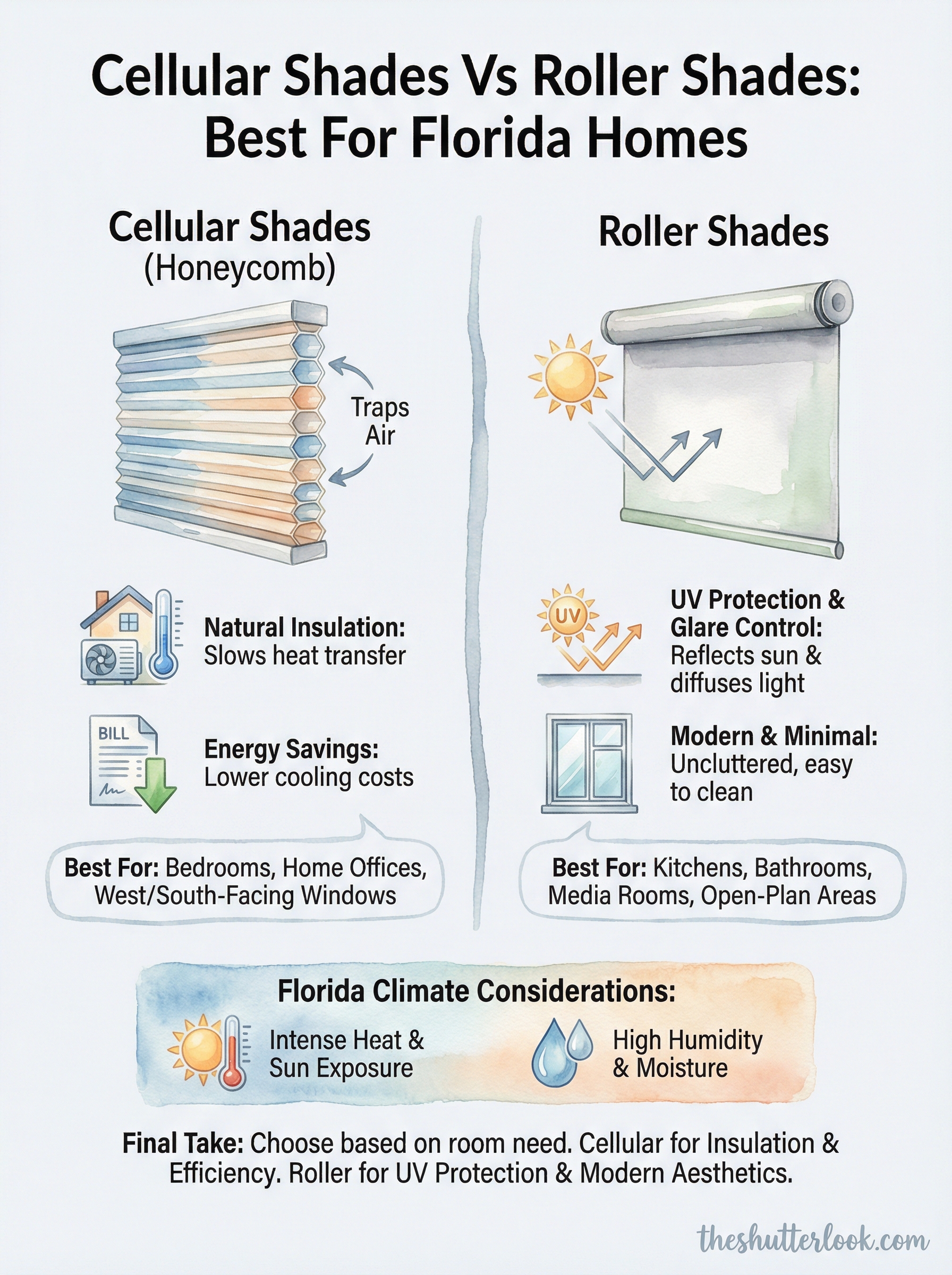
The cellular shades vs roller shades decision doesn’t have one universal answer, but it does have a clear framework. If your priority is cutting heat transfer and reducing cooling costs in Florida’s long, hot summers, cellular shades are the stronger choice, especially for south- and west-facing rooms. If you want a clean, modern look with solid UV protection and easy maintenance, roller shades get you there at a lower cost per window.
Most Central Florida homeowners end up using both across different rooms, and that’s usually the smartest approach. Match the shade to what each room demands rather than forcing a single solution throughout your home. The right combination gives you comfort, durability, and aesthetics without compromising any of them.
If you’re ready to see your options in person with actual product samples, schedule a free in-home consultation with The Shutter Look and get expert guidance for your specific home.
