


If you’ve been shopping for window treatments, you’ve probably come across the term "cellular shades" and wondered what makes them different from standard blinds or roller shades. The short answer: their unique honeycomb structure traps air, creating a pocket of insulation between your window and your room. That design detail has real consequences for your comfort and your energy bill, especially in Central Florida, where the sun doesn’t hold back.
At The Shutter Look, we’ve spent over 23 years helping homeowners across Central Florida choose the right window treatments for their homes. We’ve installed thousands of shades, shutters, and blinds, and cellular shades remain one of the most frequently requested options, for good reason. But they’re not perfect for every situation, and an honest breakdown matters before you spend your money.
This article covers exactly how cellular shades work, what benefits they bring to the table, where they fall short, and how much energy savings you can realistically expect. By the end, you’ll have a clear picture of whether cellular shades are the right fit for your home and lifestyle.
What cellular shades are and how they work
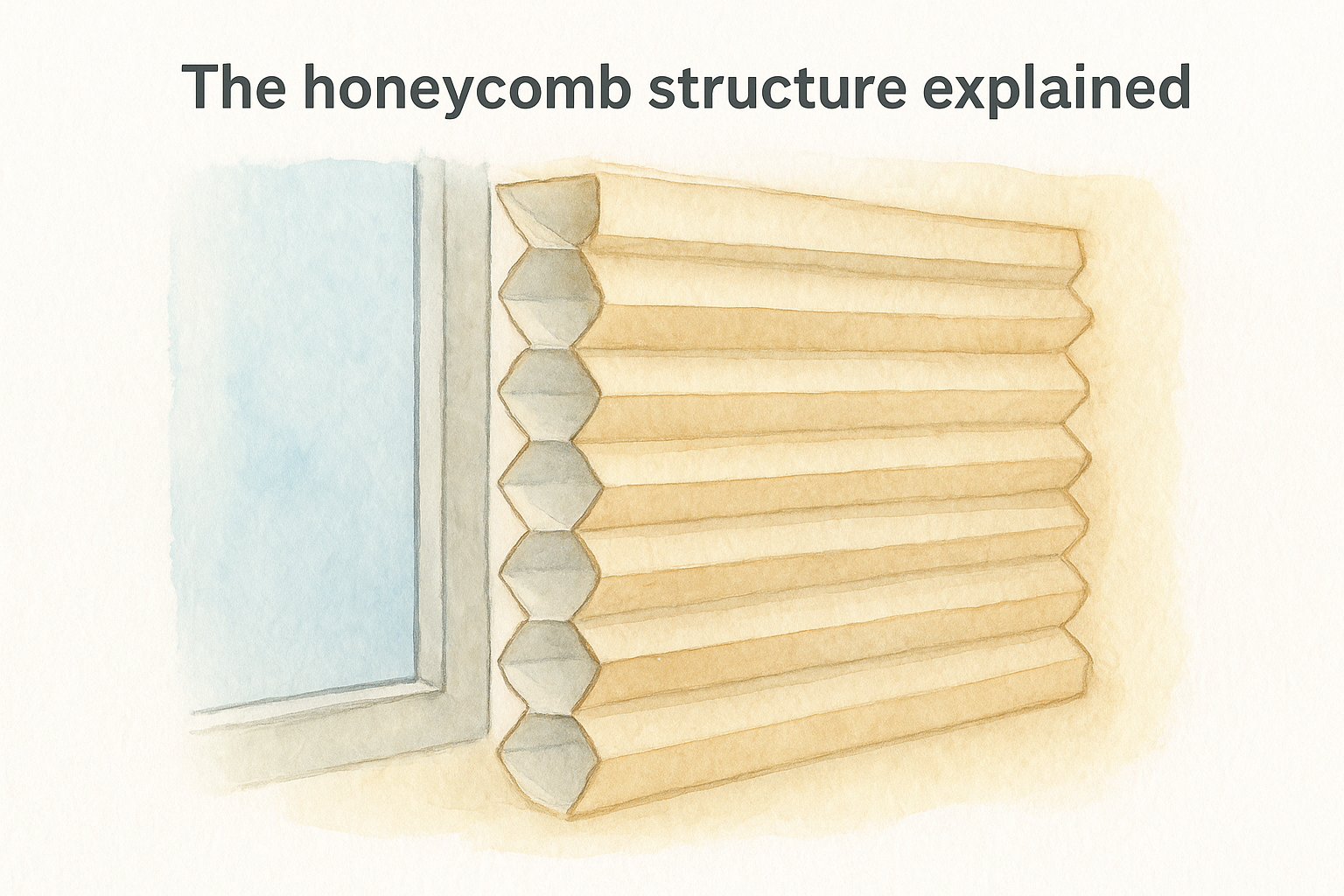
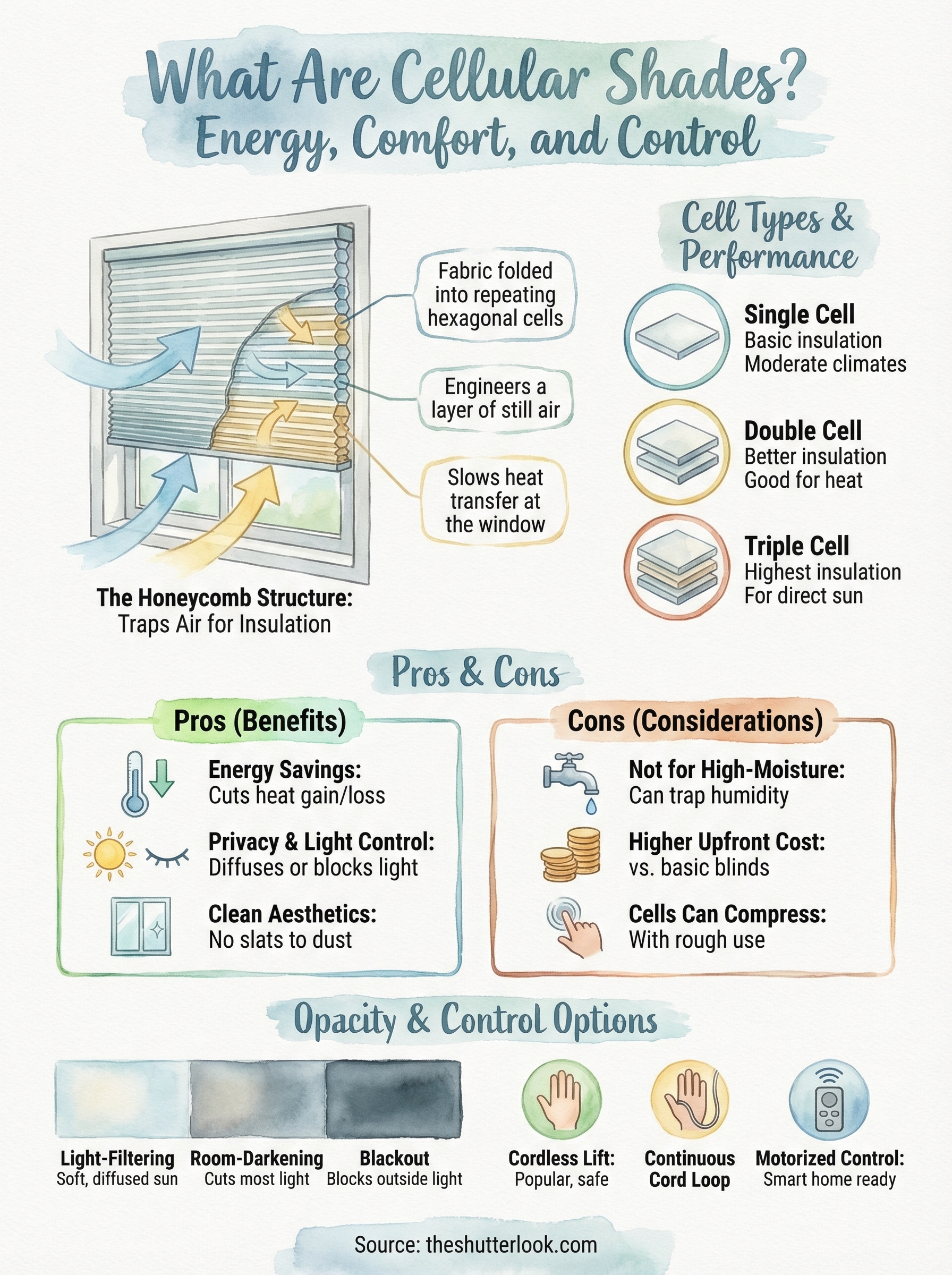
Cellular shades are window coverings built from fabric folded into repeating hexagonal cells, which is where the nickname "honeycomb shades" comes from. Each cell runs horizontally across the width of the shade. When you ask what are cellular shades, the answer starts with that structure: it’s not just about looks, it’s about engineering a layer of still air inside each pocket to slow down heat transfer at your window.
The honeycomb structure explained
The physics behind cellular shades is straightforward. Your window is one of the weakest thermal points in your home. Heat moves from warm areas to cool ones, and single-pane or older double-pane glass does very little to slow that process. The cells in a cellular shade trap a column of air between the glass and your room, and still air is a poor conductor of heat. That means less heat enters during a Florida summer and less conditioned air escapes during the cooler months.
The U.S. Department of Energy notes that window treatments can meaningfully reduce heat gain through windows, with insulating cellular shades among the most effective options for cutting energy costs.
Your standard roller shade or horizontal blind sits flat against the window without forming any real insulating barrier. Those products block light and provide privacy, but they don’t trap air. Cellular shades do both jobs simultaneously, which is the core reason they’ve held their place in the market for decades.
Single cell, double cell, and triple cell: what the difference means for you
Cell count is the most important specification to understand when shopping for cellular shades. A single-cell shade has one row of honeycomb pockets, provides basic insulation, and works well in moderate climates or interior rooms. A double-cell shade stacks two layers of cells back to back, which roughly doubles the insulating depth and improves energy performance noticeably. Triple-cell shades add a third layer, giving you the highest insulation rating available, though at a higher price point.
For most Central Florida homeowners dealing with intense summer heat, double-cell shades hit the best balance between cost and performance. Triple-cell makes more practical sense for rooms with large west-facing windows that absorb direct afternoon sun for several hours each day.
Why homeowners choose cellular shades
When homeowners start researching what are cellular shades, they quickly discover that the appeal goes beyond the honeycomb structure. The combination of energy efficiency, light control, and clean aesthetics makes cellular shades a practical solution for a wide range of rooms and window types.
Energy savings and comfort
In Central Florida, your air conditioner works hard from March through October. Cellular shades cut heat gain at the window itself, which means your HVAC system doesn’t have to maintain temperature as aggressively. Homes with double-cell shades on south- and west-facing windows often see a measurable drop in cooling costs, particularly in rooms that receive direct afternoon sunlight.
The U.S. Department of Energy estimates that heat gain and heat loss through windows accounts for 25 to 30 percent of residential heating and cooling energy use.
Installing cellular shades on those high-exposure windows gives you a direct line of defense against that heat transfer, without sacrificing natural light if you select a light-filtering fabric.
Privacy and light control in one product
Cellular shades come in light-filtering and blackout fabric options, so you can match each room to its specific function. A light-filtering shade in your living room diffuses sunlight without darkening the space. A blackout version in a bedroom blocks outside light completely, which matters if you work night shifts or have young children who nap during the day.
You also get a cleaner look than horizontal blinds, with no individual slats to dust and a flat profile that suits both contemporary and traditional interiors equally well.
Pros, cons, and common misconceptions
When people ask what are cellular shades, they often get the highlight reel without the fine print. Every product has trade-offs, and knowing both sides helps you spend your money more confidently and avoid surprises after installation.
What works well
Cellular shades give you genuine energy performance, solid privacy, and a clean appearance that suits most rooms. They’re available in a wide range of opacities, from light-filtering sheers to full blackout fabrics, so you can match light control to each room’s specific function. They also operate quietly, and most fabric options handle light dusting and spot cleaning without professional service.
Double-cell and triple-cell options deliver noticeably better thermal performance than single-cell versions, which matters most on windows with extended direct sun exposure.
Where they fall short
These shades are not ideal for high-moisture environments like bathrooms or laundry rooms, because the fabric cells can trap humidity and become difficult to clean thoroughly. They cost more upfront than basic roller shades or horizontal blinds, and the honeycomb cells can compress with rough daily handling over time, reducing the insulating performance you paid for.
- Higher upfront cost than standard shades or blinds
- Poor fit for humid rooms without moisture-resistant fabric
- Cells can compress with rough use and lose insulation over time
Common misconceptions
A frequent assumption is that cellular shades block all outside light by default. They don’t. Light-filtering versions still allow diffused sunlight through, so if you need full darkness you must specify a blackout material at the time of purchase.
Another common belief is that thicker cell count always means better value. For interior rooms with minimal sun exposure, a single-cell shade performs fine and the upgrade often doesn’t pay off.
Types, fabrics, and control options
When you dig deeper into what are cellular shades, the variety available becomes one of their strongest selling points. Beyond cell count, you make key decisions about fabric opacity and operating system that directly affect how the shade performs and how you interact with it every day.
Fabric opacity and material choices
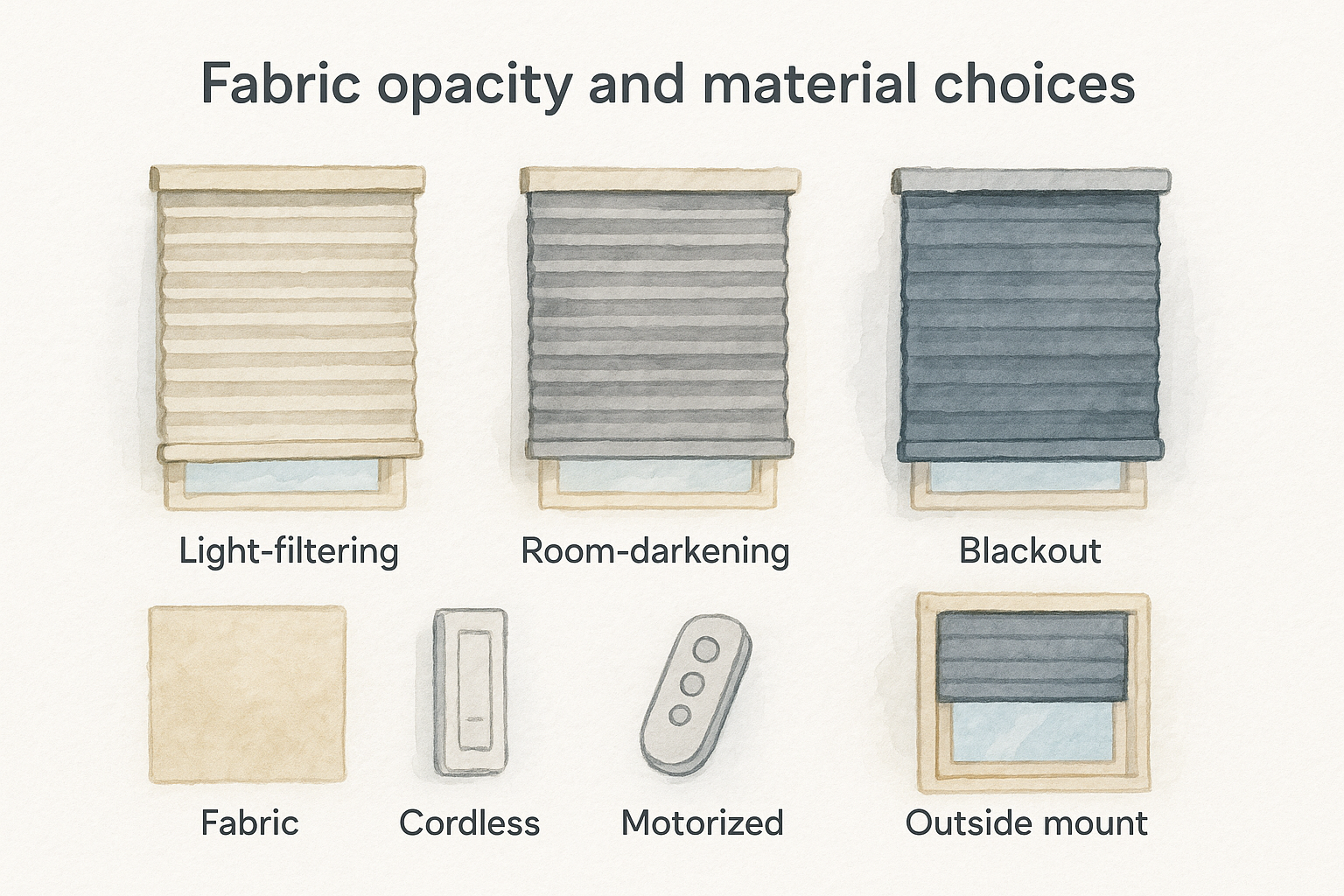
Cellular shades come in three opacity levels: light-filtering, room-darkening, and blackout. Light-filtering fabrics soften incoming sunlight while keeping the room bright, which works well in living rooms and kitchens. Room-darkening fabrics cut most of the light without achieving full blackout performance, and blackout materials are designed for bedrooms or media rooms where complete light control is the priority.
Moisture-resistant fabric options exist for humid environments, but standard cellular shade fabrics perform best in dry rooms where airflow keeps humidity low.
Some manufacturers also offer solar fabrics that reduce heat gain while preserving your outward view, which is a practical option for rooms facing direct west or south sun in Central Florida.
Control systems and mounting options
You can operate cellular shades through several mechanisms: cordless lift, continuous cord loop, or motorized control. Cordless is the most popular choice for homes with children or pets because it removes the safety hazard of dangling cords while keeping the look clean. Motorized shades connect to a remote or smart home system, letting you adjust multiple windows at once without leaving your seat.
For mounting, your two options are inside mount, which fits within the window frame for a built-in look, and outside mount, which covers the full frame and works better on windows with a shallow depth.
How to choose the right cellular shades for your home
Once you understand what are cellular shades and how they work, the next decision comes down to matching the right product to your specific windows and rooms. Two factors drive most of the decision: how much direct sun your windows receive and what you need each room to do in terms of light and privacy.
Match cell count to your window’s sun exposure
South- and west-facing windows take the hardest hit from Florida’s afternoon sun, so those windows justify double-cell or triple-cell shades for the added thermal performance. North- and east-facing windows get far less direct sunlight through most of the day, so a single-cell shade covers your needs there at a lower cost.
Spending more on triple-cell shades for a north-facing window rarely pays off in energy savings, so match cell count to actual sun load rather than buying the same spec for every room.
Pick the right opacity for each room
Your living room and kitchen benefit from light-filtering fabric that keeps the space bright while diffusing glare. Bedrooms, particularly those used by shift workers or young children, need blackout material that cuts outside light completely. If you have a bathroom or laundry room in mind, look specifically for moisture-resistant fabric options, because standard cellular shade materials don’t hold up well in persistent humidity.
Taking five minutes to walk through your home and note sun direction, room function, and existing humidity levels gives you everything you need to order the right shade the first time.
Next steps for your windows
Now that you understand what cellular shades are and how each specification affects performance, you can make a confident buying decision rather than guessing at the home improvement store. The key is connecting your specific situation, including sun exposure, room function, and budget, to the right cell count and fabric opacity before you order anything.
If you’re still weighing cellular shades against other options like shutters or roller shades, talking to someone who has installed thousands of window treatments in Central Florida homes cuts through the confusion quickly. Every window in your home has a different set of demands, and a brief conversation about your rooms, orientation, and goals gives you a shortlist of products that will actually perform.
The Shutter Look offers free in-home estimates with physical product samples, so you can see and feel the fabric before committing. Schedule your free consultation and get expert guidance from a team with over 23 years of hands-on experience.
