


So, what are plantation shutters? They’re interior window coverings with wide, adjustable louvers mounted in a solid frame that attaches directly to your window opening. You’ve likely seen them on homes across Florida, and for good reason. They offer a clean, structured look that blinds and curtains simply can’t match, while giving you precise control over light and privacy.
But plantation shutters aren’t the right fit for every window or every budget. Before you commit, it helps to understand exactly how they work, what makes them different from other window treatments, and where they fall short. At The Shutter Look, we’ve spent over 23 years installing shutters across Central Florida, so we’ve seen firsthand what homeowners love about them, and what catches people off guard.
This article breaks down the key features, pros, and cons of plantation shutters so you can decide whether they belong in your home.
Why plantation shutters matter for comfort and value
Plantation shutters do more than look good. They change how your home feels day to day, from the temperature of a sun-facing room to the privacy you get from a busy street. Unlike curtains or horizontal blinds, shutters give you granular control because you can tilt the louvers to any angle without blocking your view entirely.
Light control and energy efficiency
When you understand what are plantation shutters at a functional level, light management is one of the first things that stands out. Tilting the louvers upward directs sunlight toward the ceiling, which brightens the room without harsh glare hitting your furniture or floors. This matters especially in Florida, where sun exposure is intense for most of the year.
Properly adjusted louvers can reduce direct solar heat gain through a window, which helps lower your cooling load during peak summer months.
Closing the louvers fully at midday blocks heat-generating direct sunlight and keeps rooms noticeably cooler. Over time, that reduction in cooling demand adds up on your energy bills.
Resale value and durability
Buyers notice quality window treatments when they walk through a home. Plantation shutters installed on a solid frame signal a permanent, well-finished upgrade rather than a temporary fix. Real estate professionals in Central Florida regularly point to shutters as a detail that supports asking price.
Durability plays a big role here too. A well-made shutter, particularly one built from a material like Polycore, handles Florida’s humidity without warping, cracking, or fading. Shutters installed correctly can last decades with minimal upkeep, which means the upfront investment spreads across a much longer useful life than most other window treatments.
Key features that define plantation shutters
When you look at what are plantation shutters up close, a few specific design elements separate them from every other window treatment. The frame and louver system function together as a single installed unit, which is fundamentally different from how blinds or curtains hang independently in a window.
Louver width and tilt control
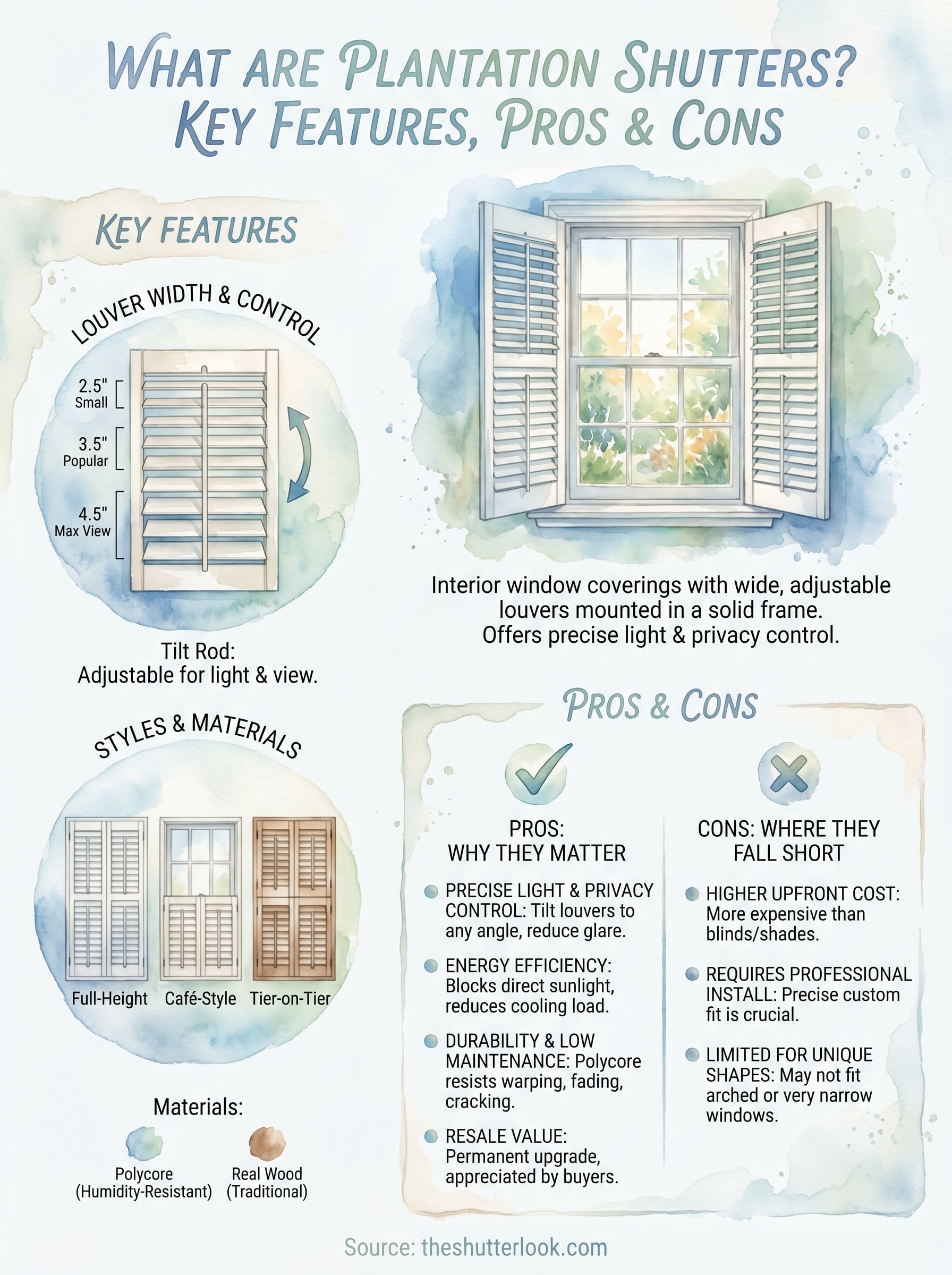
The louvers are the horizontal slats running across each panel, and their width typically ranges from 2.5 to 4.5 inches. You control the angle with a central tilt rod or hidden tilt mechanism, letting you direct light precisely without fully opening the shutter. Wider louvers give you a cleaner sightline when open and suit larger windows well.
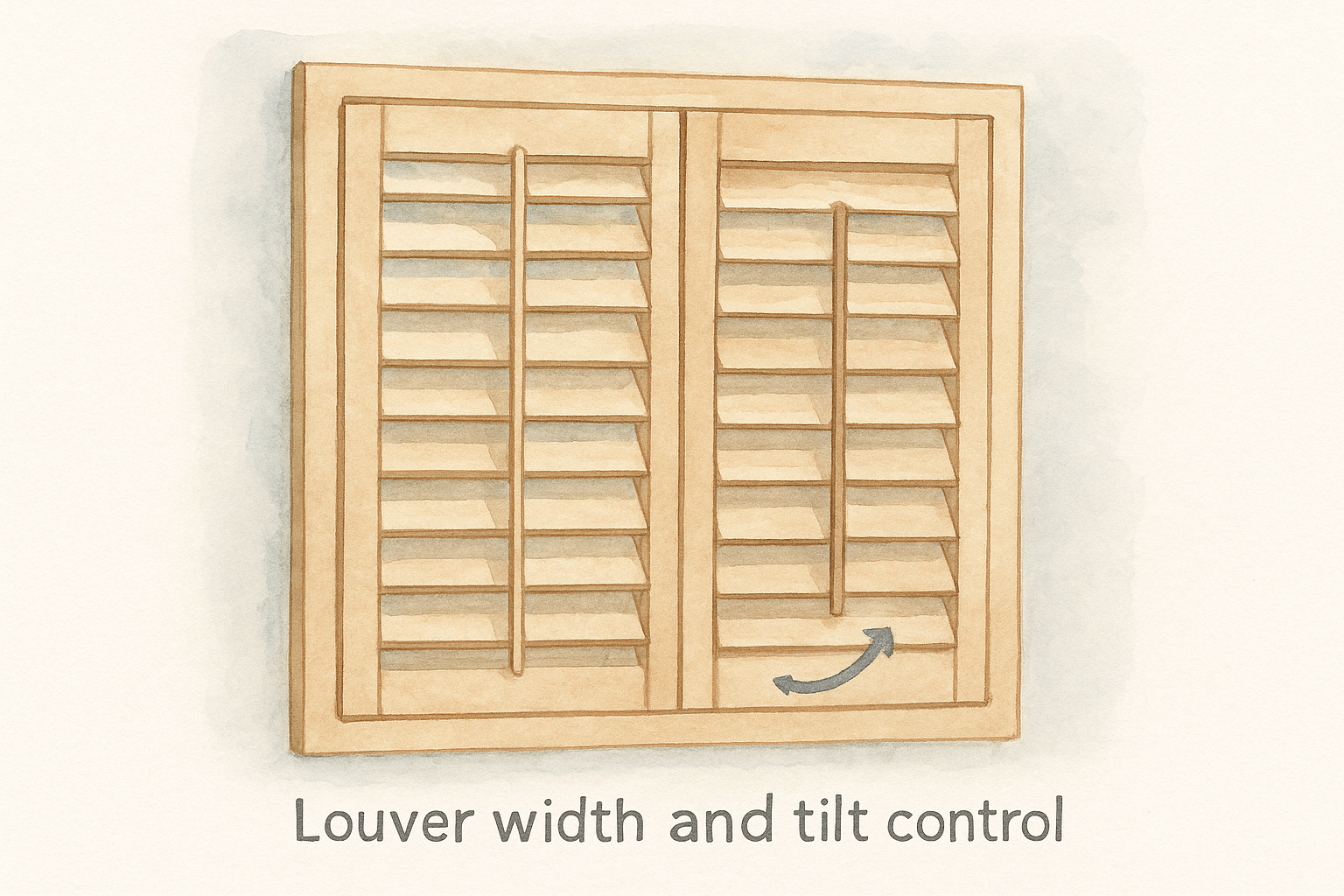
Common louver width options include:
- 2.5-inch: traditional look, works well on smaller windows
- 3.5-inch: the most popular size for standard rooms
- 4.5-inch: maximizes the view, ideal for larger openings
Frame and panel construction
Each shutter attaches to your window using a custom-built perimeter frame sized to the exact dimensions of your opening. This keeps panels stable and square over years of daily use. Splitting the panel into top and bottom sections lets you adjust each half independently for layered light and privacy control.
Independent top-and-bottom panel adjustment is a level of control you simply won’t find in standard blinds or shades.
Types, styles, and materials you can choose
Once you understand what are plantation shutters and how they function, the next decision is which type fits your specific window and your lifestyle. The choices break down into panel configuration and material. Both affect how your shutters look, perform, and hold up over time.
Panel configurations
Full-height shutters cover the entire window in one connected panel set, giving you a clean, uniform appearance. Café-style shutters cover only the bottom half of a window, which suits street-facing rooms where you want natural light from the top while maintaining privacy at eye level.
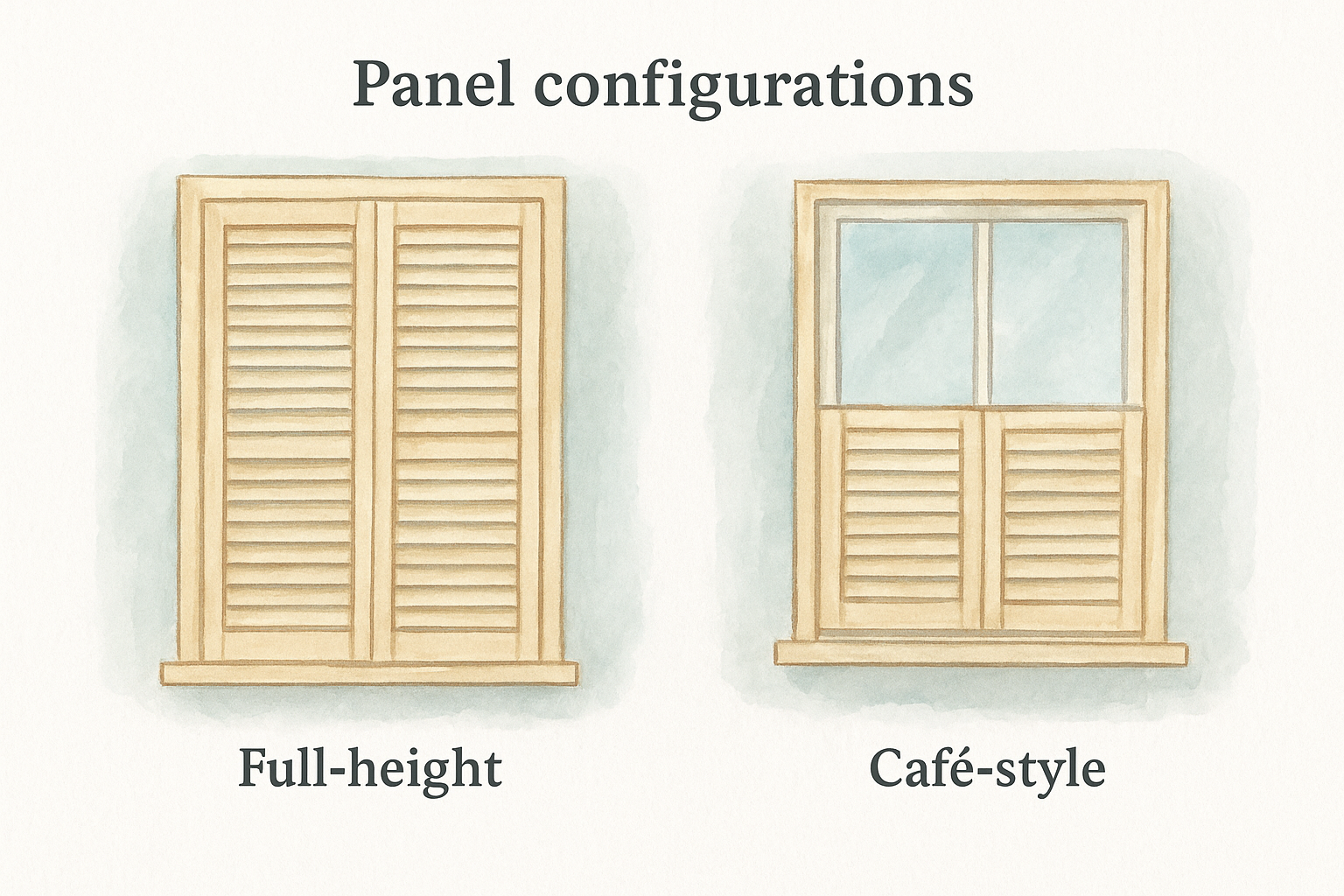
Common configurations include:
- Full-height: single panel set covering the entire window opening
- Café-style: bottom half only, ideal for street-facing windows
- Tier-on-tier: top and bottom sections that operate independently of each other
Materials and what they mean for your home
Real wood delivers a warm, traditional look but absorbs moisture, making it a poor fit for bathrooms or Florida’s humidity. Faux wood options like Polycore are engineered to resist warping, cracking, and humidity, which is why they hold up consistently well across Central Florida homes.
For humid climates, a moisture-resistant material like Polycore will outlast real wood without requiring refinishing or early replacement.
Composite shutters offer a wood core wrapped in a synthetic coating, though they still carry more moisture risk than a fully synthetic option.
Pros and cons for everyday home use
Understanding what are plantation shutters in theory is one thing, but knowing where they add genuine value and where they fall short is what helps you make a confident buying decision for your home. Shutters outperform most window treatments on light control and durability, yet they come with trade-offs you should weigh before committing.
What plantation shutters do well
Shutters give you precise control over light and airflow without the wear you see with fabric blinds or curtains. They resist fading, sagging, and dust buildup better than soft treatments, which makes them a genuinely low-maintenance option that holds up through years of daily use.
The combination of durability, light control, and long-term resale value makes plantation shutters one of the few window treatments that return their cost over time.
Key advantages:
- Precise light direction without blocking airflow
- Humidity-resistant materials that won’t warp or crack
- Strong long-term resale value
Where they fall short
Plantation shutters carry a higher upfront cost than blinds or shades, and getting them to fit correctly requires professional measurement and installation. They also work less effectively on unusually shaped or very narrow windows.
Drawbacks to consider:
- Higher upfront cost compared to most alternatives
- Requires custom fitting for each window opening
- Limited compatibility with non-standard window shapes
Cost, installation, and choosing the right shutters
Once you know what are plantation shutters and understand their trade-offs, the practical question is what they cost and how installation actually works. Plantation shutters typically run between $20 and $45 per square foot, depending on material and panel configuration. That range puts a single standard window between $300 and $800, though a full room with multiple windows will push the total higher.
What drives the final price
Material choice is the biggest cost variable. Faux wood options like Polycore generally cost less than real wood and hold up better in humid climates. Panel configuration and louver width also affect the final price, since larger louvers and tier-on-tier setups require more material and more precise fitting work.
Key pricing factors:
- Material type (faux wood vs. real wood)
- Louver width and panel configuration
- Window count and total square footage
Getting installation right
Professional measurement matters more than most people realize. A single off measurement can leave visible gaps around the frame or prevent panels from closing flush, which hurts both appearance and function. Working with an experienced installer means your windows get a precise custom fit that performs correctly for years without adjustment.
Getting the measurement right the first time is what separates shutters that look built-in from shutters that look added on.
Next steps for your windows
Now that you understand what are plantation shutters, how they function, and where they fit in a home, the decision comes down to your specific windows, your budget, and how you want your rooms to feel. Plantation shutters deliver real, lasting value when they match your window dimensions and your climate, which is exactly why professional measurement and material selection matter as much as the shutters themselves.
Getting a free in-home estimate removes the guesswork. A qualified installer will measure each window, show you physical samples, and give you a clear price before any commitment. That means you go into the process knowing exactly what you’re getting and what it costs.
If you’re ready to move forward, schedule a free in-home estimate with The Shutter Look and get expert guidance tailored to your specific windows and home.
