


If you’re shopping for shutters, the first question on your mind is probably plantation shutters cost per window, and getting a straight answer shouldn’t require a sales pitch. Prices range widely depending on material, window size, and who’s doing the install, so having a clear breakdown before you commit matters.
Here at The Shutter Look, we’ve spent over 23 years measuring, quoting, and installing shutters across Central Florida. We see pricing questions every day during our in-home consultations, and we know how frustrating it can be to compare numbers when every company structures their quotes differently. That hands-on experience is exactly why we put this guide together, to give you real pricing context, not vague estimates.
In this guide, we’ll walk through 2026 pricing for wood and faux wood plantation shutters, break down cost-per-square-foot rates, and cover what installation fees actually look like. Whether you’re outfitting a single bedroom window or an entire home, you’ll leave with enough detail to set a realistic budget and know what to expect when you request your first quote.
What drives plantation shutter cost per window
Understanding what affects plantation shutters cost per window starts with recognizing that shutters are custom-built products. Unlike blinds or shades pulled from a warehouse shelf, shutters are fabricated to match your exact window dimensions, which means pricing shifts based on several factors you can control and some you can’t.
Window size and louver width
The size of your window is the single biggest variable in your quote. Larger windows require more material, which directly increases the cost. A standard 24" x 36" window will cost noticeably less than a 36" x 72" window, even with identical materials and the same installer. Most companies price shutters by the square foot, so every extra inch adds up across a full home.
Louver width also plays a role in your final number. Plantation shutters typically come in 2.5", 3.5", and 4.5" louver sizes. Wider louvers use larger slats, which can cost slightly more to manufacture but require fewer of them per panel. The 3.5" louver is the most common choice for living rooms and bedrooms, while 4.5" louvers work well for larger windows where you want a more open, expansive look.
The louver width you choose affects not just the visual style of the room but also the manufacturing complexity behind each panel, and that complexity shows up in your quote.
Material selection
Material is the second-largest driver of cost, and it creates the biggest pricing gap between shutter types. Real wood shutters, typically basswood or poplar, carry a premium because of the natural material and the finishing process involved. Faux wood or composite shutters, like the Sunland Polycore shutters we carry at The Shutter Look, cost less upfront and outperform real wood in humid or high-moisture spaces like bathrooms and laundry rooms.
Vinyl shutters sit at the lowest price point, but they tend to warp in Florida’s heat and are harder to repair when damaged. For most Central Florida homes, composite or polycore materials offer the best balance of durability and value, especially given the climate you’re dealing with year-round.
Configuration, panel style, and special cuts
How a shutter is configured adds cost beyond the base material. Full-height shutters covering the entire window cost more than café-style shutters that only cover the lower half. If you have specialty windows, such as arches, circles, or angled frames, expect custom fabrication charges on top of the standard per-window rate.
Panel layout matters too. A single-panel shutter on a narrow window is simpler to build than a bi-fold or multi-panel configuration on a wide sliding door or picture window. Cutouts for door handles, hidden tilt systems versus standard tilt rods, and painted versus stained finishes all add to the final number. Each upgrade is minor on its own, but they stack quickly when you’re quoting a full room or an entire home.
Average plantation shutter cost per window in 2026
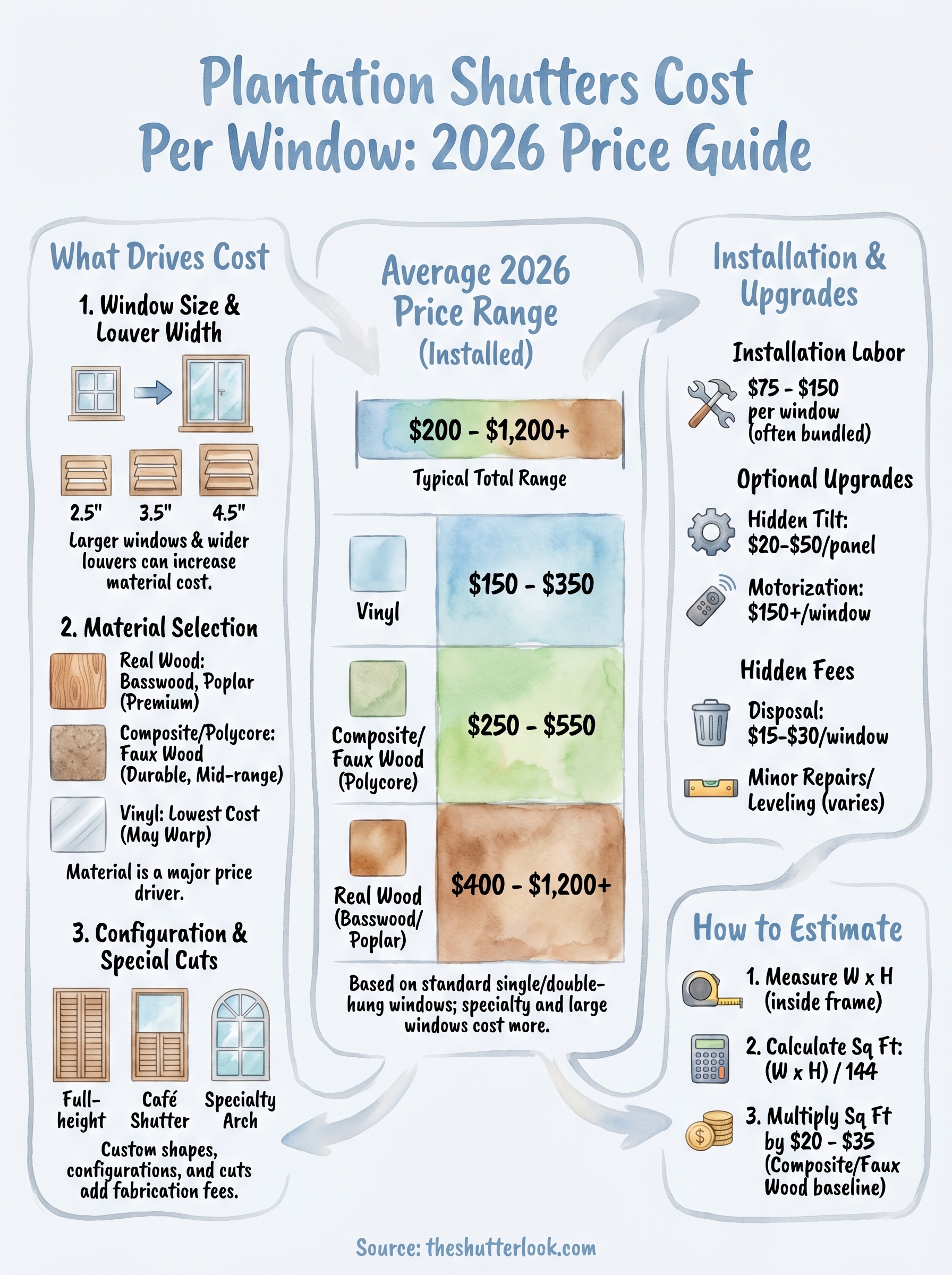
When you’re comparing quotes, having a realistic number in your head helps you separate competitive pricing from overpriced proposals. Plantation shutters cost per window typically falls between $200 and $1,200, depending on material, window size, and configuration. That’s a wide range, but most standard residential windows in Central Florida land somewhere in the $250 to $600 per window zone when you factor in composite or faux wood materials and professional installation.
Per-window price ranges by shutter type
The material you choose is the fastest way to narrow down where your project will fall in that range. Here’s a straightforward breakdown of typical 2026 per-window pricing across the most common shutter types:
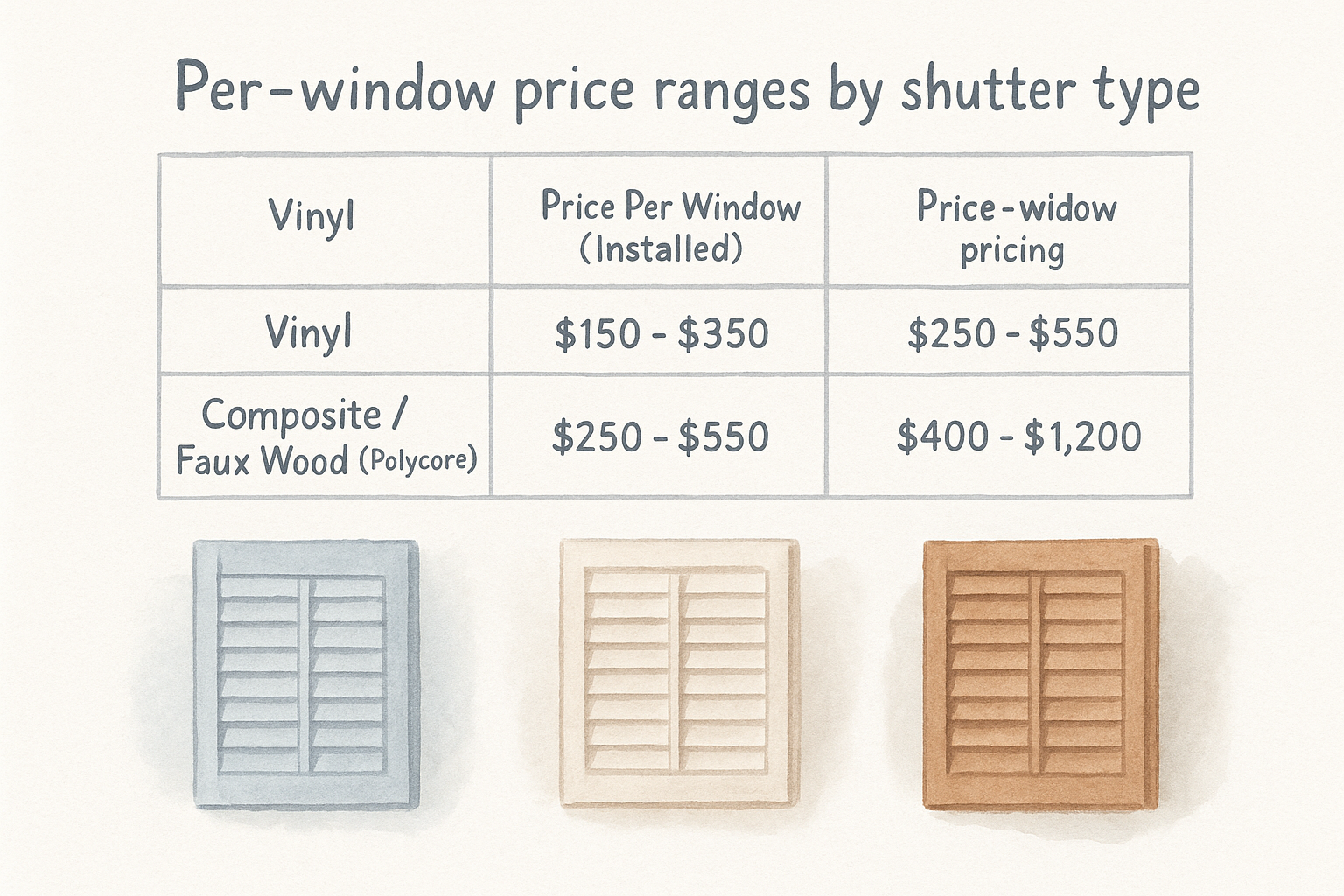
| Shutter Material | Price Per Window (Installed) |
|---|---|
| Vinyl | $150 – $350 |
| Composite / Faux Wood (Polycore) | $250 – $550 |
| Real Wood (Basswood / Poplar) | $400 – $1,200 |
These numbers reflect a standard single-hung or double-hung window in the 24" x 48" to 36" x 60" range. Specialty windows, large picture windows, or sliding glass door configurations will push costs higher than what this table shows.
If you’re outfitting multiple windows in the same room, many installers apply volume pricing that can reduce your per-window cost meaningfully.
What affects the range you’ll actually pay
Your actual per-window cost depends on more than just the material tag. Window dimensions, panel configuration, and any specialty cuts all shift the final number. A 24" x 36" window with a simple full-height panel will always cost less than a 48" x 72" window requiring a bi-fold panel setup, even if both use the same composite material.
Geographic location and labor rates in your market also play a role. In the Central Florida area, installation labor typically runs $75 to $150 per window, and that cost is sometimes bundled into the per-window quote rather than listed separately. Always ask your installer how they structure their quote so you’re comparing totals, not just product costs.
Material pricing by type and room needs
The material you choose for your shutters shapes both your upfront cost and how long those shutters hold up in your specific rooms. Matching material type to room conditions is just as important as comparing price tags, especially in a humid climate like Central Florida where moisture and heat put real pressure on window treatments over time.
Composite and faux wood shutters
Composite and polycore shutters sit in the mid-range of the plantation shutters cost per window spectrum, and they cover the widest range of rooms effectively. In bathrooms, kitchens, and laundry rooms where humidity runs high, composite materials resist warping and cracking in ways that real wood simply cannot. Polycore shutters like the Sunland Polycore line hold their finish for years without peeling, fading, or swelling when moisture levels fluctuate throughout the day.
For most Central Florida homeowners, composite shutters offer the strongest combination of long-term durability and value across both wet and dry spaces in the home.
Real wood shutters
Real wood shutters, typically made from basswood or poplar, carry a higher price per window and perform best in dry interior spaces like bedrooms and living rooms where temperature and humidity stay consistent. The natural grain and finish options available with wood give you a richer visual result, which is why many homeowners choose wood in high-visibility areas like front sitting rooms or formal dining spaces. Keep in mind that real wood requires more maintenance over time and will show wear faster in rooms with direct sunlight and no UV-protective glazing.
Matching material to the room
Choosing the right material becomes straightforward when you approach it room by room rather than applying one material across your entire home. Bathrooms and kitchens benefit from composite, while bedrooms and living areas can support either composite or wood depending on your available budget. Here is a quick breakdown:
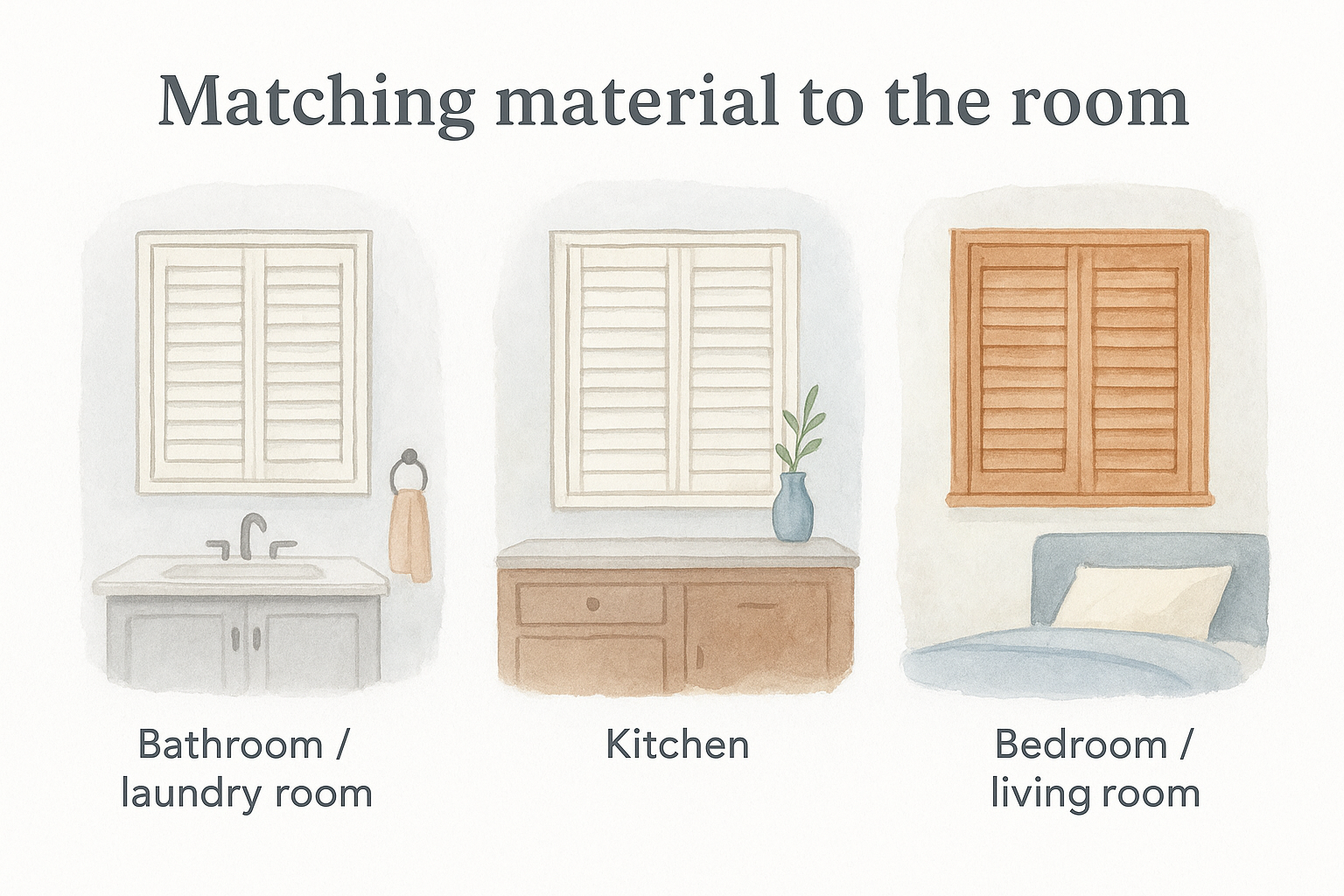
- Bathroom / laundry room: Composite or polycore only
- Kitchen: Composite preferred
- Bedroom / living room: Composite or real wood
- High-sun rooms: Composite with UV resistance
Installation costs, upgrades, and hidden fees
Knowing the product cost is only part of understanding your total plantation shutters cost per window. The full number you pay includes installation labor, optional upgrades, and a few line items that don’t always appear on the first estimate you receive. Getting clarity on all three before you sign anything keeps you from budget surprises when the final invoice arrives.
What installation labor actually costs
Most professional shutter installers charge $75 to $150 per window for labor, though many companies bundle this into a single per-window price rather than breaking it out as a separate line. When you request a quote, ask specifically whether labor is included in the number you’re seeing or listed separately. Itemized quotes give you a clearer picture of where your money goes and make it easier to spot real differences between competing proposals.
- Ask whether labor is bundled or listed separately
- Confirm if the measurement visit carries its own fee
- Check whether removal of old window treatments is included
Upgrades that increase the per-window price
Several add-ons push your per-window total above the baseline estimate. Hidden tilt systems, which eliminate the center tilt rod for a cleaner look, typically add $20 to $50 per panel. Motorized operation, available on certain composite and shade systems, can add $150 or more per window depending on the mechanism selected. Specialty louver widths, custom paint colors outside a standard palette, and shaped cutouts for doorknobs or handles all carry additional fabrication costs that appear as line items on a detailed quote.
Ask your installer to walk through each upgrade line on the quote so you understand exactly what you’re paying for before you commit.
Fees that don’t always show up upfront
A few costs catch homeowners off guard when the final invoice arrives. Removal and disposal of existing window treatments is not always included in a base quote and can run $15 to $30 per window. If your window frames need minor repairs or leveling before installation can proceed, that work carries its own charge. Travel fees may also apply for homes on the outer edges of a service area, and some companies charge a separate measurement visit fee that is credited back only if you move forward with the order.
How to estimate your per-window price accurately
Getting a reliable estimate before you call anyone starts with knowing your own numbers. The more accurately you can describe your windows, the closer your first quote will be to your actual total. You don’t need a contractor’s background to do this, just a tape measure and a basic understanding of what factors matter when calculating plantation shutters cost per window.
Measure your windows before you call
Width and height measurements are the foundation of any shutter quote. Measure each window from inside the frame, side to side for width and top to bottom for height. Write down both dimensions in inches for every window you plan to cover, since installers calculate square footage from those numbers. If you have multiple windows of the same size, note the quantity separately rather than grouping them into one measurement.
Measuring inside the frame rather than the outside gives your installer the working dimensions they actually need to fabricate a properly fitted shutter.
- Width: measure at the top, middle, and bottom; use the narrowest reading
- Height: measure at the left, center, and right; use the shortest reading
- Record each window individually, even if they look identical in size
Calculate a baseline number
Once you have your measurements, multiply the width by the height and divide by 144 to get square footage per window. Composite shutters typically run $20 to $35 per square foot installed, so multiplying your square footage by that range gives you a working budget for each window. A 30" x 60" window comes out to 12.5 square feet, which puts the estimate at roughly $250 to $437 for that single window using those rates.
Repeat the calculation for every window on your list, then combine the totals. That number gives you a realistic project baseline before you sit down with any installer for a formal quote, and it puts you in a much stronger position to evaluate what you’re actually being charged.
A simple way to budget and move forward
Understanding plantation shutters cost per window gives you a real advantage before you ever call an installer. You now have the material comparisons, per-window price ranges, and measurement steps needed to build a working budget on your own terms. Start with your measurements, run the square footage calculation from the previous section, and use the composite or wood price ranges to set a realistic project total before any salesperson enters the conversation.
Your next step is getting a quote that matches what you’ve learned here. At The Shutter Look, every estimate starts with a free in-home consultation where we bring physical samples and measure each window ourselves, so the number you receive reflects your actual home, not a generic range. With a three-week turnaround from quote to installation, you won’t be waiting long to move forward either. Request your free in-home estimate and get exact pricing for your windows today.
