


Choosing between wood vs composite plantation shutters is one of the most common decisions homeowners face when upgrading their windows. Both materials look great, both block light and add privacy, but they perform very differently depending on your budget, your home’s environment, and how long you expect them to last.
The real differences come down to a handful of factors: cost, durability, moisture resistance, weight, and long-term maintenance. If you live in a humid climate like Central Florida, these factors matter even more. The wrong choice can mean warped frames, peeling finishes, or shutters that don’t hold up after a few years of daily use.
At The Shutter Look, we’ve spent over 23 years installing both wood and composite shutters across Central Florida homes, so we’ve seen firsthand how each material performs over time. This guide breaks down the pros, cons, and costs of both options so you can make a confident decision before your next in-home consultation.
Why material choice matters for plantation shutters
When you install plantation shutters, you’re making a long-term investment in your home. Unlike curtains or blinds you can swap out in a weekend, shutters are fixed to your window frames and built to last for 10 to 20 years or more. That means the material you choose on day one shapes everything from how the shutters look in year one to how they function in year fifteen. Getting this decision right saves you money and frustration down the road.
The material you choose for your plantation shutters affects not just how they look, but how they perform in your specific home environment for years to come.
How your local environment shapes the decision
Central Florida’s climate puts extra stress on window treatments. High humidity, intense UV exposure, and frequent temperature swings create conditions that reveal the real difference between wood vs composite plantation shutters faster than almost any other region in the country. Wood can absorb moisture, swell, and warp when exposed to these conditions repeatedly, while composite materials resist it. If your home has bathrooms, kitchens, or rooms that face direct afternoon sun, the material you pick matters even more.
Your home’s specific rooms and exposures should drive this decision as much as your budget does. A shutter that holds up perfectly in a dry living room may buckle within a few years in a steam-heavy bathroom.
Why the stakes are higher than with most window treatments
Plantation shutters attach directly to your window frames or casings, which means replacing them isn’t as simple as pulling down a curtain rod. A poor material choice leads to costly removal and reinstallation, not just a quick swap. Warped louvers, cracked frames, or finishes that peel after a few summers make the shutters look worn and affect the overall appearance of a room.
Choosing the right material from the start also protects the structural integrity of your window frames. Repeated swelling and shrinking from a moisture-prone material can put pressure on the surrounding trim and casings over time.
How wood and composite plantation shutters differ
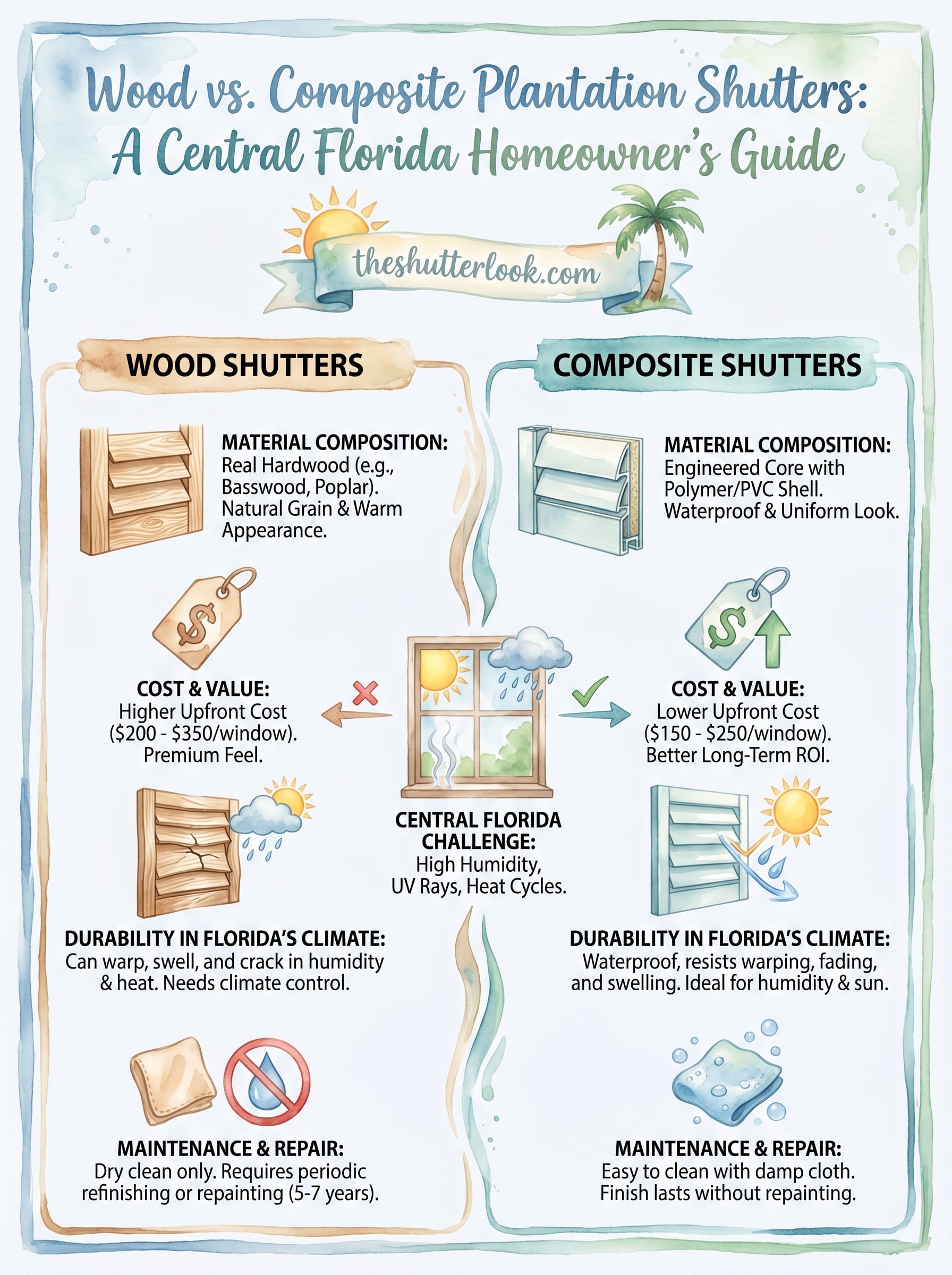
The core distinction between wood vs composite plantation shutters comes down to raw materials and how those materials react to your home’s environment. Wood shutters use real timber, typically basswood or poplar, while composite shutters use an engineered core wrapped in a polymer or PVC shell.
What wood plantation shutters are made of
Wood shutters are crafted from real hardwood, most commonly basswood due to its lightweight and paintable surface. The natural grain gives them a warm, traditional appearance that works well in formal living spaces and bedrooms. Because they’re solid wood, they paint and stain beautifully and can match your existing interior trim.
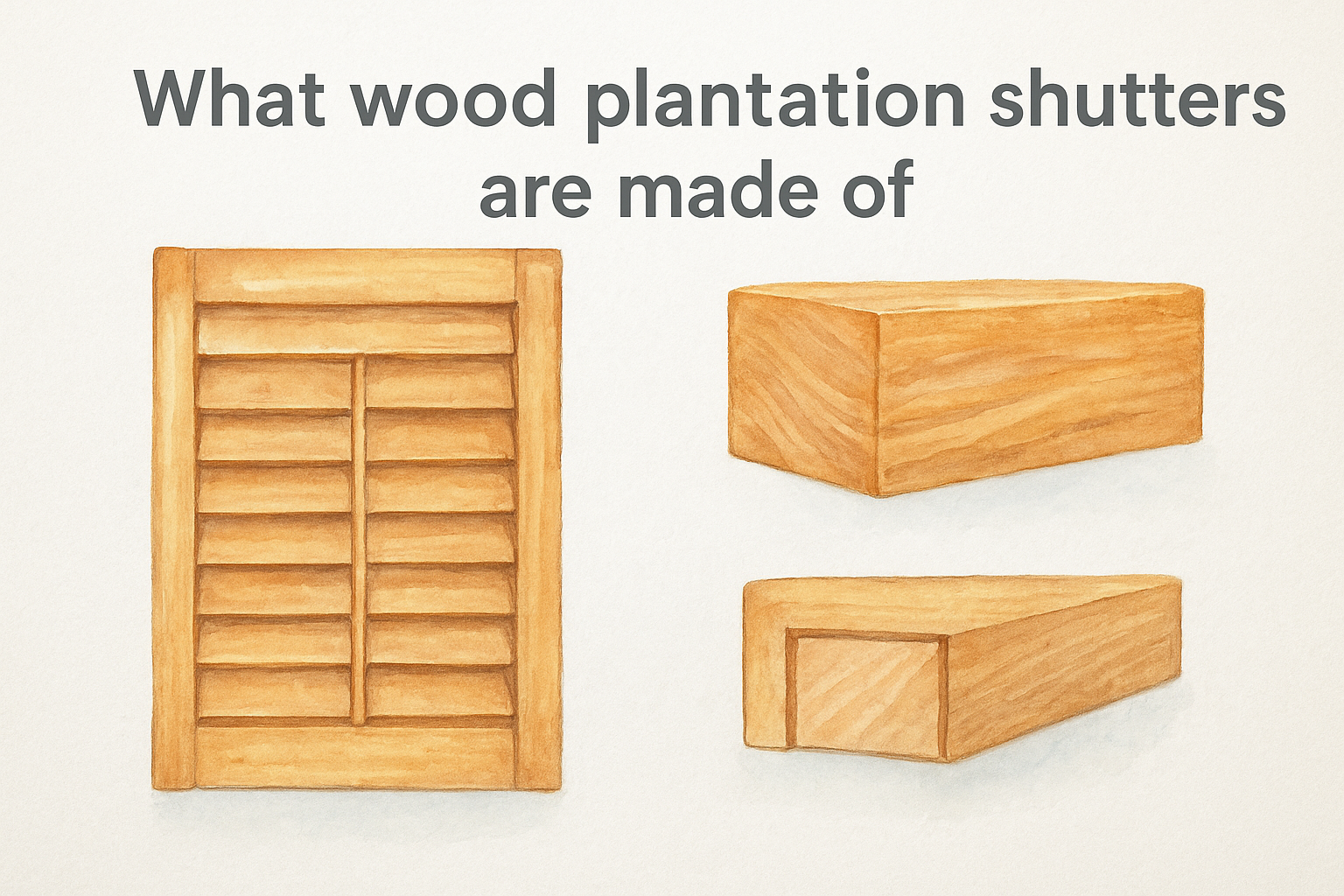
Real wood is also heavier than composite, which puts more stress on hinges and frames over time, particularly across wider window openings in your home.
What composite plantation shutters are made of
Composite shutters, like the Sunland Polycore shutters we install at The Shutter Look, use a rigid foam or wood-fiber core encased in a vinyl or polymer outer layer. This construction makes them waterproof, resistant to UV fading, and dimensionally stable in humid conditions.
They won’t warp, crack, or swell the way real wood can, which makes composite a reliable long-term choice for bathrooms, kitchens, and sun-facing rooms in your home.
Composite shutters deliver the same clean look as wood while handling moisture and sun exposure that would degrade a real wood shutter over time.
Cost, value, and ROI differences
Wood and composite plantation shutters both cost more than blinds or curtains, but they sit at different price points. Wood shutters typically run 10 to 20 percent more than comparable composite options, depending on wood species, finish, and window size. For a full home installation, that gap adds up fast.
What you pay upfront
The cost difference between these two materials is consistent across most window sizes. Wood shutters typically range from $200 to $350 per window installed, while composite shutters fall closer to $150 to $250 per window. If you’re comparing wood vs composite plantation shutters across a full home, composite can save you several hundred dollars on the total project cost.
| Material | Avg. Cost Per Window (Installed) |
|---|---|
| Wood | $200 – $350 |
| Composite | $150 – $250 |
Long-term value and return on investment
Your real measure isn’t the upfront price alone but what you spend over the shutter’s full lifetime. Composite shutters hold their finish longer and rarely need replacement in high-humidity environments like Central Florida, while wood shutters may need refinishing or full replacement sooner if installed in moisture-prone rooms.
Composite shutters often deliver better long-term ROI in Florida homes because you avoid paying to repair or replace them after a few humid summers.
Durability in humidity, sun, and heat
Florida’s climate tests every material in your home, and plantation shutters are no exception. Daily exposure to high humidity, UV rays, and intense heat cycles creates conditions that reveal the real difference between wood vs composite plantation shutters faster than almost any other region in the country.
How wood holds up over time
Real wood responds to moisture by expanding and contracting with seasonal humidity changes. Over several years, this cycle causes louvers to warp, frames to twist, and paint finishes to crack. Wood shutters perform well in dry, climate-controlled rooms like bedrooms and formal living areas, but struggle in spaces with direct sun exposure or fluctuating humidity levels.
Wood shutters can last decades in the right conditions, but Florida’s heat and humidity aren’t those conditions for most rooms in your home.
Why composite outperforms in Florida conditions
Composite shutters use a waterproof polymer shell that doesn’t absorb moisture, so the swelling and warping cycle that degrades wood simply doesn’t happen. For Central Florida homes, composite materials hold their shape and finish far longer in sun-facing rooms.
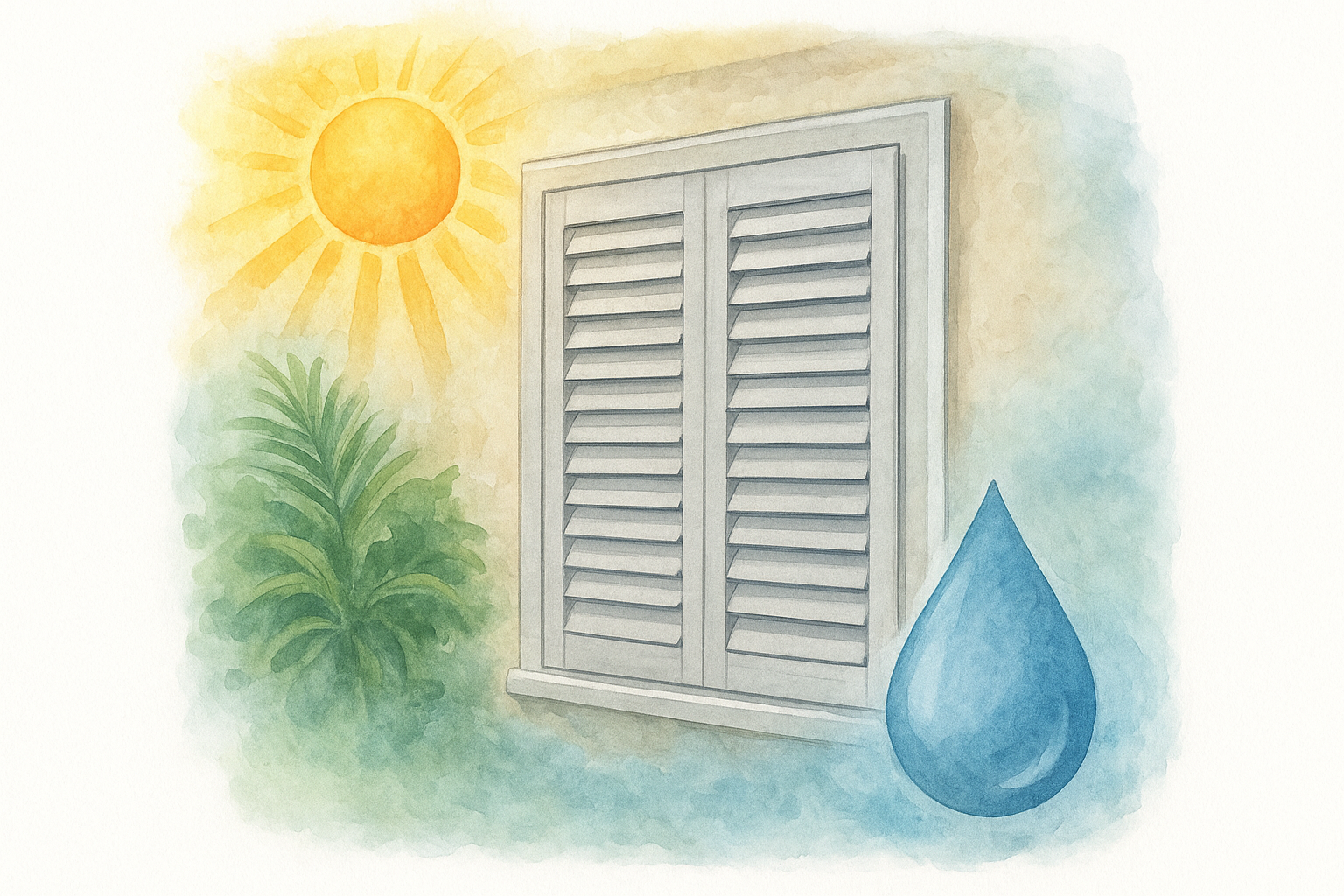
UV-resistant finishes on composite shutters prevent the fading and chalking that intense sun accelerates in real wood. Composite holds up reliably against:
- Moisture absorption in bathrooms and kitchens
- UV fading on south and west-facing windows
- Dimensional warping from summer heat cycles
Maintenance, cleaning, and repair expectations
Both wood and composite plantation shutters require occasional cleaning, but the effort and cost involved differ considerably. Understanding what each material demands before you buy prevents surprises after installation and helps you plan realistic long-term maintenance.
Cleaning and repairing wood shutters
Wood shutters need dry cleaning methods to avoid moisture damage. Use a soft cloth or a dry microfiber duster to wipe down louvers regularly. Avoid spraying water directly on the surface because excess moisture penetrates the finish and accelerates warping over time. When wood shutters do sustain damage, repairs typically involve sanding, refinishing, or repainting, which adds cost and labor.
Wood shutters in high-humidity rooms often need refinishing within five to seven years, which offsets the premium feel they initially provide.
Cleaning and repairing composite shutters
Composite shutters, like Sunland Polycore, handle moisture without risk, so you can wipe them down with a damp cloth or mild cleaning solution. This makes weekly cleaning straightforward and fast. Because the polymer shell resists UV fading and won’t absorb moisture, the finish stays consistent for years without the need to repaint or reseal. Repair needs for composite shutters are also far less common, and the dimensional stability of the material means louvers and frames hold their shape even after years of daily use in Central Florida conditions.
Comparing wood vs composite plantation shutters on maintenance alone, composite wins for most Florida homeowners.
Next steps for your home
The choice between wood vs composite plantation shutters comes down to your rooms, your budget, and how long you want them to last. If your home has bathrooms, kitchens, or sun-facing windows, composite is the stronger pick for Central Florida’s climate. If you’re furnishing a dry, climate-controlled bedroom or formal living space and want the warmth of real timber, wood remains a solid option worth considering.
Before you commit to either material, an in-home consultation gives you a chance to see actual product samples in your space and get accurate measurements for a real quote. That removes the guesswork and helps you compare both options against your specific windows and rooms.
The Shutter Look has spent over 23 years helping Central Florida homeowners find the right fit for their homes. Schedule your free in-home estimate and get expert guidance from start to installation.
