


Large windows bring in natural light and open up a room, but covering them properly is a different challenge altogether. Standard off-the-shelf options often fall short, literally. Plantation shutters for large windows need to handle extra weight, wider spans, and years of daily use without sagging or warping. Choosing the wrong product or skipping key details during installation can turn a significant investment into a costly headache.
At The Shutter Look, we’ve spent over 23 years measuring, fitting, and installing shutters across Central Florida homes, many of them with oversized windows that demand precision. That hands-on experience has taught us exactly what works and what fails over time when it comes to large openings.
This article breaks down five practical tips to help you select plantation shutters that fit your large windows correctly, hold up under real conditions, and actually last. Whether you’re upgrading existing treatments or starting fresh, these recommendations come straight from the field, not a product catalog.
1. Work with a full-service shutter installer
Large windows leave no room for guesswork. A full-service installer handles precise measurement, product sourcing, and professional installation as a single package, which removes the gaps where errors typically happen. When you split those responsibilities across multiple vendors, you often end up with shutters that don’t fit or warranties that nobody honors.
What the tip solves for large windows
Wide and tall openings require measurements taken at multiple points because walls shift and windows rarely sit perfectly square. A full-service provider takes responsibility for every measurement, so if a panel arrives cut wrong, the fix is on them, not you.
Skipping professional measurement on large windows is the single most common reason shutters warp, gap, or require costly rework within the first year.
How to apply it in a real home
Ask your installer to bring physical product samples to your home during the consultation rather than relying on photos or swatches. Seeing a louver style and material against your actual window light tells you far more than any catalog. At The Shutter Look, every estimate includes an in-home visit with real samples so you can make an informed decision before anything gets ordered.
Options that change cost and durability
Full-service pricing typically includes measurement, the product itself, and installation as a bundled cost. Some installers break these out separately, which can look cheaper upfront but adds up fast. Custom fitting for large openings adds value because panels are built specifically for your window dimensions rather than cut down from standard sizes.
Red flags to watch for
Be cautious of any company that asks you to submit your own measurements or ships product directly to your door for self-installation. Large window shutters need professional fitting, and any installer unwilling to come out in person is one worth skipping.
2. Choose the right material for Florida conditions
Florida’s heat, humidity, and intense sun put constant stress on window treatments. For plantation shutters for large windows, material choice determines whether your shutters look sharp in year three or start warping and fading in year one.
What the tip solves for large windows
Larger panels flex more under temperature changes and absorb more UV exposure than smaller ones. Choosing a material built for Florida’s climate means your shutters maintain their shape and finish across a wide span that smaller windows never stress-test.
Composite core shutters outperform untreated wood on wide panels in humid climates because the core resists moisture absorption that causes warping.
How to apply it in a real home
Ask your installer specifically about moisture-resistant composite options like Sunland Polycore, which holds its shape in humid rooms like kitchens and bathrooms where wood expands and contracts seasonally.
Options that change cost and durability
Polycore materials typically cost more upfront than basic wood shutters, but they outlast wood significantly in Florida conditions. Lexwood offers another durable option that balances a wood-like appearance with better humidity resistance for rooms with heavy sun exposure.
Red flags to watch for
Avoid any installer offering untreated solid wood shutters for Florida homes without a clear explanation of how the product handles long-term humidity. Wood without proper sealing warps quickly on large spans.
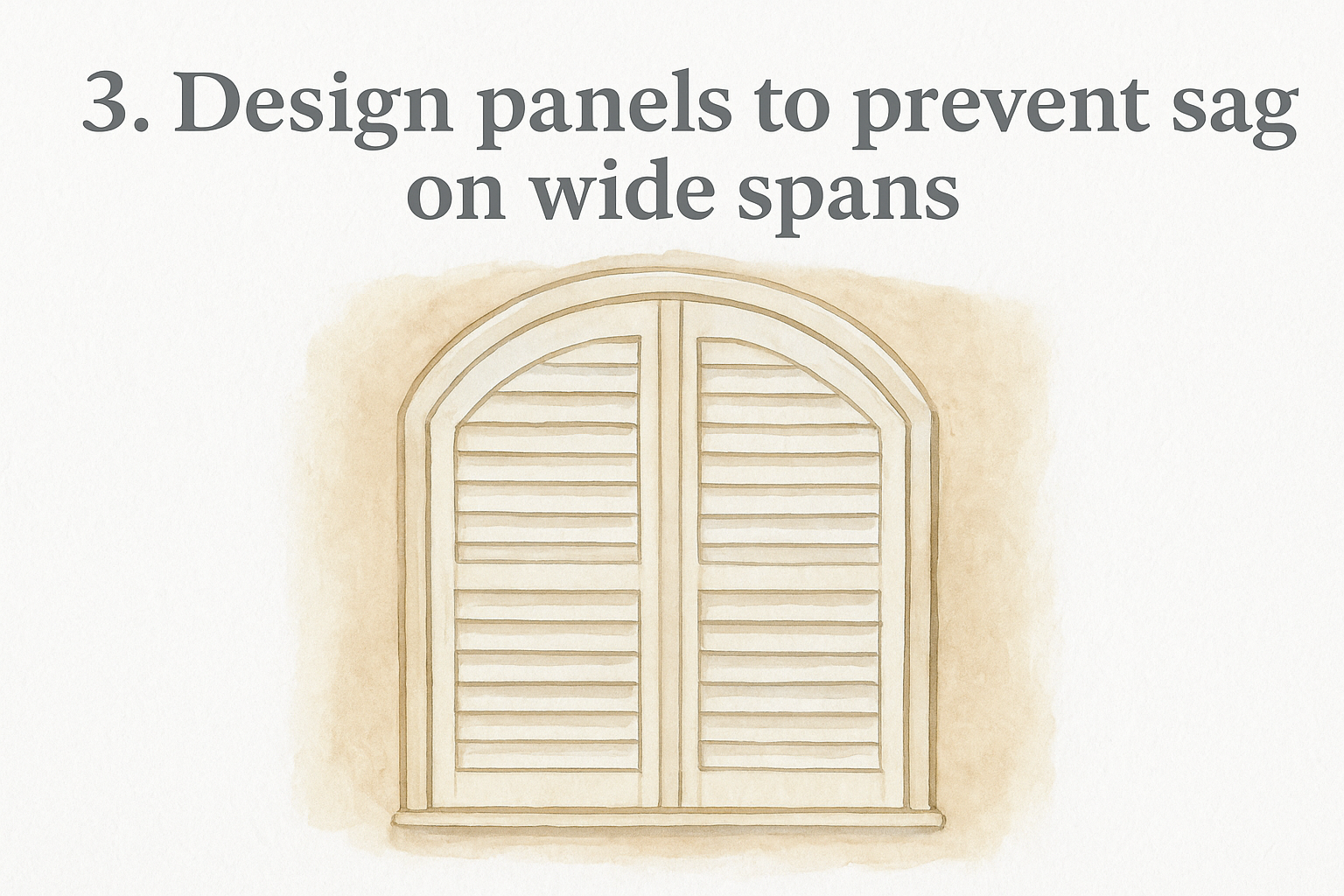
3. Design panels to prevent sag on wide spans
Large windows put structural stress on shutter panels that smaller openings never create. Panel width and support framing work together to determine whether your shutters hang straight for years or start drooping within months.
What the tip solves for large windows
Wide spans force panels to carry more weight across a longer horizontal distance. A center divider rail running across the middle of a tall, wide panel reduces flex and keeps both sections operating independently, which prevents the bottom half from pulling the frame out of shape.
Adding a center divider rail on panels wider than 36 inches is one of the most effective structural upgrades for plantation shutters for large windows.
How to apply it in a real home
Ask your installer to split wide openings into multiple narrower panels rather than ordering one oversized piece. Two or three panels across a wide window distribute weight more evenly and give each section a stable frame to work within.
Options that change cost and durability
Multiple panels add hardware and labor costs, but they extend shutter lifespan significantly on wide spans. Divider rails are a lower-cost structural addition your installer can recommend based on your specific window dimensions.
Red flags to watch for
If an installer quotes you a single oversized panel for a window wider than 48 inches without mentioning divider rails or split panels, they are likely skipping important structural planning that will cost you later.
4. Pick louver size and controls for tall windows
Louver size affects how much light enters and how easy the shutters are to operate daily. Tall windows amplify both of these factors, making your louver choice more important than it would be on a standard-sized opening.
What the tip solves for large windows
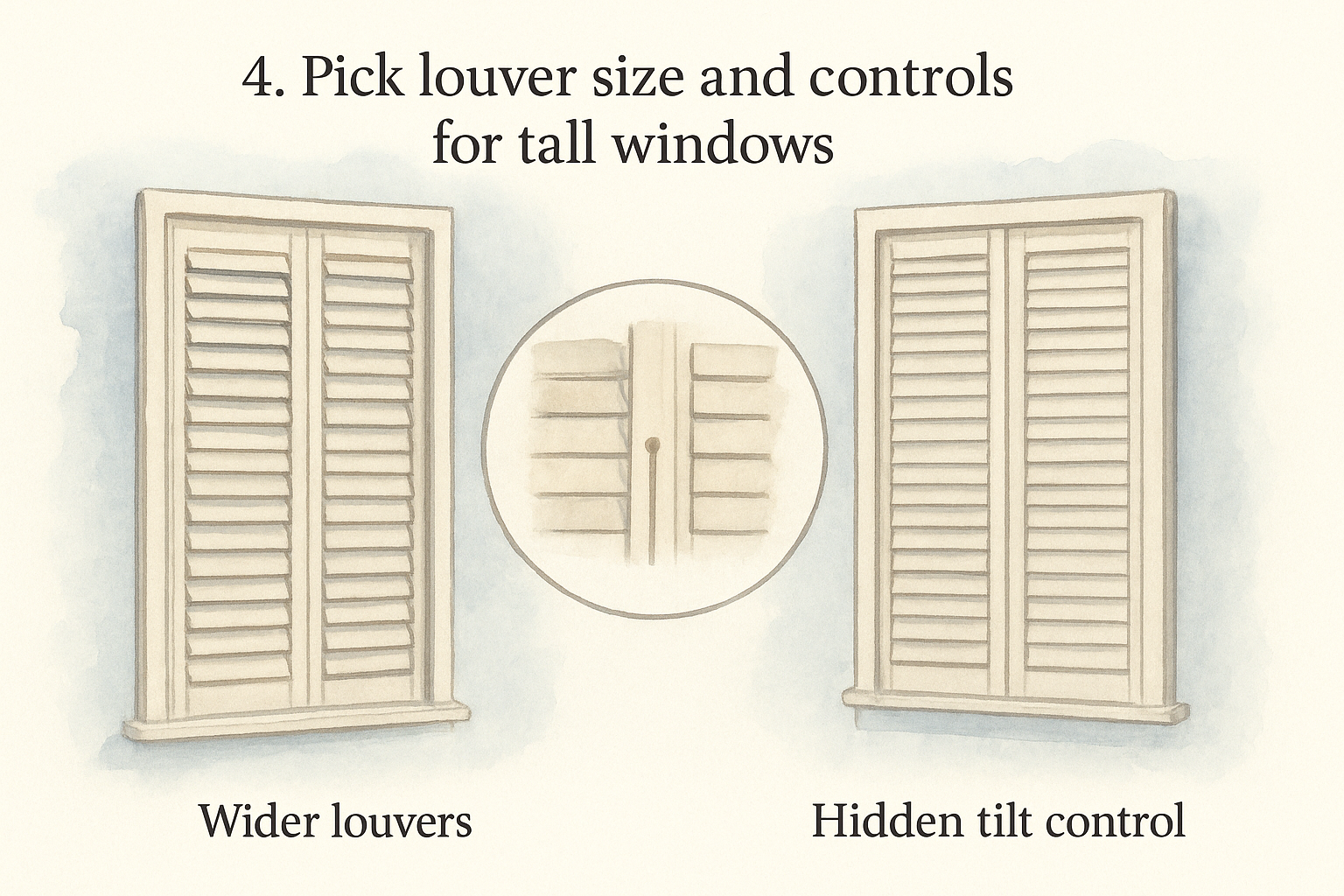
Wider louvers let in more light and require less force to tilt on plantation shutters for large windows, which matters when panels sit high up in a tall frame. Smaller 2.5-inch louvers suit narrower openings but can feel heavy and visually busy on large spans.
Louvers sized at 3.5 inches or wider work better on tall windows because they reduce the number of slats, which lowers the total weight the tilt rod has to move.
How to apply it in a real home
Ask your installer to demonstrate tilt rod versus hidden tilt control options during your in-home consultation. Hidden tilt removes the vertical rod from the center of the panel, giving you a cleaner look on large windows where that rod is more visible.
Options that change cost and durability
Hidden tilt systems cost more than standard rods but improve both aesthetics and long-term function on tall panels.
Red flags to watch for
If an installer only offers one louver size across all window heights, they are not customizing to your specific opening, which is a sign they lack experience with larger window projects.
5. Plan inside vs outside mount for clean fit
The way your shutters mount to the window frame shapes the final look as much as any louver or material choice. For plantation shutters for large windows, getting the mount decision right prevents gaps, uneven reveals, and frames that look visually out of place.
What the tip solves for large windows
Large windows often have shallow frame depth, which forces an outside mount. Inside mounts look cleaner but require at least 2.5 inches of frame depth so the louvers can open without hitting the glass.
Measuring frame depth before ordering shutters saves you from receiving panels that physically cannot fit inside the window opening.
How to apply it in a real home
Your installer should measure frame depth at multiple points across the window, not just the center. Depth shifts across large openings, and even a half-inch difference can change the mount decision entirely.
Options that change cost and durability
Outside mounts cost less in hardware but require precise framing to avoid visible gaps at the edges. Inside mounts deliver a custom-fitted appearance that works well when your frame depth genuinely supports it.
Red flags to watch for
Any installer who recommends a mount type without physically measuring your frame depth is guessing. On large windows, that guess typically results in panels that sit awkwardly or need extra trim work to hide the gaps.
Next steps
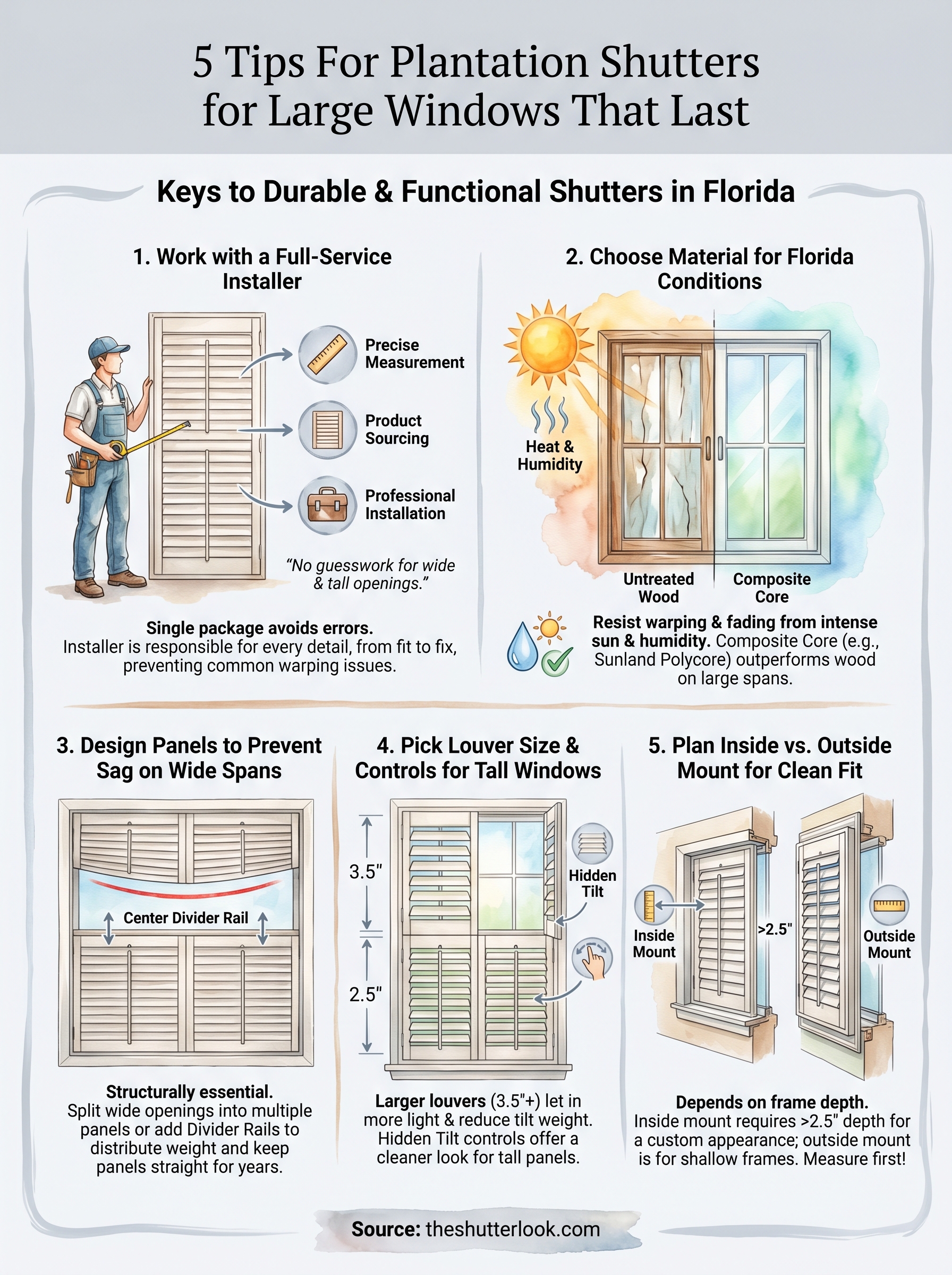
Getting plantation shutters for large windows right comes down to five decisions made before a single panel gets ordered: hiring a full-service installer, picking the right material for Florida’s climate, building in structural support on wide spans, choosing louver size and controls that match your window height, and nailing down your mount type with actual measurements. Each tip connects directly to how your shutters perform years from now, not just on installation day.
If your home has large windows and you want shutters that hold up without constant adjustments or replacements, the next move is to book a consultation with someone who handles every step in-house. At The Shutter Look, every project starts with a free in-home estimate, where you see real samples against your actual windows before anything gets ordered. With over 23 years of experience fitting shutters across Central Florida, we handle the details so you don’t have to. Schedule your free estimate today.
