


Fabric window shades add warmth and style to any room, but they also collect dust, allergens, and the occasional mystery stain. Knowing how to clean fabric window shades the right way matters because the wrong method, harsh chemicals, too much water, aggressive scrubbing, can warp, discolor, or permanently damage the material. With over 23 years of installing and working with window treatments across Central Florida, we’ve seen firsthand what happens when shades get cleaned incorrectly.
At The Shutter Look, we help homeowners choose and install shades built to last. Part of that lasting quality comes down to proper care after installation. Whether you have Roman shades in your living room, pleated shades in a bedroom, or roller shades in a home office, each type needs a slightly different cleaning approach to stay looking its best.
This guide walks you through routine dusting, spot-cleaning stains, and deep-cleaning options, both while your shades are still hanging and when you need to take them down for a thorough soak. Every method here is safe for most fabric shade types and designed to help you maintain your investment without risking damage.
Before you start: tools, fabric checks, and do-nots
Jumping straight into cleaning without preparation often causes more harm than the original dirt did. Fabric types vary widely, and what works on a tightly woven roller shade can easily ruin a delicate pleated or Roman shade. Take five minutes to check your shade’s care label and gather the correct tools before you touch anything.
Gather the right tools
Having the right supplies on hand keeps the process smooth and prevents improvising with the wrong products. Most of what you need is already in your home, so there’s no reason to buy specialty cleaners unless your fabric specifically requires one.
- Soft-bristle brush or clean, dry paintbrush
- Handheld vacuum with an upholstery attachment
- Mild, unscented dish soap
- White microfiber cloths (colored cloths can transfer dye onto fabric)
- Lukewarm water in a small bowl
- Clean dry towels for blotting and drying
Check your fabric type first
Before you figure out how to clean fabric window shades properly, you need to know what your shades are made of. Synthetic fabrics like polyester tolerate gentle moisture well, while natural fibers such as linen or cotton are far more sensitive to water and can shrink or warp if you over-saturate them.
Always read the manufacturer’s care label before applying any liquid. If there’s no label, test your cleaning method on a small, hidden corner first and let it dry completely before moving forward.
Know what to avoid
Certain habits cause permanent damage that no amount of re-cleaning can fix. Harsh chemical sprays, bleach, and abrasive scrubbing pads are the most common offenders homeowners reach for without thinking. Avoid soaking any shade that isn’t fully removable, and never use a steam cleaner on fabric shades unless the manufacturer explicitly states the fabric can handle direct heat exposure.
Step 1. Routine cleaning while shades hang
Routine dusting is the single most effective habit you can build to keep your shades in good condition. Doing it every two to four weeks prevents dust and allergens from embedding themselves into the fabric, which makes deeper cleaning sessions far less frequent and less stressful on the material.
Dust from top to bottom
Start at the top of the shade and work your way down with a soft-bristle brush or clean dry paintbrush. This direction matters because loose particles fall downward, so brushing upward just redistributes them. Use light, sweeping strokes across each fold or panel without pressing into the fabric.
Always lower your shade fully before dusting so you can reach the entire surface without missing sections hidden in the folds.
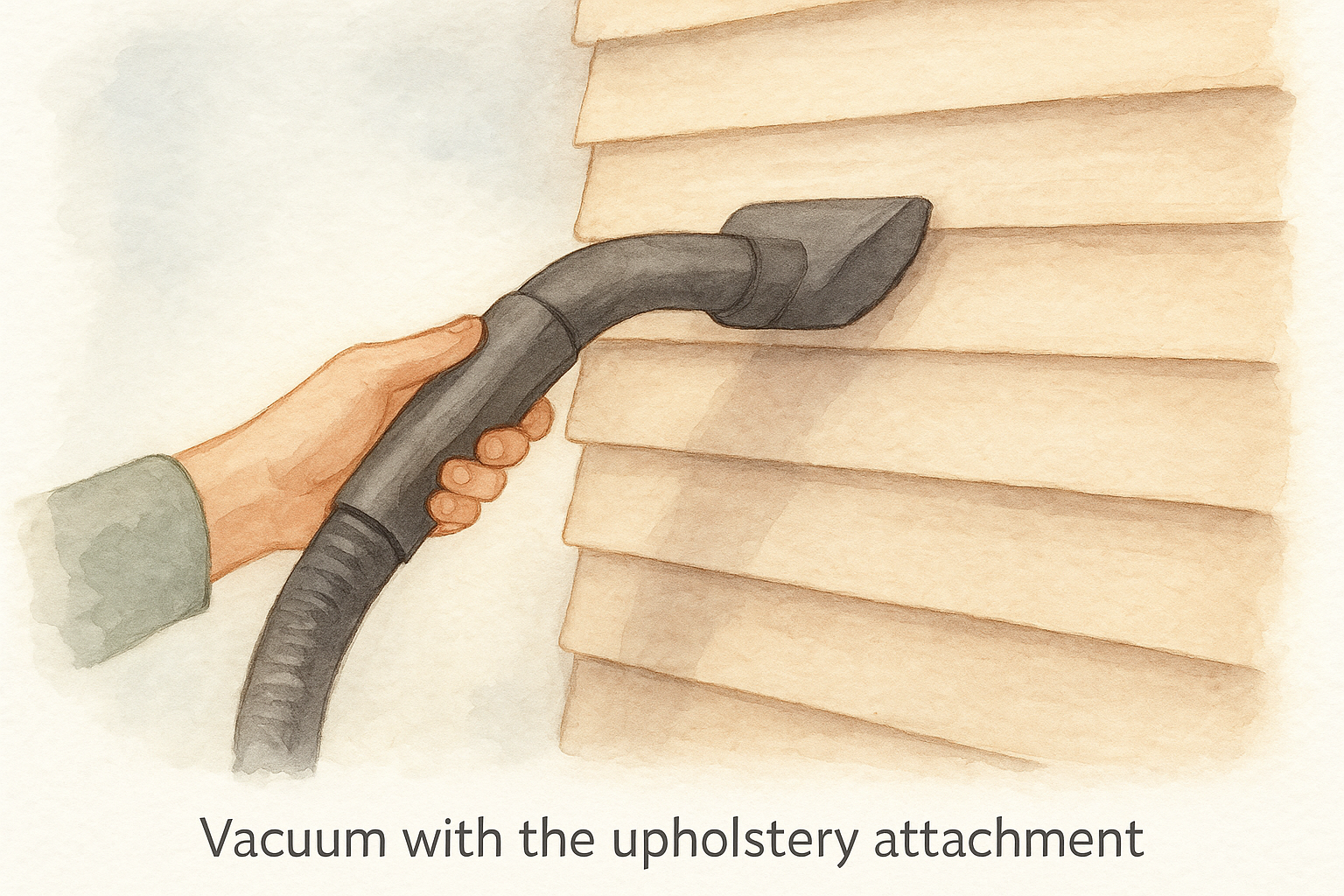
Vacuum with the upholstery attachment
Learning how to clean fabric window shades through vacuuming is one of the safest methods for regular maintenance. Set your vacuum to its lowest suction setting, hold the upholstery attachment slightly away from the fabric surface, and glide it slowly across each panel. Pressing directly onto the material can distort the weave or leave marks, especially on softer fabrics like linen or polyester blends.
Step 2. Spot clean common stains the safe way
Stains happen, but acting quickly is the difference between a clean shade and a permanent mark. The key to knowing how to clean fabric window shades effectively is treating stains before they dry and set into the fibers. Blot instead of scrubbing, because friction spreads the stain and pushes it deeper into your shade’s weave.
Match your approach to the stain type
Different stains need different treatments, and using the wrong solution can make things worse for your fabric. For greasy stains like cooking oil or fingerprints, apply a small drop of mild dish soap to a damp white microfiber cloth and blot gently from the outside edge inward. For water-based stains such as juice or coffee, plain lukewarm water on a clean cloth works first, and dish soap only if the mark persists.
Always work from the outer edge of the stain toward the center to prevent spreading it into a larger ring.
Rinse and dry immediately
After treating the stain, rinse the area with a second cloth dampened with clean water only. Then press a dry towel firmly against the damp spot to absorb as much moisture as possible. Leave your shade fully lowered and allow it to air dry completely before raising it.
Step 3. Deep clean removable shades and dry them fast
Some stains go deeper than surface cleaning can reach. When routine dusting and spot cleaning aren’t enough, a full soak is the most thorough way to handle how to clean fabric window shades with heavy buildup. Only attempt this if your care label confirms the shade is washable, since certain fabrics like silk or structured Roman shades with non-removable rods cannot handle submersion.
Take them down and soak safely
Remove your shade carefully from its mounting brackets to avoid bending any internal frames or rods. Fill a clean bathtub or large basin with lukewarm water and add a few drops of mild, unscented dish soap. Submerge the shade fully and agitate it gently by hand for two to three minutes without twisting or bunching the fabric.
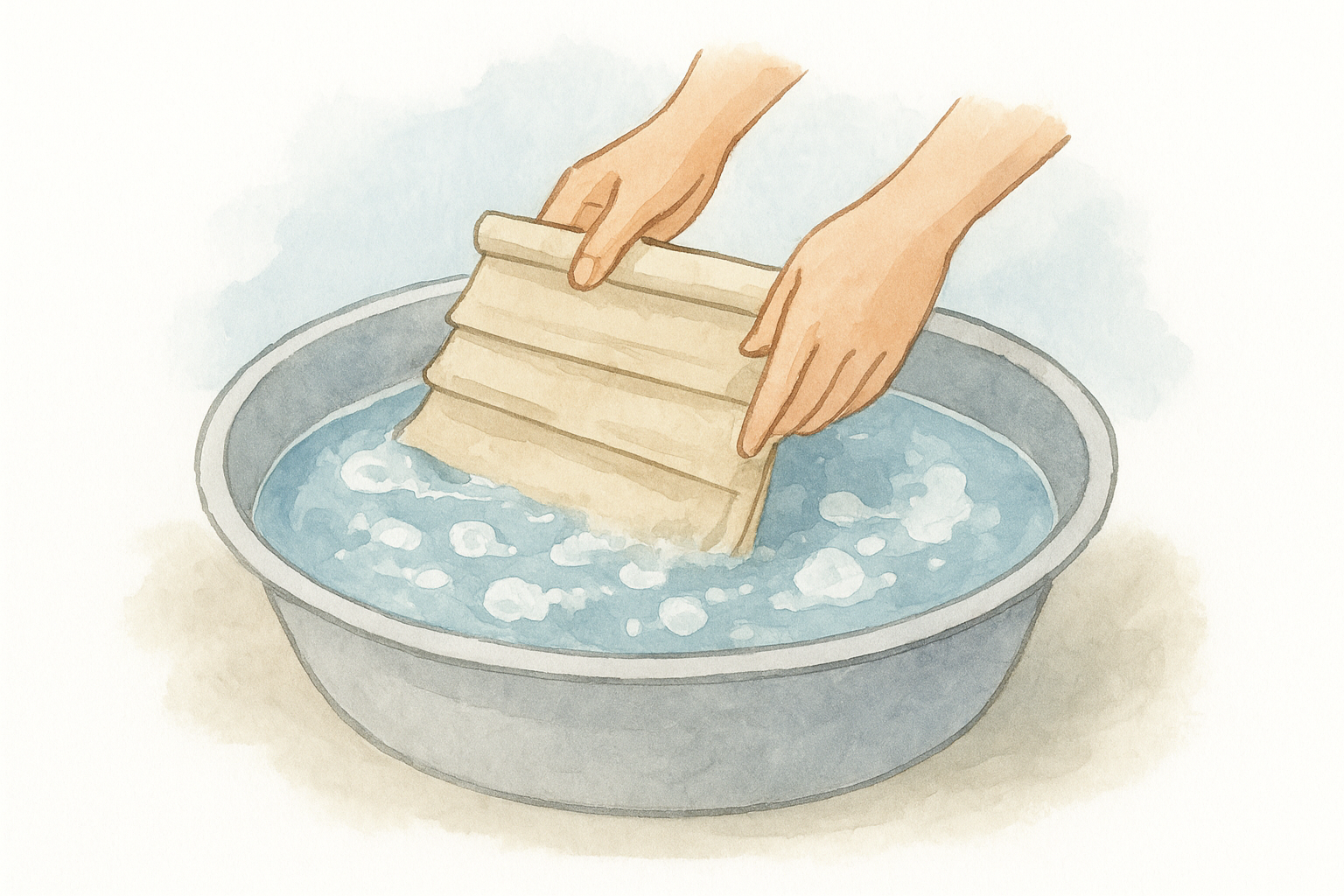
Rinse with cool, clean water until no soap residue remains. Leftover detergent stiffens fabric and attracts new dirt faster than a clean surface would.
Dry them fast to prevent mildew
After rinsing, lay the shade flat on a clean dry towel and roll the towel inward to press out excess moisture without wringing. This step pulls out the bulk of the water before you hang it to air dry, which cuts total drying time significantly.
Hang your shade immediately in a well-ventilated indoor area or in outdoor shade away from direct sunlight, which can fade the color and warp the fabric while it is still wet and vulnerable. Most fabric shades dry fully within two to four hours with good airflow.
Prevent future grime and fix common issues
Preventing buildup is far easier than deep-cleaning shades that have gone months without attention. A few simple habits built into your regular routine keep your shades in good shape and reduce how often you need to think about how to clean fabric window shades from scratch.
Simple habits that keep shades cleaner longer
Cooking grease and humidity are the biggest contributors to stubborn shade buildup in Florida homes. Keep a window slightly open when cooking and run bathroom exhaust fans during showers to reduce moisture that settles into fabric over time.
- Dust shades every two to four weeks
- Keep shades raised during high-humidity events when possible
- Wipe window sills regularly so dust doesn’t transfer onto the fabric
- Avoid touching fabric with bare hands, as skin oils attract dirt quickly
Fix common problems before they get worse
If your shade develops a yellowish tint, it usually signals sun exposure rather than dirt. Rotating shades on sun-heavy windows every few months distributes wear more evenly across the fabric.
Catching small issues early almost always keeps a simple fix from turning into a full replacement.
For shades with stiff or stuck lifting cords, never yank them. Lower the shade fully and gently work the cord free by hand to avoid tearing the fabric along its heading.
Keep Your Shades Looking New
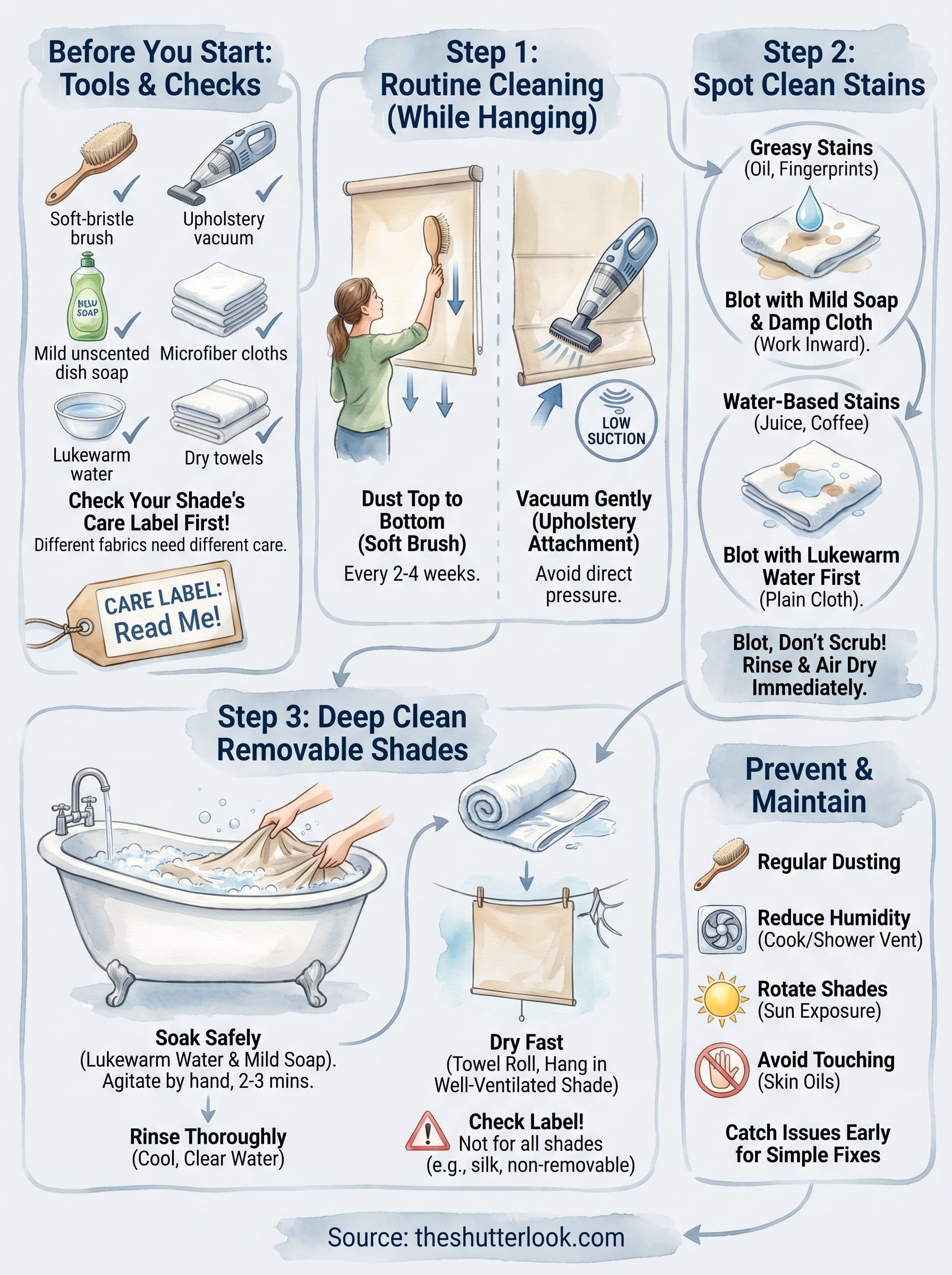
Fabric window shades are a long-term investment, and consistent care is what protects that investment over time. The steps in this guide cover how to clean fabric window shades at every level, from quick weekly dusting to a full bathtub soak when buildup gets serious. Staying consistent with routine maintenance is what separates shades that look great after five years from ones that need early replacement.
Clean shades also perform better mechanically. Heavy dust and moisture buildup can stiffen the fabric and cause the lifting cord or roller mechanism to work harder than it should, which shortens the lifespan of both the shade and its hardware. Treating stains early and keeping your shades dry after cleaning protects the fabric structure for the long run.
If your shades are showing real wear or you are ready for an upgrade, The Shutter Look offers free in-home consultations across Central Florida to help you find a durable, well-fitted replacement for any room in your home.
