


Choosing between roller shades vs blinds is one of the most common decisions homeowners face when updating their windows. Both options work well for light control and privacy, but they differ in design, function, and long-term value. Picking the wrong one can mean wasted money and daily frustration, especially in Central Florida, where sun exposure and heat play a major role in what works best.
At The Shutter Look, we’ve spent over 23 years helping homeowners across Central Florida find the right window treatments for their specific needs. Through thousands of in-home consultations, we’ve seen firsthand how the roller shades vs blinds question plays out in real homes with real lighting conditions and budgets.
This guide breaks down the key differences between roller shades and blinds, covering light control, privacy, durability, maintenance, and cost, so you can make a confident decision before you buy. Whether you’re outfitting a new home or replacing outdated window coverings, you’ll walk away knowing exactly which option fits your situation.
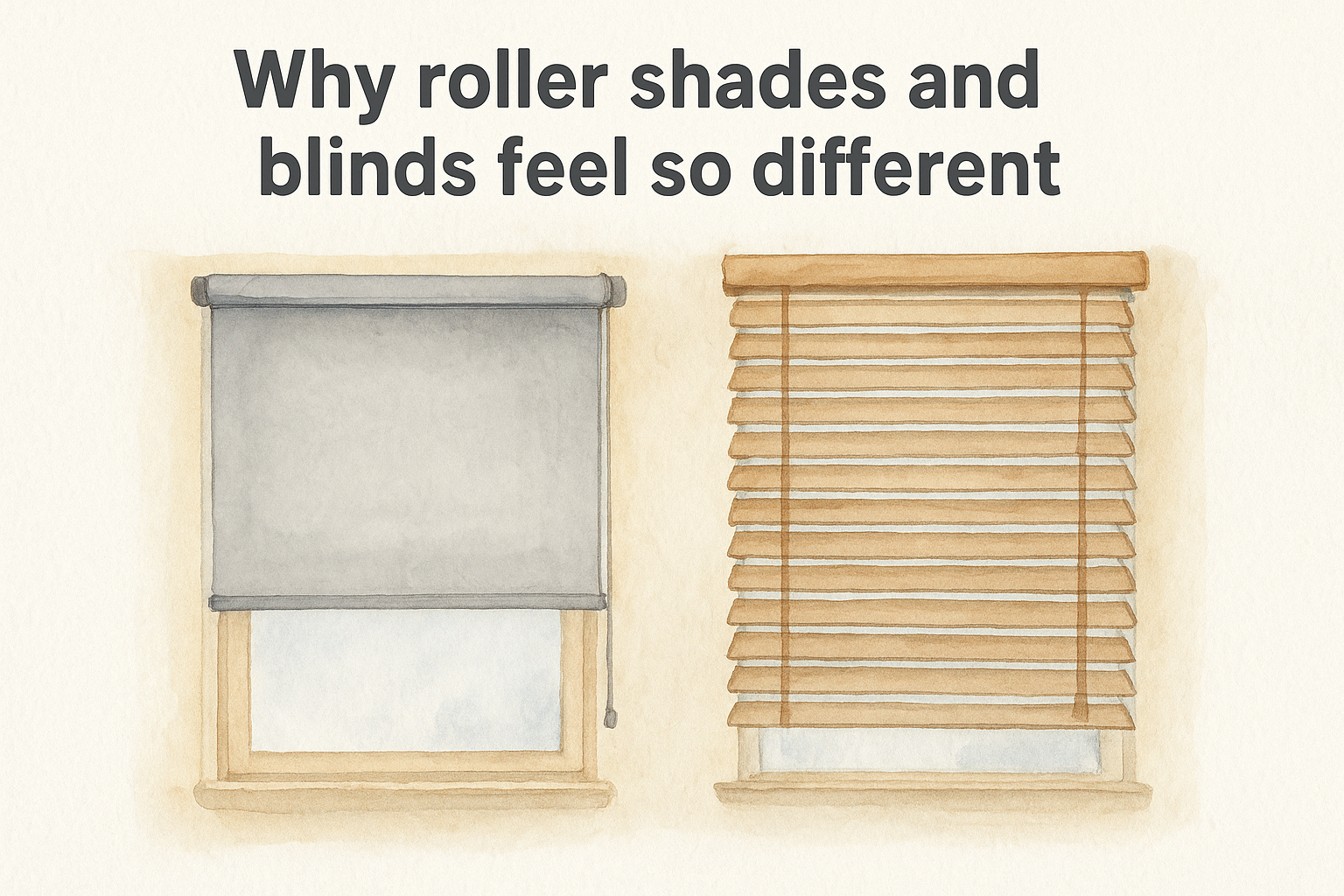
Why roller shades and blinds feel so different
The core difference between roller shades and blinds comes down to how each product is built and how it sits on your window. One uses a continuous sheet of fabric that rolls up and down; the other uses a series of horizontal slats that tilt open or closed. That single structural difference shapes everything from the way they look in a room to how you clean them and how well they hold up under Central Florida’s intense sun exposure.
How roller shades work
Roller shades consist of a single piece of fabric attached to a cylindrical tube mounted at the top of your window. When you pull them down, the fabric unrolls in one smooth, even sheet. When you raise them, the fabric rolls back up neatly. The result is a clean, minimal look with no moving parts beyond the tube and a simple cord or chain mechanism. Many modern versions, including motorized Neolux shades, replace the cord entirely with a quiet motor you operate by remote or a wall switch.
The simplicity of a roller shade is what makes it reliable: fewer parts mean fewer things that can break or wear out over time.
How blinds work
Blinds use a set of horizontal slats (typically made from wood, faux wood, vinyl, or aluminum) that hang from a headrail at the top of the window. A cord or wand lets you tilt those slats open or closed to adjust incoming light, and a separate lift cord raises the entire stack of slats when you want a fully open view. Because each slat moves independently in relation to the others, you can fine-tune exactly how much light enters and from which angle, giving you more hands-on control throughout the day.
What this means for your home
When you place roller shades vs blinds side by side, the difference in feel becomes obvious right away. Roller shades lean toward modern and streamlined, while blinds can work in both traditional and contemporary spaces depending on the material and finish you select. Your room’s existing style, the amount of direct sunlight it receives, and how much you want to adjust your window coverings daily all influence which product will actually fit your life.
Light control and privacy differences
When you compare roller shades vs blinds side by side, light control is where the two products diverge most sharply. Roller shades offer coverage determined entirely by the fabric you select at purchase, while blinds let you adjust light exposure at any time by tilting the slats. Neither approach is wrong, but one will fit your daily habits better than the other.
Roller shades: filter or block on your terms
Roller shades give you two distinct settings: the shade is either down or up. What matters most is the fabric opacity you choose upfront. Sheer fabrics diffuse sunlight and maintain a soft glow while protecting your furniture from UV damage. Light-filtering fabrics cut glare without darkening the room. Blackout fabrics block virtually all incoming light, making them a strong pick for bedrooms and media rooms.
The fabric you select at purchase locks in your light experience, so reviewing physical samples before you commit is well worth the time.
Blinds: adjust the angle throughout the day
Blinds give you on-demand control because you can tilt the slats to any angle without raising or lowering the entire covering. This lets you redirect sunlight toward the ceiling rather than block it outright, keeping a room bright without direct glare hitting your eyes or screens.
Privacy works differently with blinds as well. Even when the slats are fully closed, small gaps between them can still allow slivers of light and partial outside views at certain angles. If complete visual privacy is your priority, a blackout roller shade will outperform blinds in that specific situation.
Durability and maintenance in Florida homes
Florida’s climate puts window treatments under serious stress. High UV exposure, humidity, and daily heat cycles degrade materials faster here than in most other climates. When comparing roller shades vs blinds, material choice directly affects how long each product lasts and how much work it takes to keep it looking good.
How Florida’s climate affects each product
Fabric roller shades can fade under prolonged direct sunlight, particularly in south- or west-facing rooms that absorb full afternoon heat. High humidity also creates conditions that allow some fabrics to retain moisture and develop mildew over time.
Faux wood blinds built from moisture-resistant materials handle Florida’s humidity far better than real wood alternatives. Products like Sunland Polycore shutters are designed specifically to resist warping and cracking, making them a reliable long-term investment in high-humidity spaces like bathrooms and kitchens.
Choosing the right material upfront prevents early replacement costs that add up quickly in Florida’s demanding conditions.
Cleaning and upkeep day to day
Roller shades are easy to maintain because the flat fabric surface has no grooves or gaps where dust settles. A quick wipe with a damp cloth handles most buildup without much effort.
Each slat on a blind collects dust along its surface and edges, so cleaning takes noticeably more time and attention. In a busy household, that difference compounds week after week. If low-maintenance upkeep matters to you, roller shades offer a clear practical advantage in day-to-day care.
Cost, value, and upgrade options
Price is a real factor when weighing roller shades vs blinds, and the gap between entry-level and premium options is wider than most homeowners expect. Both product types have budget-friendly starting points, but the materials, features, and installation quality you choose will determine how much value you actually get over time.
What you pay upfront
Standard faux wood blinds tend to cost less at the entry level, making them an attractive option when you need to cover multiple windows quickly on a fixed budget. Roller shades range from inexpensive basic fabric options to higher-end UV-resistant materials that hold their color and shape significantly longer in sun-heavy environments. Spending a little more upfront on a durable fabric often saves you from replacing the shade within a few years.
Cheaper materials may win on initial price, but Florida’s climate will expose that difference faster than most homeowners anticipate.
Upgrade options worth considering
Both product types support meaningful upgrades that improve daily convenience. Motorized operation is the most impactful upgrade available for roller shades, letting you raise and lower coverings by remote or wall switch without touching a cord. Motorized Neolux shades bring that convenience to any room without complex installation. Cordless lift systems for blinds are a worthwhile upgrade for households with children or pets, removing the safety risk that traditional lift cords present. Whichever direction you go, factoring in upgrade costs during the initial purchase decision prevents frustration later.
How to choose for each room and window
The right choice in the roller shades vs blinds debate often comes down to which room you’re treating and what that room demands from your window coverings every single day. A product that performs well in a bright living room can feel limiting in a bedroom or bathroom, so matching the treatment to the specific conditions of each space matters more than settling on one product for your entire home.
High-sun rooms and west-facing windows
West- and south-facing rooms collect the most direct afternoon heat and UV exposure, which accelerates fabric fading and material warping over time. In these spaces, roller shades made from UV-resistant fabric outperform standard blinds by maintaining their appearance longer and blocking radiant heat more effectively as a continuous single layer rather than individual slats.
Pairing a UV-resistant roller shade with motorized operation keeps you from handling the fabric repeatedly during peak heat hours, which extends its lifespan further.
Bedrooms, bathrooms, and multi-use spaces
Bedrooms benefit most from blackout roller shades because complete light blocking makes a measurable difference in sleep quality, especially with Central Florida’s year-round bright mornings. Bathrooms call for moisture-resistant materials first, making faux wood or Polycore blinds a practical fit since they handle humidity without warping or cracking. In open living areas where you want flexible light throughout the day, blinds give you the on-demand tilt adjustment that roller shades simply cannot match without swapping the fabric entirely.
Final takeaway
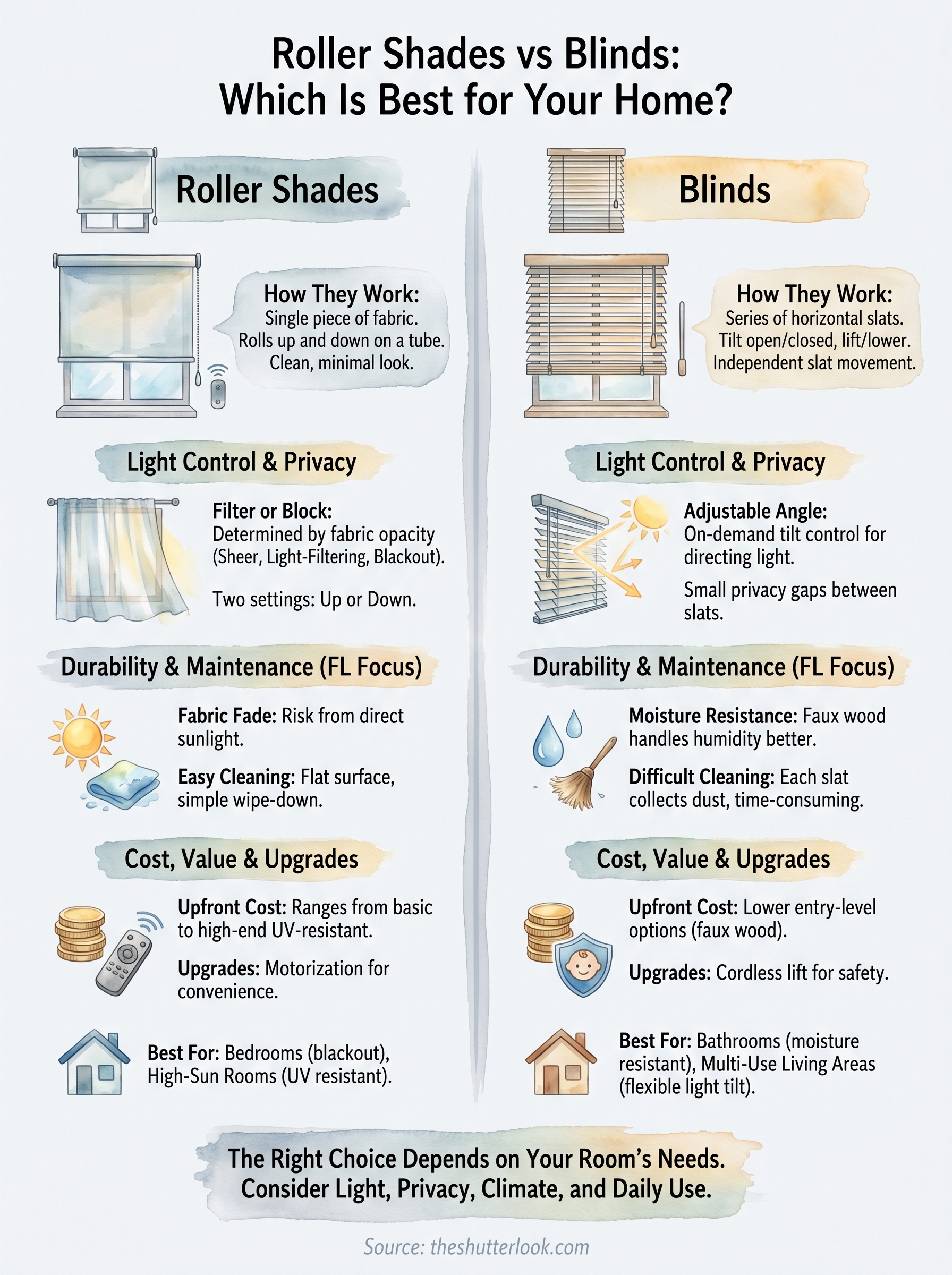
The roller shades vs blinds decision gets much easier once you match each product to what your specific rooms actually need. Roller shades deliver clean lines, easy maintenance, and superior blackout performance in bedrooms and sun-heavy spaces. Blinds give you on-demand tilt control and moisture-resistant material options that work well in bathrooms and multi-use living areas. Neither product wins outright for every situation, which is why many homeowners end up using both across different rooms in the same house.
Your window treatments affect how comfortable your home feels every single day, so getting the details right matters. Seeing physical samples in your actual space under your real lighting conditions makes a bigger difference than any photo or online description ever could. If you want expert guidance on which option fits your windows, schedule a free in-home consultation with The Shutter Look and get a precise recommendation backed by 23 years of hands-on experience.
