


Bali motorized shades are one of the most recognized names in automated window treatments, and for good reason. They offer a solid range of styles, smart home compatibility, and remote-controlled convenience that appeals to homeowners ready to ditch the cord. But with multiple product lines, varying price points, and different retailer options, figuring out which Bali shade actually fits your home takes some digging.
At The Shutter Look, we’ve spent over 23 years installing window treatments across Central Florida, including motorized options from several manufacturers. We know what holds up, what integrates cleanly with smart home systems, and where homeowners tend to overspend. That hands-on experience gives us a practical perspective on how Bali’s motorized lineup stacks up.
This article breaks down Bali’s motorized shade options, covers pricing, smart home integration, and the real pros and cons, so you can make a confident decision before you buy. Whether you’re upgrading a single room or outfitting an entire home, you’ll walk away with the details that actually matter.
What Bali motorized shades are
Bali is a window treatment brand owned by Springs Window Fashions, one of the largest window covering manufacturers in North America. The brand has been around for decades and sells through major retailers including Home Depot and Lowe’s, as well as through professional dealers. Their motorized product line sits within a broader catalog that covers roller shades, cellular shades, Roman shades, and more, all available in both manual and powered versions.
The brand behind the product
Bali motorized shades run on a battery or hardwired motor built directly into the roller tube or headrail of the shade. When you press a button on the remote, the motor spins the tube and the shade raises or lowers smoothly without any cord involvement. Springs Window Fashions manufactures these shades under strict quality controls, and Bali products are widely available, which makes replacement parts and warranty service more accessible than with smaller brands.
The motorized mechanism is the same core technology used across most major shade brands, so Bali’s advantage comes down to price point, availability, and style variety rather than a unique motor design.
How the motorization works
Most Bali motorized shades use a DC motor that sits inside the headrail. That motor connects to either a battery pack or a power supply depending on the product line you choose. The shade receives a signal from a handheld remote or a smart home hub, interprets it, and drives the motor in the correct direction. Some models also allow you to set upper and lower limit stops so the shade always stops at exactly the position you want.
Available shade styles
Bali offers motorized versions across several fabric and construction types, giving you flexibility based on your light control needs and room function.
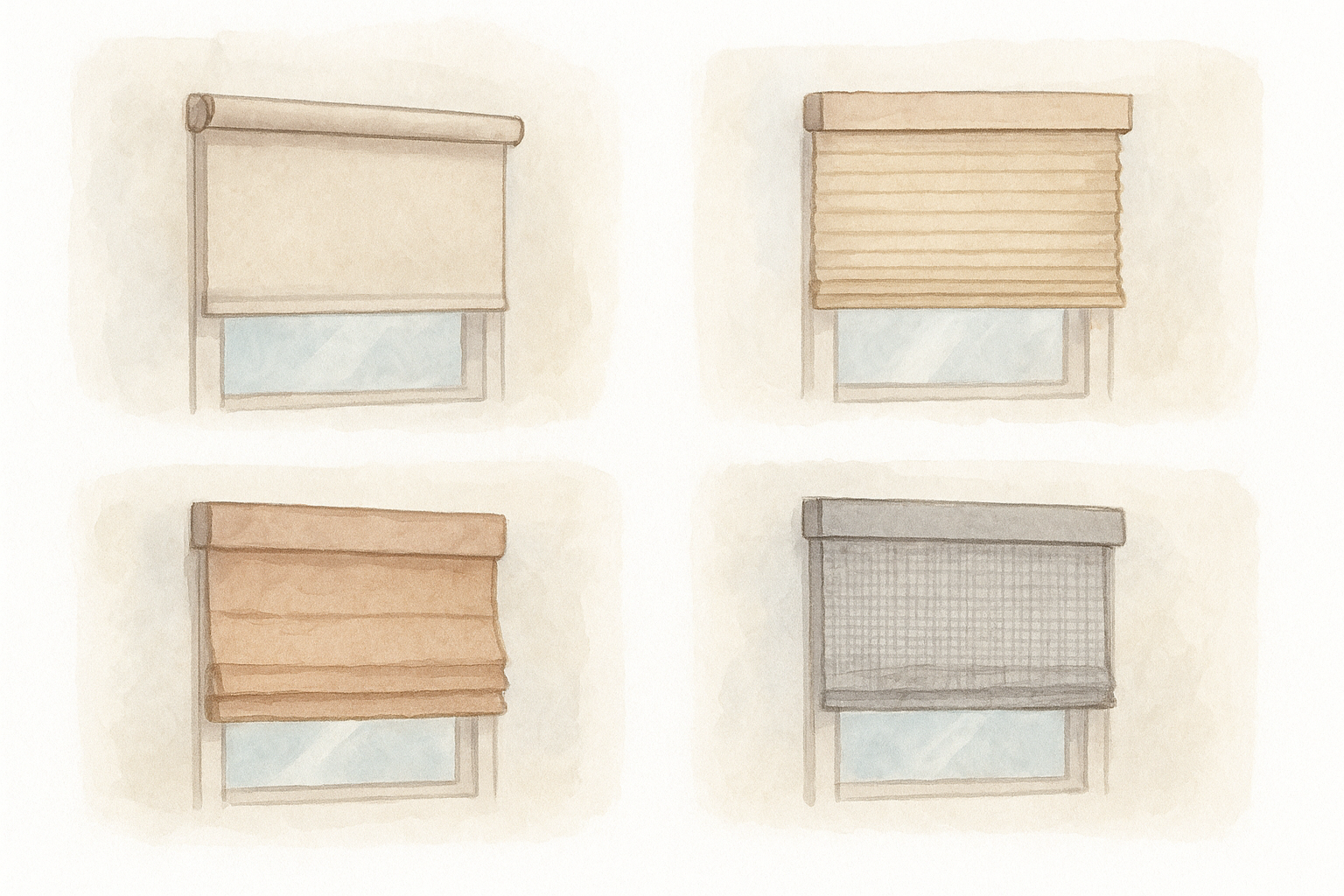
- Roller shades: flat-profile shades available in light-filtering and blackout fabrics
- Cellular shades: honeycomb construction that adds insulation alongside light control
- Roman shades: soft fabric folds that work well in living rooms and dining areas
- Solar shades: open-weave fabrics that reduce glare while preserving your view
Each style comes in multiple opacity levels and color options, so you can match the shade to your existing decor without sacrificing the motorized functionality you want.
Why homeowners choose motorized shades
Most people start looking at motorized shades for one simple reason: convenience. Reaching across furniture or stretching up to grab a cord on a tall window gets old fast. With bali motorized shades, you press a button and the shade moves to exactly where you want it, without leaving your seat. That ease of use is the entry point for most buyers, but it rarely stays the only reason they stick with motorized after installation.
Cord-free safety and child hazards
Corded window treatments carry a documented strangulation risk for young children and pets. The Consumer Product Safety Commission has flagged corded blinds and shades as a leading cause of household accidents involving children under six. Motorized shades eliminate that risk entirely because there is no hanging cord at any point in the shade’s operation. If you have kids or animals in your home, that alone can make the decision straightforward.
Removing cords from your window treatments is one of the most impactful safety upgrades you can make in a home with young children.
Energy savings and comfort control
A motorized shade does more than move on command. When you program schedules into your system, the shades can lower during peak afternoon heat and raise again in the evening without any effort from you. Cellular motorized shades in particular add an insulating layer at the window, which reduces heat transfer and takes pressure off your HVAC system. Over time, consistent use of automated shading can contribute to lower energy bills, especially in sun-heavy climates like Central Florida where solar gain through glass is a real factor.
Smart home control options and integrations
Bali motorized shades connect to your smart home in a few ways depending on the product line you choose. The simplest is a handheld RF remote that ships with most models, giving you raise, lower, and stop functions without leaving your seat. Higher-tier products support wireless hub and smart home platform connections that add scheduling, scene control, and voice commands.
Remote and app control
The standard remote pairs directly to the motor and works without a hub or Wi-Fi connection, which keeps things simple and reliable regardless of your network. For app control, select Bali models use Z-Wave or Zigbee protocols, so you can pair them to a compatible hub and manage your shades from your phone.
Scheduling through the app lets your shades open and close at set times without manual input, which reduces daily adjustments to your routine across every room.
Voice assistant and hub compatibility
Bali motorized shades with Z-Wave or Zigbee radios connect to Amazon Alexa, Google Home, and Apple HomeKit through a compatible hub like SmartThings. You can group shades by room, set them to open at sunrise, or include them in a scene alongside your lights and thermostat.
Once your shades are part of a scene, you stop managing them individually and they become part of how your home runs throughout the day.
Pairing a shade to your hub typically takes under fifteen minutes per unit and requires no special tools, just the hub’s pairing mode and a stable connection.
Power, sizing, and shade style choices
Before you order bali motorized shades, you need to settle three practical questions: how the shades will get power, what sizes you need, and which shade style fits each room’s function. Getting these details right before purchase saves you from dealing with returns or retrofit work after installation.
Power source options
Bali offers battery-powered and hardwired motor options across their motorized lineup. Battery motors use AA or D-cell batteries housed in a compact pack inside the headrail, which means no electrical work required during installation. Hardwired motors connect to a low-voltage transformer wired into your wall, which gives you continuous power without ever swapping batteries. If your windows sit near existing electrical access, hardwired is the cleaner long-term choice. If they don’t, battery motors work well and typically last several months to a full year depending on how often you operate the shade.
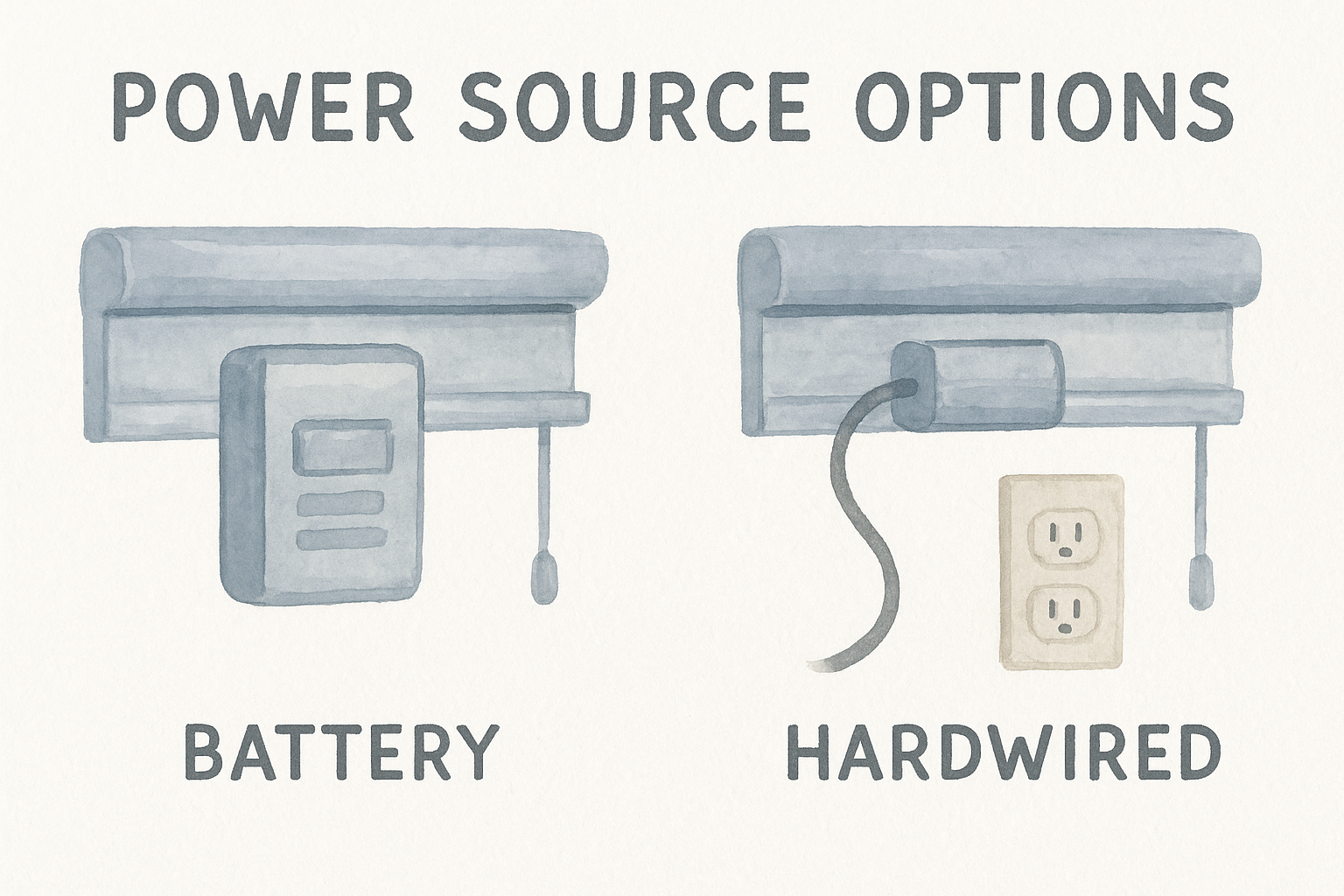
Choosing your power source before measuring saves you from ordering the wrong motor type and having to start the process over.
Sizing your shades correctly
Motorized shades require accurate measurements at every window because the motor and tube assembly is built to a specific width. Measure your window width at the top, middle, and bottom, then use the narrowest measurement as your guide. Inside-mount shades sit within the window frame, while outside-mount shades cover the frame completely, which requires adding width and height to your measurements.
Matching shade style to room function
Blackout roller shades work best in bedrooms where full light block matters. Solar shades suit living rooms and offices where glare reduction without losing the view is the priority. Cellular shades add the most insulation value, making them a practical choice for rooms with large sun-facing windows.
Pricing, warranties, and where to buy
Bali motorized shades fall into a mid-range price category compared to the broader motorized shade market. You’ll pay more than you would for a basic corded shade, but less than custom-motorized options from high-end dealers. Understanding the cost breakdown before you shop helps you set a realistic budget across multiple windows.
What you’ll pay per shade
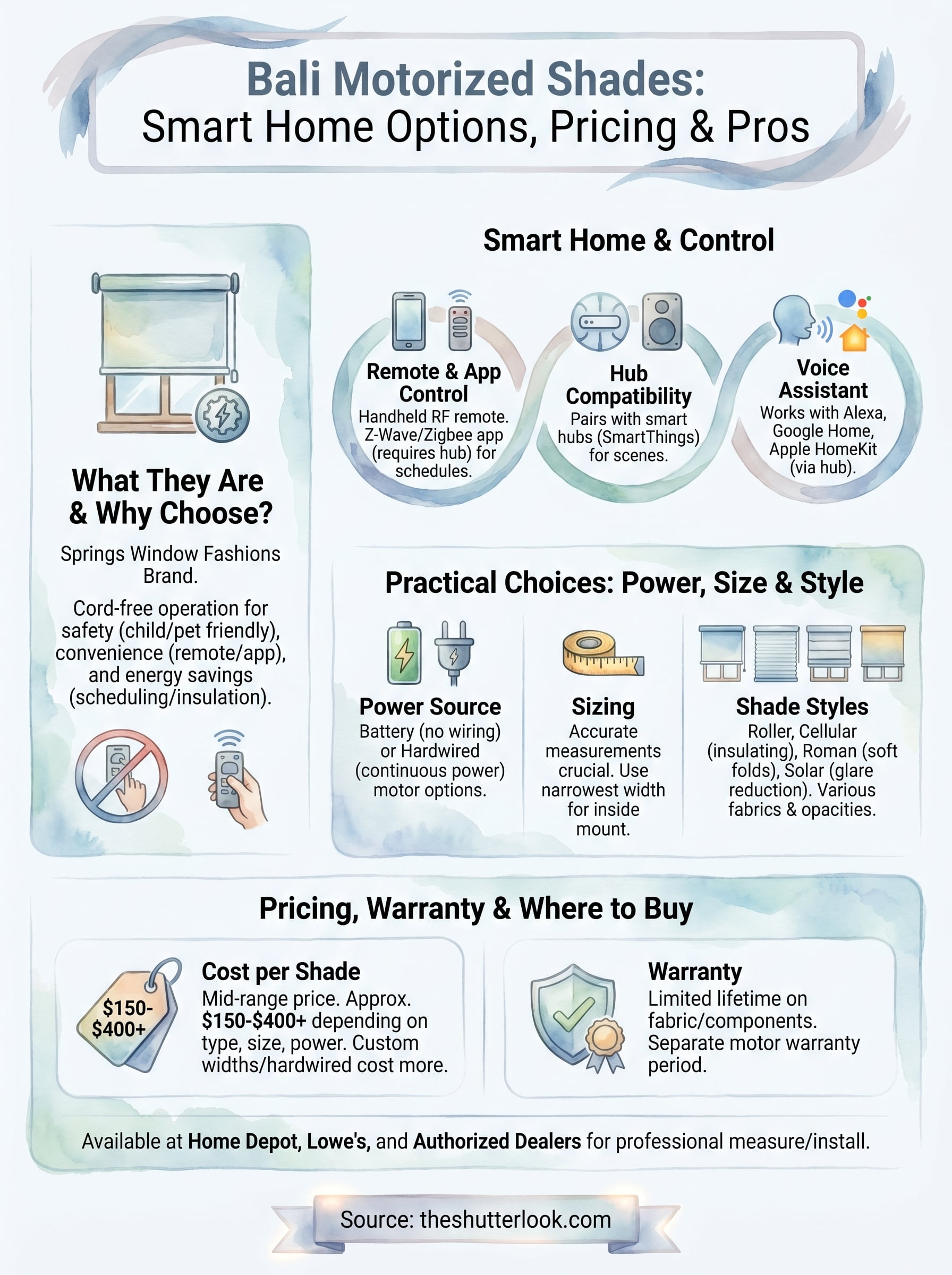
Pricing varies by shade type, size, and where you purchase. Battery-powered roller shades typically start around $150 to $250 per shade for standard window widths, while cellular and Roman motorized styles run closer to $250 to $400 or more depending on size and fabric. Larger custom widths push costs higher, so budget accordingly if you have oversized windows. Hardwired models carry a slight premium over battery versions and may add installation labor costs if you need an electrician to run low-voltage wiring.
Buying through a professional dealer often includes measurement and installation in the quoted price, which eliminates costly fitting errors.
Warranty coverage
Bali backs their motorized products with a limited lifetime warranty on the shade fabric and components under normal residential use. The motor itself carries a separate warranty period, which typically covers defects in materials and workmanship. Keep your purchase receipt and register your product directly with Bali to activate full coverage and simplify any future claims.
Where to buy
You can purchase Bali motorized shades through Home Depot and Lowe’s both in-store and online, where you’ll find a selection of stock sizes. For custom widths and professional installation, authorized dealers offer measuring services that ensure your shades fit correctly the first time, which is worth the added cost.
Next steps for your home
Bali motorized shades give you a practical, well-supported entry point into automated window treatments without requiring a major budget commitment. You get cord-free operation, smart home compatibility, and a range of shade styles that cover most room functions, from blackout bedrooms to glare-reducing living spaces. The key is matching the right shade type and power option to each window before you order, since a wrong fit costs more to correct than it does to prevent.
If you’re covering multiple windows or working with custom sizes, professional measurement and installation removes the guesswork entirely and protects your investment from the start. The Shutter Look has helped Central Florida homeowners navigate motorized shade decisions for over 23 years, with hands-on expertise at every step from the first consultation through final installation. Ready to get a accurate quote for your home? Schedule a free in-home estimate with The Shutter Look and see your options in person.
