


Hunter Douglas roller shades are one of the most popular window treatments on the market, and for good reason. They combine clean, minimal design with serious fabric variety, light control options, and motorization capabilities that few competitors match. But with so many collections, opacity levels, and price tiers available, choosing the right one for your home can feel overwhelming.
That’s where having the right guidance matters. At The Shutter Look, we’ve spent over 23 years helping Central Florida homeowners navigate decisions exactly like this one. We carry a wide range of roller shades and window treatments, and we’ve seen firsthand how the right product choice transforms a room, not just in appearance, but in comfort and energy efficiency.
This guide breaks down Hunter Douglas’s roller shade lineup by style, fabric type, and pricing so you can make a confident, informed decision. Whether you’re comparing their Designer Roller Shades to their Sonnette collection, or trying to understand the difference between light-filtering and room-darkening fabrics, we’ll walk you through what actually matters. We’ll also cover where Hunter Douglas fits in the broader roller shade market and what to expect when it’s time to buy.
What makes Hunter Douglas roller shades different
Most roller shades look similar at first glance: a fabric roll, a mechanism, and a mounting bracket. What separates hunter douglas roller shades from standard options is the level of engineering built into every component. From the precision-engineered roller tube to the fabric finishing at the hem, each detail is designed to last and perform well over time. That consistency is what drives their reputation among homeowners and designers alike.
The difference between a Hunter Douglas shade and a budget roller shade often shows up not at purchase, but two or three years later in how the product holds up and operates.
Build quality and materials
Hunter Douglas controls its own manufacturing process, which means the materials going into their shades meet tighter tolerances than most of what you’ll find from third-party brands. The fabrics go through UV stability and colorfastness testing, so you’re getting a product that resists fading and degradation even in sun-heavy environments like Central Florida. The hardware components, including the roller tube and bracket system, are built to handle daily use without developing the wobble or uneven rolling that cheaper shades show after a year or two.
The hem bar at the bottom of each shade also gets more attention than you might expect. Weighted hem bars keep the fabric hanging flat and straight, and Hunter Douglas gives you options to match the hem finish to your room’s design rather than accepting whatever default comes standard.
Technology and motorization
Hunter Douglas built their PowerView Motorization system around the idea that window treatments should work with your smart home, not function as an afterthought. You can schedule shades to open and close automatically or control them through a dedicated app. The motor hardware is also designed to be quiet, which matters when you’re using shades in bedrooms or living spaces where noise is noticeable.
PowerView connects with the major smart home platforms you’re likely already using:
- Amazon Alexa
- Google Home
- Apple HomeKit
Types of Hunter Douglas roller shades
Hunter Douglas offers several distinct roller shade collections, and each one is built for a different set of priorities. Understanding the differences between them helps you avoid overpaying for features you don’t need or missing out on a performance upgrade that would genuinely improve your space.
Designer Roller Shades
Designer Roller Shades are Hunter Douglas’s core roller shade line and the one most homeowners start with. They’re available in hundreds of fabric options across varying opacities, and you can add motorization through the PowerView system at any point. The clean profile and wide customization range make them a reliable choice for living rooms, home offices, and bedrooms alike.
Sonnette Cellular Roller Shades
Sonnette Cellular Roller Shades are the more specialized option within the hunter douglas roller shades lineup. Unlike standard roller shades, Sonnette shades use a cellular fabric construction that adds an insulating air pocket between your window and the room. This makes them a stronger choice for energy efficiency, particularly in Florida homes where heat gain through windows is a consistent problem.
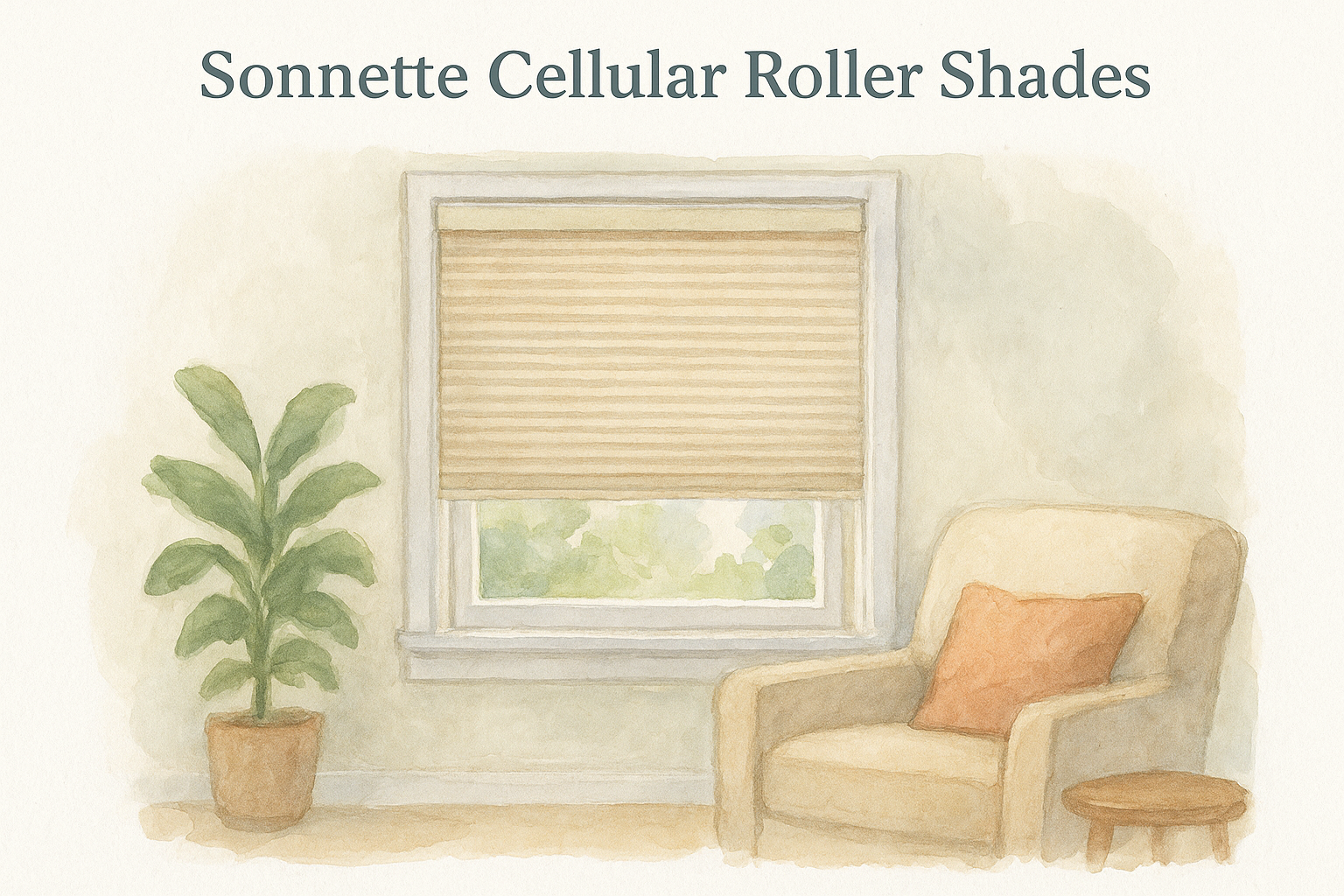
If you want the clean look of a roller shade combined with the insulating performance of a cellular shade, the Sonnette collection is the only product that delivers both in one.
Fabric and opacity options explained
Fabric selection is where hunter douglas roller shades give you the most control over how a room looks and functions. Each fabric option affects light transmission, privacy, and heat gain differently, so it’s worth understanding the three main opacity categories before you commit to a choice.
Light-filtering fabrics
Light-filtering fabrics let natural light into a room while softening glare and reducing visibility from outside during the day. They work well in living rooms and kitchens where you want daylight but still need daytime privacy. Hunter Douglas offers these in sheer and semi-opaque weights, so you can fine-tune exactly how much light passes through.
Sheer fabrics look beautiful in direct sunlight but offer almost no nighttime privacy once interior lights are on, so think carefully about how you use the room after dark.
Room-darkening and blackout options
Room-darkening fabrics block most incoming light and are the right fit for bedrooms, home theaters, or any space where sleep quality or screen visibility matters. They cut glare significantly without going to full blackout performance.
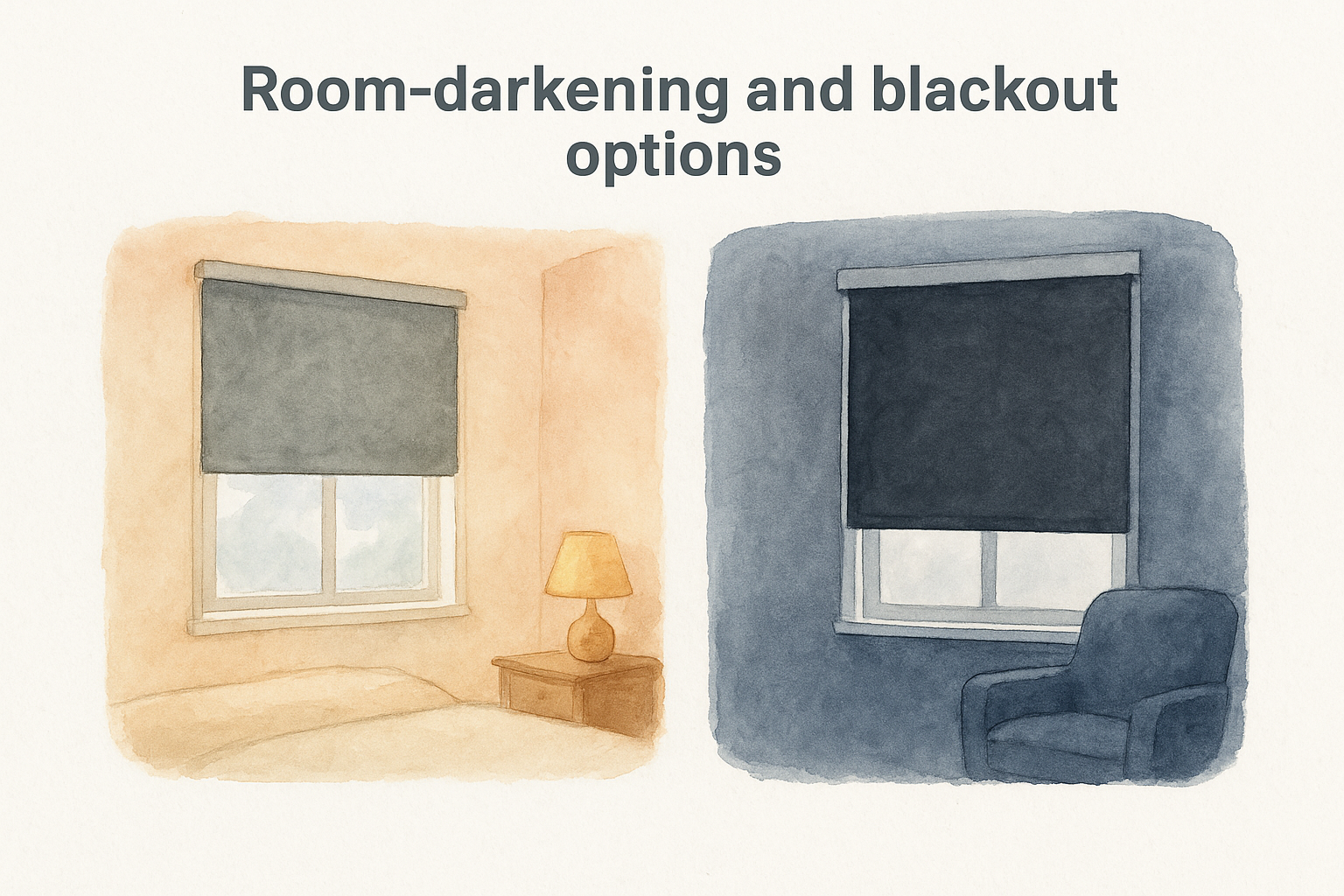
Blackout fabrics take it further by blocking nearly all light, which also adds a layer of thermal insulation at the window. In a Florida home, that insulation benefit adds up quickly during summer months when solar heat gain through windows pushes cooling costs higher.
Pricing, installation, and what affects cost
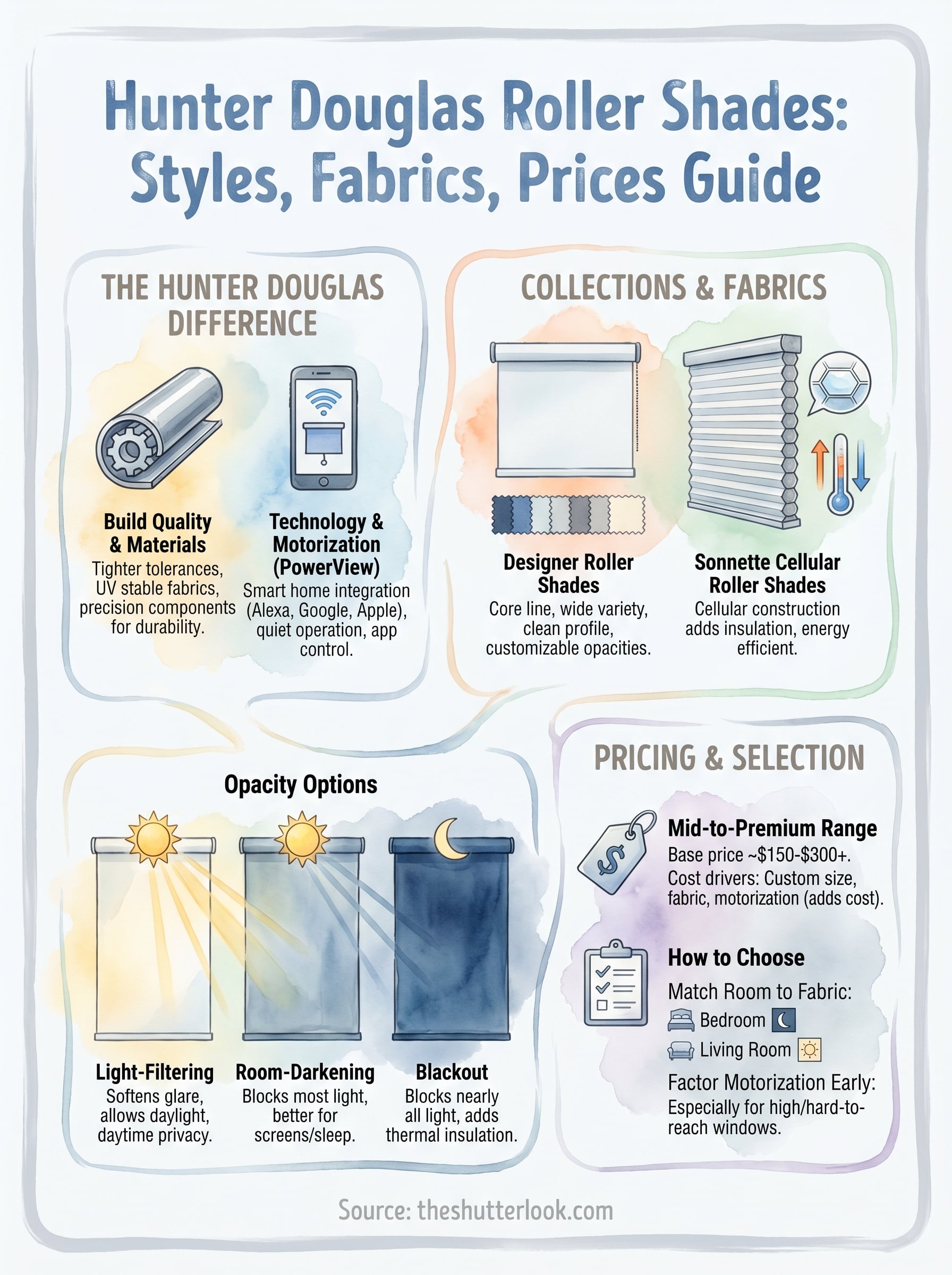
Hunter Douglas roller shades sit in the mid-to-premium price range compared to the broader window treatment market. A single Designer Roller Shade typically starts around $150 to $300 per window at the base level, while the Sonnette Cellular collection runs higher due to its more complex fabric construction. Adding motorization through the PowerView system can push the cost up by $200 or more per shade, depending on whether you choose a battery-powered or hardwired motor configuration.
The total cost of motorized roller shades often surprises buyers, but evaluating the long-term energy and convenience benefits makes the number easier to justify.
What drives the final price up
Several factors push costs beyond the base shade price. Custom dimensions are the biggest driver since Hunter Douglas shades are made to your exact window measurements rather than cut from standard sizes. Fabric selection, specialty hem bar finishes, and decorative fascia additions all affect the final quote, so it pays to decide on these details before you request pricing.
Professional installation
Professional installation ensures your shades hang level, operate correctly, and fit the window opening without gaps. For motorized shades specifically, proper installation covers wiring or charging setup and pairing the system with your smart home devices. Most installers price by shade or by hour, so asking for a detailed quote upfront keeps your budget on track.
How to choose the right roller shade for your home
Choosing the right shade comes down to three things: how you use the room, how much light control you need, and what your budget allows. Before you look at fabric swatches or collection names, spend a few minutes thinking through these questions for each window you plan to cover. That thinking upfront saves you from ordering the wrong product and dealing with replacements later.
Match the room to the fabric
Bedrooms and home theaters call for room-darkening or blackout fabrics since sleep and screen quality both depend on blocking outside light. Living rooms and kitchens typically do better with light-filtering options that keep the space bright while cutting glare and providing daytime privacy. Hunter Douglas roller shades give you enough fabric variety to match the function of each room without compromising on style.
Don’t apply the same fabric choice across every window in your home. Different rooms have different needs, and treating them the same way leads to shades that perform well nowhere.
Factor in motorization early
Motorization is far easier to add during the initial order than to retrofit later, especially for high or hard-to-reach windows. Consider it upfront if any of these apply to your situation:
- Multiple shades cover one large window or sliding door
- Windows sit above comfortable reach
- You already use a smart home platform like Alexa or Google Home
Final takeaways
Hunter Douglas roller shades deliver a level of build quality, fabric variety, and smart home integration that most competing products don’t match. The choice between the Designer Roller Shades and the Sonnette Cellular collection comes down to whether energy efficiency or pure fabric selection matters more for your specific windows. Opacity decisions follow the same logic: match the fabric to how you actually use each room rather than applying one choice across the board.
Pricing runs higher than budget alternatives, but the long-term performance and durability justify that gap for most homeowners, especially in sun-heavy climates like Central Florida. Adding motorization early in the process is smarter than retrofitting it later. If you want hands-on guidance and physical samples before committing, working with an experienced local installer makes the whole process faster and more reliable. Reach out to The Shutter Look to schedule a free in-home consultation and see your options in person.
