


Sliding glass doors let in tons of natural light, but they also create real challenges with glare, heat, and privacy. Motorized shades for sliding glass doors solve all three problems at once, giving you push-button control over wide expanses of glass that are awkward to cover with traditional treatments. And with smart home integration now standard on most systems, you can schedule your shades to adjust throughout the day without lifting a finger.
But not all motorized shades work the same way, and choosing the wrong style for your door type can mean poor coverage, difficult operation, or a look that clashes with your room. The differences between roller shades, panel tracks, vertical blinds, and other options matter more than most people realize, especially when you’re covering an opening that gets used dozens of times a day.
At The Shutter Look, we’ve spent over 23 years installing window treatments across Central Florida, including motorized systems for every type of sliding glass door you can think of. This article breaks down six popular styles side by side so you can compare how each one looks, functions, and fits your budget before scheduling a consultation.
1. Motorized Neolux roller shades
Motorized Neolux roller shades are one of the most popular choices for sliding glass doors in Central Florida homes. The Neolux fabric line is specifically engineered for high-humidity environments, which makes it a strong match for Florida’s climate. The shade rolls up cleanly into a slim headrail cassette, keeping the look minimal whether the shade is open or closed.
How it works on a sliding glass door
A single wide roller shade can span most standard sliding door widths (typically 60 to 72 inches) without a center seam. The motorized tube sits inside a cassette headrail mounted above the door frame, and the fabric drops straight down in a flat, even plane that doesn’t interfere with the door’s sliding track. You operate it with a remote, wall switch, or app depending on the motor you select.
Best for
Neolux roller shades work best when you want clean lines and a modern aesthetic without adding visual bulk to the room. They’re a strong pick for homeowners who want to manage heat and UV exposure in rooms that get direct afternoon sun, which is common in west-facing Central Florida living rooms.
What you give up
The main trade-off is privacy at night. Standard Neolux fabrics in light-filtering opacity let people outside see silhouettes when your interior lights are on. You can address this by choosing blackout-lined or room-darkening fabric, but that eliminates the daytime view-through entirely.
If privacy matters as much as light control, ask your installer about dual-shade systems that layer a sheer and a blackout fabric on the same headrail.
Power and smart control options
Most motorized Neolux systems run on rechargeable lithium-ion battery motors or hardwired low-voltage motors. Battery motors typically last six to twelve months per charge depending on daily use frequency. Higher-end motors support integration with platforms like Google Home or Amazon Alexa for voice commands and automated scheduling.
Typical cost range in Central Florida
For a standard sliding glass door opening, expect to pay between $400 and $750 installed. Hardwired systems with hub-based smart home control sit at the higher end of that range, while battery-operated remote-only setups cost less.
2. Motorized solar shades
Solar shades are a distinct category of motorized shades for sliding glass doors because the fabric uses an open mesh weave that blocks UV rays and cuts glare while keeping your view of the backyard intact. The weave density is measured by openness factor, typically ranging from 1% to 14%, and that number directly controls how much light and outward visibility you get.
How it works on a sliding glass door
Solar shades mount with a motorized cassette headrail above the door frame, and the fabric drops in a flat, taut plane that clears the sliding track completely. The mesh fabric filters sunlight throughout the day without making the room feel closed off, which standard blackout fabrics do.
Best for
These shades suit south- or west-facing doors where afternoon sun is your biggest problem but you still want to see outside. They’re a practical pick for Florida homeowners who deal with intense glare while sitting near the door.
A 3% to 5% openness factor gives you the best balance between glare reduction and outward visibility during daytime hours.
What you give up
Solar shades offer almost no privacy at night. Once your interior lights are on, anyone outside can see straight through the fabric.
Power and smart control options
Motors run on rechargeable battery packs or hardwired low-voltage systems, with most higher-end options supporting app control and smart home scheduling through platforms like Google Home.
Typical cost range in Central Florida
Expect to pay between $350 and $650 installed for a standard sliding glass door opening.
3. Motorized cellular shades
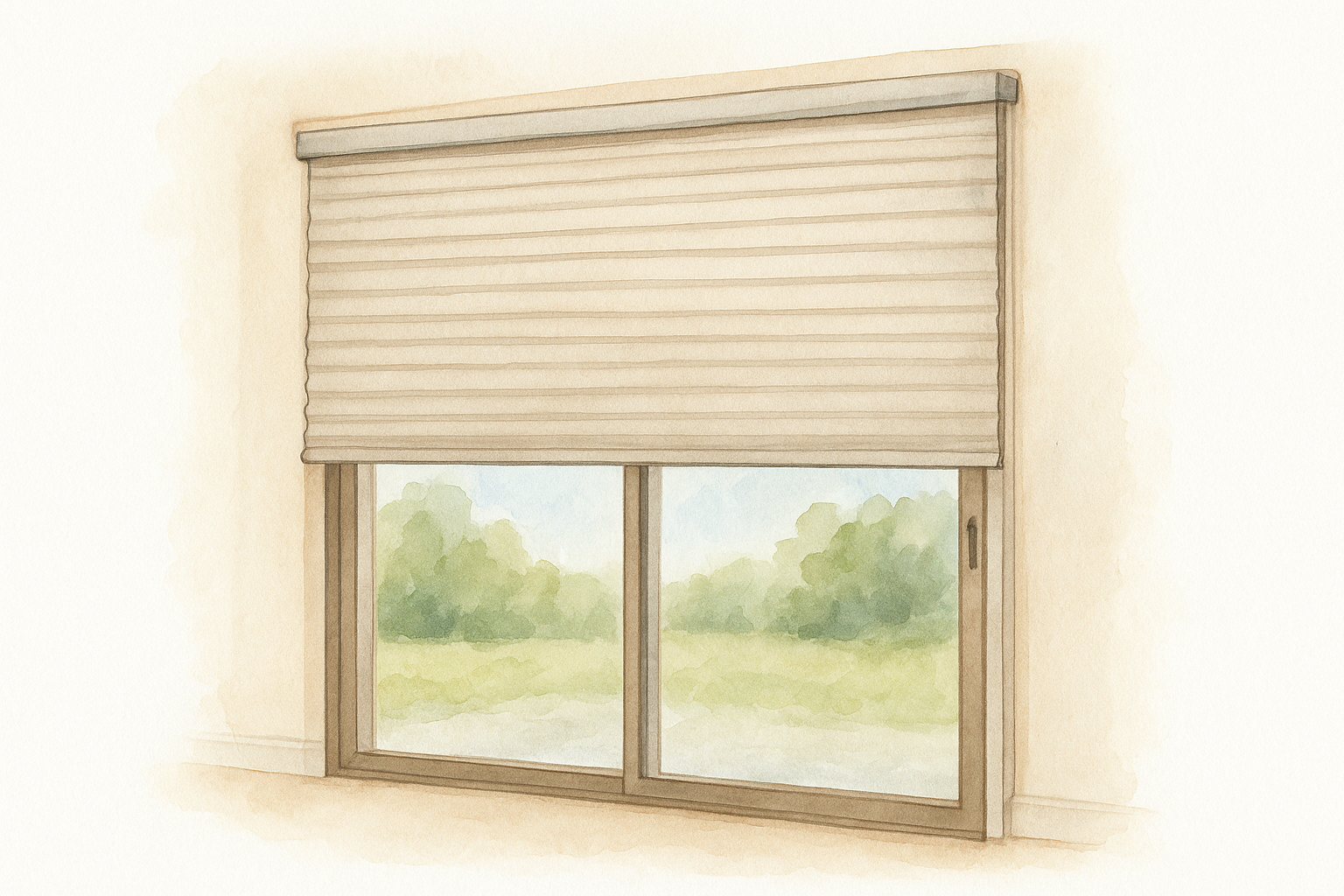
Motorized cellular shades, sometimes called honeycomb shades, stand apart from other motorized shades for sliding glass doors because they add genuine insulation value to your glass door. The fabric folds into hexagonal cells that trap air, creating a thermal buffer between your room and the glass.
How it works on a sliding glass door
A motorized headrail cassette mounts above the door frame, and the fabric stacks at the top when raised. Three cell configurations are available, each offering a different level of thermal performance:
- Single-cell: basic insulation, thinnest stack
- Double-cell: better heat resistance, mid-range stack height
- Triple-cell: strongest insulation, largest stack when raised
Best for
Cellular shades work best for homeowners who want to reduce energy costs through better insulation at the glass. They’re a practical choice if your air conditioning bills run high during Central Florida summers.
Double-cell or triple-cell configurations provide noticeably better heat resistance than single-cell options, which matters most in west-facing rooms.
What you give up
The bulkier stack height when fully raised is the main drawback. Cellular fabric doesn’t compress as tightly as roller or solar shade fabric, so you lose some visible door frame at the top when the shade is up.
Power and smart control options
These shades run on rechargeable battery motors or hardwired low-voltage systems, with smart home compatibility available through platforms like Google Home or Amazon Alexa.
Typical cost range in Central Florida
Expect to pay between $450 and $800 installed for a standard sliding glass door opening, with triple-cell configurations sitting at the higher end.
4. Motorized sliding panel shades
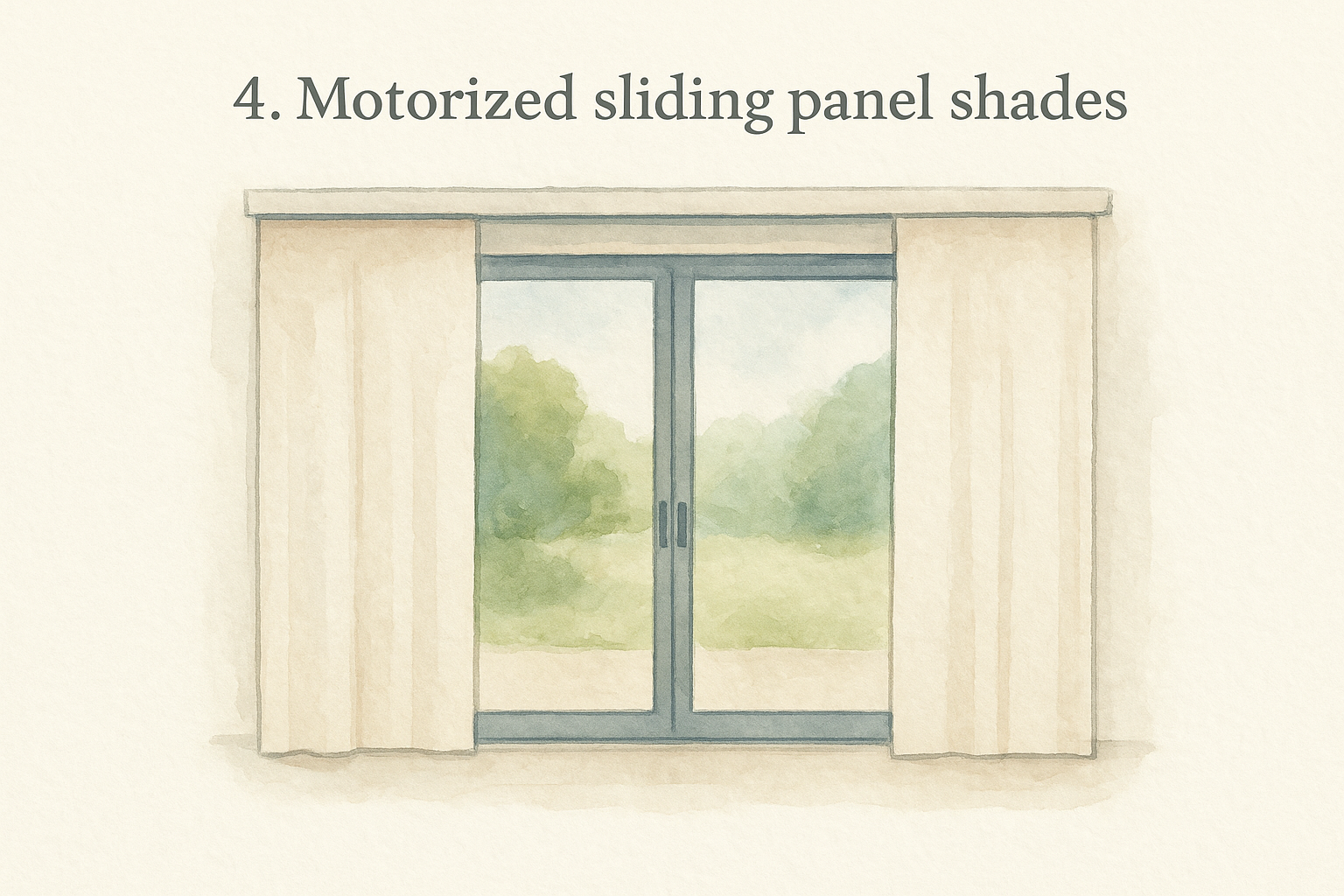
Motorized sliding panel shades are a natural architectural fit for sliding glass doors because the panels move horizontally across the opening on a track, matching the direction of the door itself. Wide fabric panels give large glass openings a clean, tailored appearance that feels designed rather than added as an afterthought.
How it works on a sliding glass door
A motorized track mounts above your door frame, and fabric panels ranging from 24 to 36 inches wide glide open and stack to one or both sides at the press of a button. The motor drives a carrier system that pulls each panel smoothly without bunching or sagging, which matters on high-traffic doors you open and close throughout the day.
Best for
Panel shades suit homeowners who want a contemporary look on wide sliding glass doors and patio openings. These are among the strongest motorized shades for sliding glass doors when your opening exceeds 72 inches and a single roller shade would require an oversized, hard-to-source tube.
Panel track systems handle floor-to-ceiling glass particularly well without the fabric tension problems that wider roller shades sometimes develop.
What you give up
The stacking panels don’t compress into a slim headrail when open, so you lose some usable glass width on whichever side the panels stack.
Power and smart control options
These systems run on hardwired low-voltage motors or rechargeable battery motors, with app and voice control available through platforms like Google Home.
Typical cost range in Central Florida
Expect to pay between $500 and $900 installed for a standard sliding door opening, with wider multi-panel configurations sitting at the higher end.
5. Motorized Roman shades
Motorized Roman shades bring a softer, fabric-forward look to your sliding glass door that roller and panel styles don’t match. The fabric folds into horizontal pleats when raised, creating a tailored appearance that works well in traditional, transitional, or coastal-style interiors.
How it works on a sliding glass door
A motorized headrail mounts above the door frame and lifts the fabric into stacked horizontal folds at the press of a button. Roman shades for sliding glass doors require wider fabric panels than standard window applications, so working with an installer experienced in large-format treatments is important for getting a flat, even hang.
Best for
Roman shades suit homeowners who want decorative fabric and soft texture as the focal point of the room rather than a minimal look. They work best on sliding doors in dining rooms or bedrooms where the door sees moderate traffic rather than constant daily use.
If your sliding glass door opens multiple times a day, a panel track or roller shade will hold up better to repeated cycling than a Roman shade will.
What you give up
The stacked folds take up more headroom than roller styles when fully raised. Roman shades also require careful fabric selection to ensure the material hangs flat and doesn’t bow across a wide opening.
Power and smart control options
These shades run on rechargeable battery motors or hardwired low-voltage systems, with smart home compatibility available through platforms like Google Home or Amazon Alexa.
Typical cost range in Central Florida
Expect to pay between $500 and $850 installed for a standard sliding glass door opening, with premium fabrics and smart motor upgrades sitting at the higher end.
6. Motorized woven wood shades
Motorized woven wood shades use natural materials like bamboo, rattan, and grasses woven into panels that filter light with a warm, textured look no synthetic fabric can replicate. As one of the more distinctive motorized shades for sliding glass doors, this style works particularly well in coastal, bohemian, and transitional interiors common across Central Florida.
How it works on a sliding glass door
A motorized roller mechanism mounts in a headrail above the door frame, and the woven panel drops straight down across the glass opening. The natural weave creates an organic light-filtering effect that softens sunlight without blocking it entirely, giving your room a warm glow throughout the day.
Best for
Woven wood shades suit homeowners who want natural texture and visual warmth as a design element rather than a minimal or modern look. They work best on sliding glass doors in living rooms or sunrooms where daytime ambiance matters more than full privacy.
If complete privacy is a priority, ask your installer about adding a fabric liner behind the woven panel.
What you give up
The open weave structure provides limited privacy and almost no insulation compared to cellular or blackout roller options. Natural materials also require more careful maintenance to prevent warping in high-humidity environments like Central Florida.
Power and smart control options
These shades run on rechargeable battery motors, with app and voice control available through platforms like Google Home or Amazon Alexa on compatible motor systems.
Typical cost range in Central Florida
Expect to pay between $450 and $800 installed for a standard sliding glass door opening, with premium natural materials and motorized upgrades sitting at the higher end.
Quick Recap and Next Steps
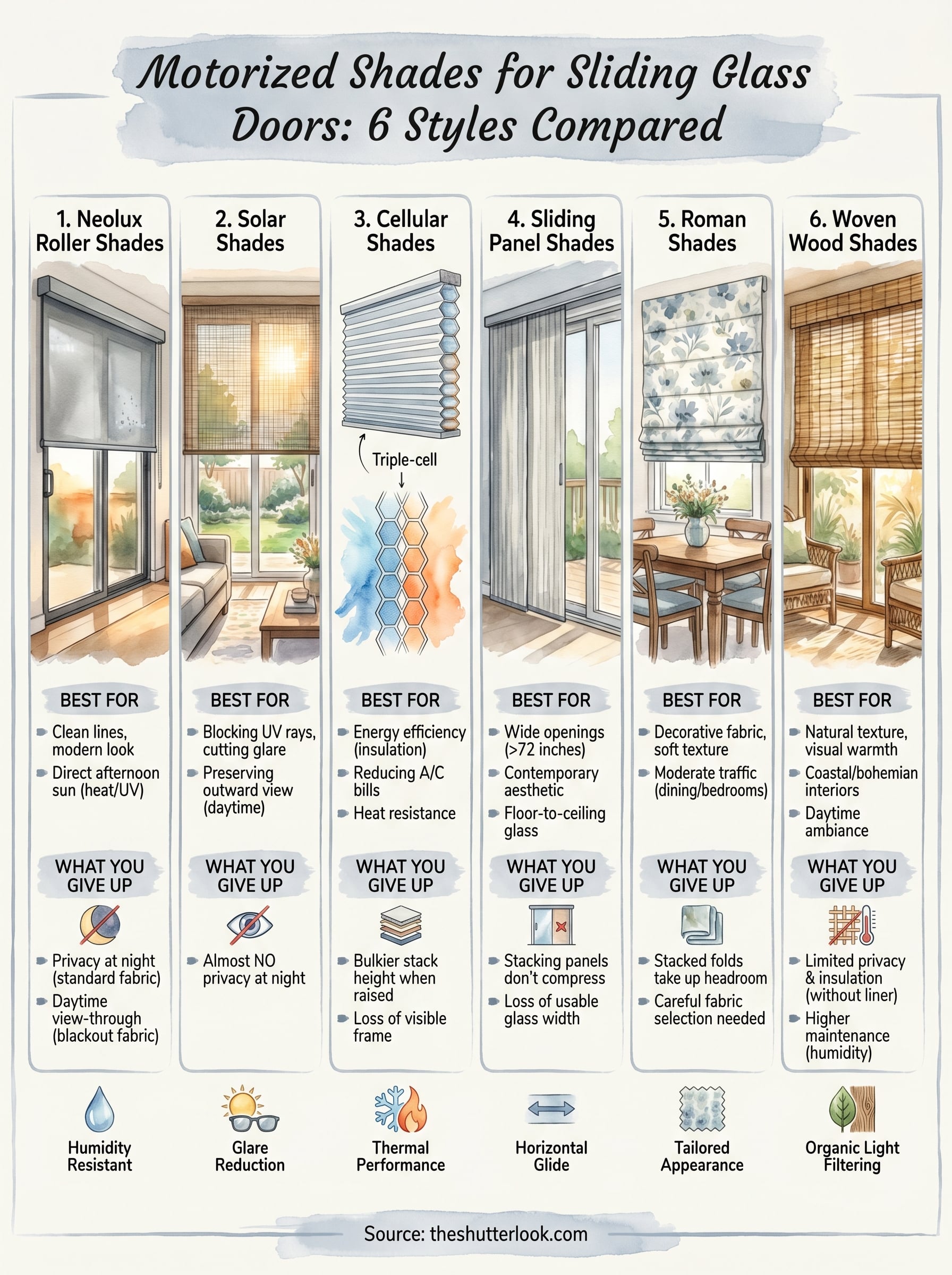
Each of the six styles covered here solves a different problem. Neolux roller shades and solar shades give you the cleanest, most minimal look with reliable UV and glare control. Cellular shades add real insulation value that the others don’t match. Panel shades handle wide openings better than any roll-up style. Roman shades bring soft texture for lower-traffic doors, and woven wood shades deliver natural warmth that synthetic fabrics can’t replicate.
Your best pick comes down to three factors: how often you use the door, what level of privacy you need, and the aesthetic direction of your room. If you’re still weighing options or want to see fabric samples in person, the team at The Shutter Look offers free in-home consultations across Central Florida, bringing physical samples directly to your home so you can compare motorized shades for sliding glass doors against your actual space before committing.
